NIPT Fetal cfDNA Enrichment - Core Workflow
Plasma Preparation
Platelet-Poor Plasma Isolation
Sample Conditioning
Lysis + Chaotropic Salt Treatment
cfDNA Binding
Silica Matrix Adsorption
Stringent Washing
Inhibitor Removal
Elution
Concentrated cfDNA Recovery
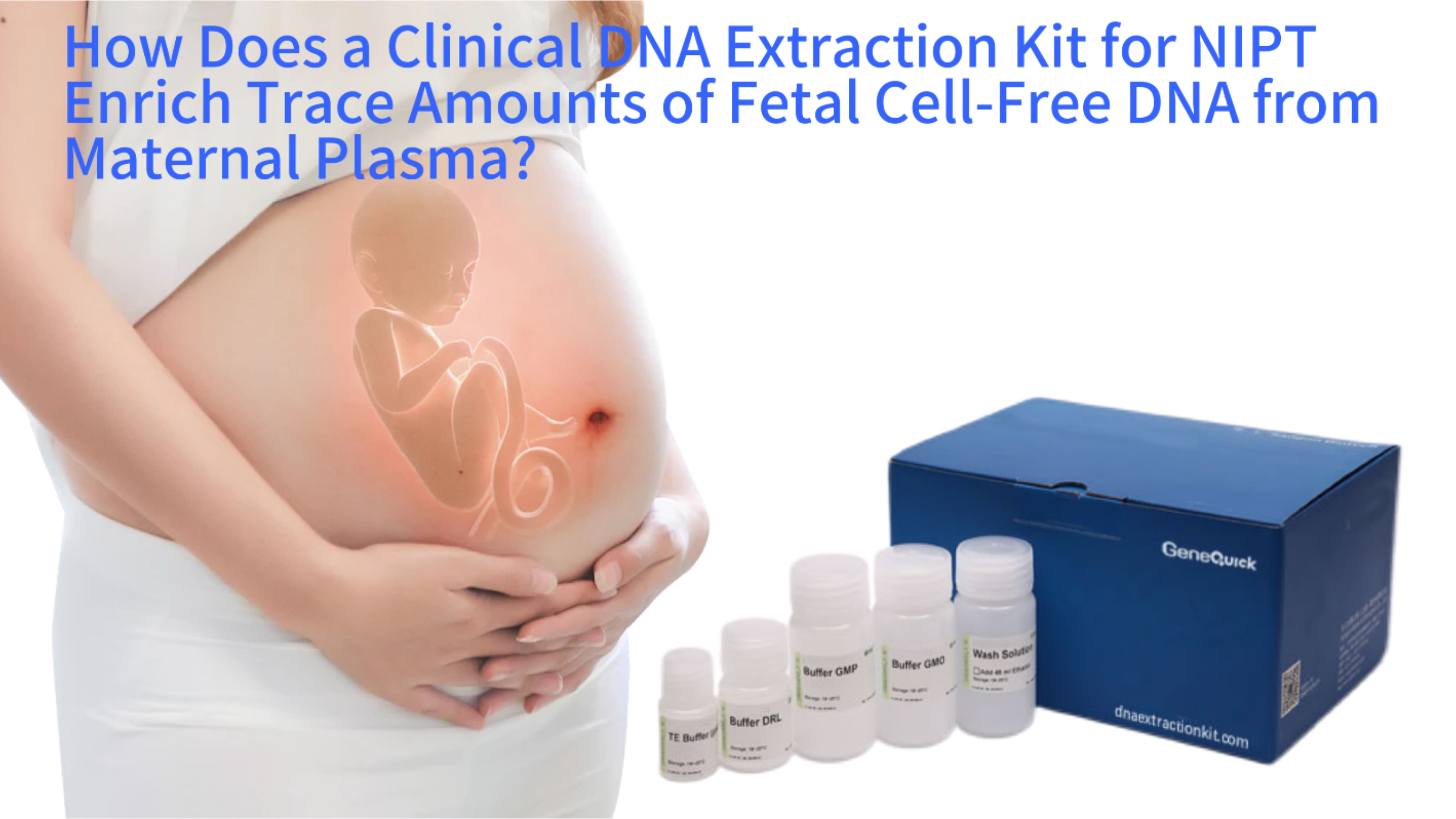
Non-Invasive Prenatal Testing represents a monumental advance in prenatal care, allowing for the screening of fetal genetic conditions from a simple maternal blood draw. The cornerstone of this technology is the ability to access, isolate, and analyze the scarce fetal genetic material circulating within the mother's bloodstream. Specialized clinical DNA extraction kits are engineered explicitly for this formidable task, designed to overcome the significant challenge of enriching a tiny minority of fetal cell-free DNA fragments from a vast background of maternal cfDNA. This article provides a detailed examination of the biochemical and physical principles these kits employ. It explores the unique characteristics of the cell-free DNA pool in maternal plasma, delineates the step-by-step molecular workflow for fetal DNA enrichment, discusses the rigorous performance validation required for clinical diagnostics, and offers practical guidance for laboratory implementation. Understanding this specialized extraction process is fundamental to appreciating the reliability and transformative impact of modern NIPT.
The Fundamental Challenge of Fetal DNA in Maternal Plasma
Fetal vs Maternal Cell-Free DNA - Key Characteristics
| Characteristic | Fetal cfDNA | Maternal cfDNA |
|---|---|---|
| Abundance in Plasma | 4-20% of total cfDNA | 80-96% of total cfDNA |
| Fragment Size | <200 bp (peak at 143 bp) | Mixed (higher proportion of long fragments) |
| Biological Origin | Placental trophoblast apoptosis | Maternal hematopoietic system |
| Total Mass in Sample | Nanogram range or less | Dominant mass of cfDNA pool |
The success of NIPT relies entirely on analyzing cell-free DNA fragments present in a pregnant woman's plasma. This cfDNA is a mosaic, originating primarily from the maternal hematopoietic system, with a minor fraction, typically between 4% and 20%, derived from the placental trophoblast cells, which are genetically identical to the fetus. This fetal fraction is not only low in abundance but also exists as short, fragmented molecules, often less than 200 base pairs in length, intermixed with generally longer maternal fragments. The primary technical hurdle for any extraction method is to capture this total cfDNA population with maximum efficiency and minimal bias, ensuring the fetal DNA component is not lost or under-represented during the purification process. The integrity of the final analytical result is directly dependent on the extraction kit's ability to faithfully recover this representative subset of fragments. A failure to do so can lead to reduced test sensitivity, an inability to call results, or inaccurate fetal fraction quantification, which is a critical quality control metric for many NIPT algorithms.
The Biological Origin and Characteristics of Cell-Free Fetal DNA
Cell-free fetal DNA enters the maternal circulation primarily through the apoptosis of placental cytotrophoblasts. This biological origin dictates its physical properties. Studies have consistently shown that cfDNA fragments are not random in size but exhibit a nucleosomal ladder pattern. Fetal-derived fragments tend to be shorter on average than maternal ones, with a peak size distribution around 143 base pairs, corresponding to the length of DNA wrapped around a single nucleosome core particle. Maternal cfDNA, while also containing short fragments, has a greater proportion of longer DNA strands. This size difference is a subtle but exploitable characteristic. The fragmented nature also means the total mass of fetal DNA in a standard blood collection tube is minuscule, often in the nanogram range or less, demanding an extraction chemistry of exceptional sensitivity and recovery to ensure sufficient material reaches downstream sequencing or PCR-based analysis.
Overcoming the High Background of Maternal Genetic Material
The overwhelming background of maternal cfDNA presents a signal-to-noise challenge unparalleled in most other diagnostic DNA applications. The fetal DNA is not physically separate but is a minor contaminant within the maternal DNA pool. Therefore, the extraction process cannot selectively pull out only fetal fragments based on sequence; it must non-discriminately harvest all cfDNA. Any step in the protocol that preferentially loses shorter DNA fragments will disproportionately deplete the fetal component, skewing the final fetal fraction. This makes the binding and elution dynamics of the extraction chemistry critically important. Techniques must be optimized for high-efficiency binding of very short, low-concentration DNA fragments from a large volume of plasma, which often contains PCR inhibitors like heparin from the blood collection tube or immunoglobulin G, which must also be removed to ensure downstream analytical compatibility.
The Specialized Workflow for Cell-Free DNA Enrichment
cfDNA Enrichment - Step-by-Step Molecular Workflow
• Cell-stabilizing collection tubes
• Double centrifugation (1st: plasma/blood cell separation; 2nd: platelet removal)
• -80°C storage (if not immediate use)
• Chaotropic salts (guanidine HCl)
• Proteinase K digestion (magnetic bead kits)
• High-salt/low-pH binding environment
• Silica membrane (spin-column)
• Silica-coated magnetic beads
• Optimized for sub-200bp fragment capture
• Ethanol-based wash buffers
• Residual ethanol evaporation
• Low-salt elution (20-50 µL volume)
Clinical DNA extraction kits for NIPT follow a refined adaptation of the classic bind-wash-elute principle, with every reagent and step optimized for the plasma matrix and cfDNA target. The process begins with the careful processing of blood to obtain platelet-poor plasma, the optimal starting material. The core extraction then employs conditions that promote the maximum adsorption of short, fragmented DNA onto a solid-phase matrix, followed by stringent washes to remove proteins, salts, and other small-molecule inhibitors without stripping away the desired DNA. The final elution uses a low-ionic-strength buffer to release the DNA in a small volume, effectively concentrating the previously dilute cfDNA into a form suitable for molecular analysis. This entire workflow is designed for robustness and consistency, minimizing manual handling variance to produce reliable results crucial for clinical decision-making.
Initial Plasma Processing and Stabilization
The journey of fetal DNA enrichment begins long before the extraction kit is opened. Proper blood collection and plasma preparation are paramount. Blood is drawn into specialized cell-free DNA blood collection tubes that contain reagents to stabilize nucleated blood cells, preventing their lysis during transport and storage. This stabilization is critical because lysis of maternal white blood cells would release a massive amount of genomic DNA, swamping the fetal cfDNA signal and making analysis impossible. Within a specified timeframe, the blood undergoes a double centrifugation protocol. The first spin separates plasma from blood cells, and the second, higher-speed spin removes any residual platelets, which also contain DNA. The resulting clear, platelet-poor plasma is then either processed immediately or frozen at -80°C to halt nuclease activity. This meticulous pre-analytical phase ensures the sample entering the extraction workflow contains primarily the short, extracellular cfDNA of interest.
Chemical Lysis and Conditioning of the Plasma Sample
The purified plasma sample itself does not require harsh cellular lysis, as the target DNA is already extracellular. However, the plasma contains DNA-protein complexes and other biomolecules that must be disrupted to allow the DNA to bind efficiently to the purification matrix. The extraction kit introduces a specialized lysis or binding buffer. This buffer serves multiple functions: it contains chaotropic salts, like guanidine hydrochloride, which denature proteins bound to the DNA and help to dissociate histones from the nucleosomal fragments. It also creates a high-salt, low-pH environment that is optimal for the subsequent binding of the DNA's negatively charged phosphate backbone to the positively charged surface of the silica-based matrix, whether in a column format or on magnetic beads. For magnetic bead-based kits, this step often includes a proteinase K digestion to thoroughly degrade any contaminating proteins that could interfere with binding or downstream analysis, a crucial consideration for obtaining inhibitor-free DNA.
Selective Binding and Concentration of cfDNA Fragments
This step is the heart of the enrichment process. The conditioned plasma is combined with the solid-phase binding material. In spin-column kits, the mixture is passed through a silica membrane under centrifugal force. In magnetic bead kits, silica-coated paramagnetic beads are added. In the optimized buffer conditions, the DNA adsorbs tightly to the silica surface. The key to fetal DNA enrichment lies in the kinetics and efficiency of this binding for short fragments. Advanced silica chemistries are designed with porous structures or surface coatings that increase the effective binding area and enhance the capture of sub-200bp fragments. The mixture is incubated to allow maximum adsorption, after which the liquid waste, containing proteins, salts, and other small molecules, is removed. The bound DNA, now representing a concentrated subset of the original plasma content, is immobilized while contaminants are discarded. This process effectively enriches the cfDNA by pulling it from a large volume of plasma and localizing it to a very small solid surface.
Stringent Washing and Final Elution of Purified cfDNA
Following binding, the DNA-silica complex undergoes several wash steps to remove residual impurities. These washes typically use ethanol-based buffers with specific salt concentrations. They are stringent enough to remove PCR inhibitors like salts, heme derivatives, and organic compounds but gentle enough not to dislodge the short, bound DNA fragments. This balance is critical; overly aggressive washing can lead to fetal DNA loss. After washing, the silica matrix is dried to evaporate residual ethanol, which would inhibit subsequent enzymatic reactions. The purified DNA is then eluted using a low-salt buffer or nuclease-free water. The elution buffer is often heated and applied in a small volume, typically 20-50 µL, to maximize the concentration of the eluted cfDNA. This final eluate contains the total recovered cfDNA population, with the fetal DNA proportion preserved relative to its original representation in the plasma, now in a purified, concentrated form ready for quantification and library preparation for sequencing or direct qPCR analysis.
Performance Validation and Quality Metrics for NIPT Kits
NIPT Extraction Kit - Critical Performance Metrics
Short Fragment Recovery
Target for sub-200bp cfDNA
A260/A280 Purity Ratio
Ideal value for protein-free DNA
A260/A230 Purity Ratio
Threshold for chemical-free DNA
PCR Inhibitor Carryover
Target for downstream compatibility
The performance of a NIPT-specific extraction kit is not judged solely by total DNA yield. Given the clinical application, validation focuses on metrics that directly correlate with test success and accuracy. Laboratories must perform extensive validation studies to establish that a chosen kit performs consistently on their specific instrumentation and meets the sensitivity requirements of their downstream NIPT platform. Key performance indicators include the absolute yield of total cfDNA from a standard input volume of plasma, the efficiency of recovery for short DNA fragments, the consistency of the fetal fraction recovered, and the complete absence of inhibitors that could impact sequencing library preparation or PCR amplification. Reproducibility across different operators, sample batches, and kit lots is a non-negotiable requirement for a clinical-grade product, ensuring every patient sample is processed under equivalent conditions to generate reliable, comparable data.
Measuring Recovery Efficiency and Fetal DNA Representation
Validating recovery efficiency involves spiking experiments. A known quantity of synthetic, size-selected DNA fragments, mimicking fetal DNA in length, can be added to plasma or buffer controls. By extracting these samples and quantifying the spike-in DNA using specific qPCR assays, scientists can calculate the percentage recovery. More importantly, for fetal DNA representation, studies use simulated models, such as plasma samples from non-pregnant females spiked with a known percentage of male DNA, or well-characterized plasma from early pregnancy. After extraction, the recovered DNA is analyzed by digital PCR or targeted sequencing to measure the percentage of the spiked-in or fetal-specific allele. A high-quality kit will recover this fetal signal close to its original input percentage, demonstrating minimal bias against the shorter fragments. This fidelity is essential for accurate aneuploidy detection, where the statistical power of the test depends on a precise measurement of the fetal contribution.
Assessing Purity and Compatibility with Downstream Sequencing
The purity of the extracted cfDNA is vital for the success and cost-efficiency of next-generation sequencing, the most common downstream application for NIPT. Purity is assessed spectrophotometrically by A260/A280 and A260/A230 ratios, with ideal values close to 1.8 and above 2.0, respectively, indicating minimal protein or chemical contamination. However, spectrophotometry is less reliable for low-concentration, fragmented DNA. A more functional assessment is the success rate of library preparation. The extracted DNA should produce high-quality sequencing libraries with high conversion rates, meaning a large proportion of input DNA molecules are successfully adapted for sequencing. The presence of carryover inhibitors from the extraction can manifest as failed library preps, high duplication rates in sequencing, or uneven genome coverage. Therefore, part of kit validation involves running the extracted DNA through the entire NIPT workflow and confirming it generates sequencing data that meets all quality control thresholds for read count, fetal fraction, and noise levels, ensuring the extraction is truly fit for genetic testing at the most demanding level.
Critical Considerations for Laboratory Implementation and Operation
Laboratory Quality Control - NIPT cfDNA Extraction
Implementing a NIPT cfDNA extraction protocol in a clinical laboratory extends beyond selecting a kit. It requires establishing a controlled, contaminant-aware workflow and training staff to execute the protocol with high precision. The trace nature of the analyte means that contamination from other DNA sources, including PCR products, genomic DNA from laboratory personnel, or even from previous samples on automated platforms, poses a significant risk. Laboratories must design their physical workspace with separate pre- and post-PCR areas, employ dedicated equipment and reagents, and utilize consumables certified as nuclease-free and DNA-free. Standard Operating Procedures must detail every step from plasma aliquoting to the final elution storage, including specific centrifugation speeds, incubation times, and quality checkpoints. Adherence to these controlled conditions is what translates the theoretical performance of the kit into consistent, real-world diagnostic results.
Optimizing Protocol for Manual and Automated Platforms
NIPT extraction kits are available in formats suitable for both manual processing and integration with liquid handling robots. The choice depends on laboratory throughput and resources. Manual protocols using spin-columns offer flexibility and lower startup costs but introduce more operator-dependent variability. Every pipetting step, incubation timing, and centrifugation step must be performed identically. For medium to high-volume clinical labs, automation is highly advantageous. Automated systems using magnetic bead-based kits can process dozens of samples simultaneously with minimal hands-on time, greatly improving reproducibility and reducing the risk of repetitive strain injury for technologists. When transitioning to an automated platform, a meticulous verification study is mandatory. This study must demonstrate that the automated method yields DNA of equivalent or better quality, quantity, and fetal fraction representation compared to the established manual method, ensuring patient results remain consistent and reliable.
Establishing Rigorous In-Process and Post-Extraction Quality Controls
Integral to the operation is a system of controls that monitor the extraction process itself. Each batch of patient samples should include control samples. A negative control, consisting of nuclease-free water or plasma from a non-pregnant individual, is processed identically to patient samples to detect any kit or environmental contamination. A positive control, which could be a commercially available synthetic cfDNA reference or a characterized plasma pool, is used to verify the extraction efficiency and fetal DNA recovery meet acceptable thresholds. Furthermore, every patient's extracted DNA eluate undergoes quantification using a fluorescence-based method sensitive to double-stranded DNA, such as Qubit or Picogreen, which is more accurate for fragmented DNA than UV spectrophotometry. This concentration measurement, along with the volume, provides the total yield, a primary quality indicator. Samples yielding below a validated minimum threshold may be flagged for re-extraction or may produce an inconclusive NIPT result, highlighting how extraction quality directly gates the success of the final diagnostic report.
Comparative Analysis of Extraction Technologies for cfDNA
cfDNA Extraction Technologies - Comparative Analysis
| Evaluation Criterion | Spin-Column (Silica Membrane) | Magnetic Bead-Based |
|---|---|---|
| Short Fragment Binding | Moderate (risk of fragment loss) | High (large surface area in suspension) |
| Automation Suitability | Low (centrifugation-dependent) | High (magnetic manipulation compatible) |
| Contamination Risk | Moderate (aerosol from centrifugation) | Low (closed-tube processing) |
| Operator Variability | High (manual centrifugation/pipetting) | Low (automated bead handling) |
SPRI Technology Advantages
Size-selective binding (tunable for 143bp fetal fragments)
PEG/salt calibration for fetal fraction enrichment
Ultra-high affinity for fragmented cfDNA
Compatible with low-volume plasma samples
While silica-based binding is the industry standard for NIPT, the implementation varies, primarily between spin-column and magnetic bead methodologies. Each approach has distinct technical and operational profiles that laboratories must evaluate. Spin-column technology is well-established, involving passing the lysate through a microporous silica membrane under centrifugal force. Magnetic bead technology uses silica-coated beads that are mixed with the lysate, captured with a magnet, and subjected to wash steps on the bead surface. The choice between them influences workflow integration, potential for sample cross-contamination, binding capacity for very short fragments, and suitability for automation. Understanding these differences allows a laboratory to select the platform that best aligns with its sample volume, staffing model, existing instrumentation, and required performance specifications for sensitive NIPT applications.
Spin-Column vs. Magnetic Bead-Based Extraction for Plasma
Spin-column kits are characterized by their simplicity and widespread use. They are effective and can produce high-purity DNA. However, their binding efficiency for very short fragments can sometimes be lower than optimal, as shorter fragments may pass through the membrane or not bind as efficiently under standard protocols. Centrifugation steps can also lead to aerosol formation, presenting a minor contamination risk if tubes are opened carelessly. Magnetic bead technology offers several advantages for cfDNA. The beads provide a large surface area in suspension, potentially improving the kinetics of binding for short fragments. The wash and elution steps are performed without centrifugation or column transfers, reducing physical shearing forces and hands-on time. The bead-based workflow is inherently more adaptable to automation, as the magnetic particles can be moved between wells by a robotic manipulator. This automation not only increases throughput but also standardizes the process, minimizing inter-operator variability—a critical factor for clinical testing.
The Emergence of Solid-Phase Reversible Immobilization and Other Advanced Methods
Many modern magnetic bead kits for cfDNA utilize a chemistry known as Solid-Phase Reversible Immobilization. In SPRI, the beads are introduced in a solution containing polyethylene glycol and a high concentration of salt. Under these conditions, DNA molecules of a certain size preferentially bind to the beads. By carefully calibrating the concentration of PEG and salt, the protocol can be tuned to selectively bind and enrich DNA fragments within a desired size range. This property is particularly useful for NIPT, as it can be optimized to favor the recovery of the shorter fetal DNA fragments over the longer maternal ones, potentially enriching the fetal fraction during the extraction process itself. Other advanced methods include the use of specialized beads with functionalized surfaces designed for ultra-high affinity to fragmented DNA. These technological refinements, often proprietary to different manufacturers, aim to push the limits of recovery efficiency and fetal DNA yield from limited plasma volumes, continually improving the robustness and success rate of NIPT, especially in cases with low fetal fraction.
The Future of Fetal DNA Enrichment and Integrated Diagnostic Platforms
Next-Generation cfDNA Extraction - Technology Roadmap
Optimized SPRI Beads
Size-selective fetal cfDNA enrichment
Microfluidic Devices
1-10 min turnaround (point-of-care)
Multi-Analyte Extraction
cfDNA + cfRNA + exosomes co-purification
Integrated Diagnostics
Extraction + sequencing + analysis on-chip
The field of cell-free DNA analysis is dynamic, with ongoing research focused on improving every step of the analytical chain. Future directions for extraction technology aim not only at incremental improvements in yield and purity but also at greater integration, speed, and the ability to extract more informative analytes. The goal is to move from simply harvesting total cfDNA to performing more sophisticated pre-analytical separations that can provide deeper biological insights. As the diagnostic power of NIPT expands beyond aneuploidy to include microdeletions, monogenic disorders, and even whole-genome analysis, the demands on the initial extraction step will grow accordingly, driving innovation in chemistry, materials science, and microfluidics to support the next generation of comprehensive prenatal genetic assessment.
Towards Ultra-Rapid and Point-of-Care Extraction Methodologies
Current cfDNA extraction protocols, even automated ones, take 1-2 hours. There is active development towards drastic reductions in processing time. Microfluidic "lab-on-a-chip" devices are being designed that can integrate plasma separation from whole blood, cfDNA capture, washing, and elution into a single, closed cartridge with a turnaround time of minutes. These systems often use novel nanostructured silicon or polymer surfaces for DNA binding instead of beads or columns. The driving force behind this research is the potential for point-of-care NIPT, where a blood draw in a clinic could yield a result within hours rather than weeks. While significant technical and regulatory hurdles remain, especially concerning yield and integration with sensitive enough detection methods, this represents a frontier that could fundamentally alter the prenatal testing workflow and improve access in resource-limited settings.
Multi-Analyte Extraction and Analysis of Fetal Nucleic Acids
The future of prenatal diagnosis likely involves a multi-analyte approach. Maternal plasma contains not only fetal cfDNA but also cell-free RNA and extracellular vesicles, such as exosomes, which may carry fetal proteins and nucleic acids. Next-generation extraction technologies are being explored to co-purify these different molecular entities or to selectively isolate them from the same plasma sample. For instance, a protocol might first capture exosomes using antibody-conjugated beads, then release and extract the RNA and DNA contained within them. This "fetal vesiclome" could provide complementary information, such as gene expression profiles from the placenta, offering functional insights that DNA sequence alone cannot provide. The development of extraction kits capable of handling these complex, multi-modal analyses will be key to unlocking a more holistic view of fetal health and development from a single, non-invasive maternal blood sample, moving prenatal care further towards truly comprehensive precision medicine.