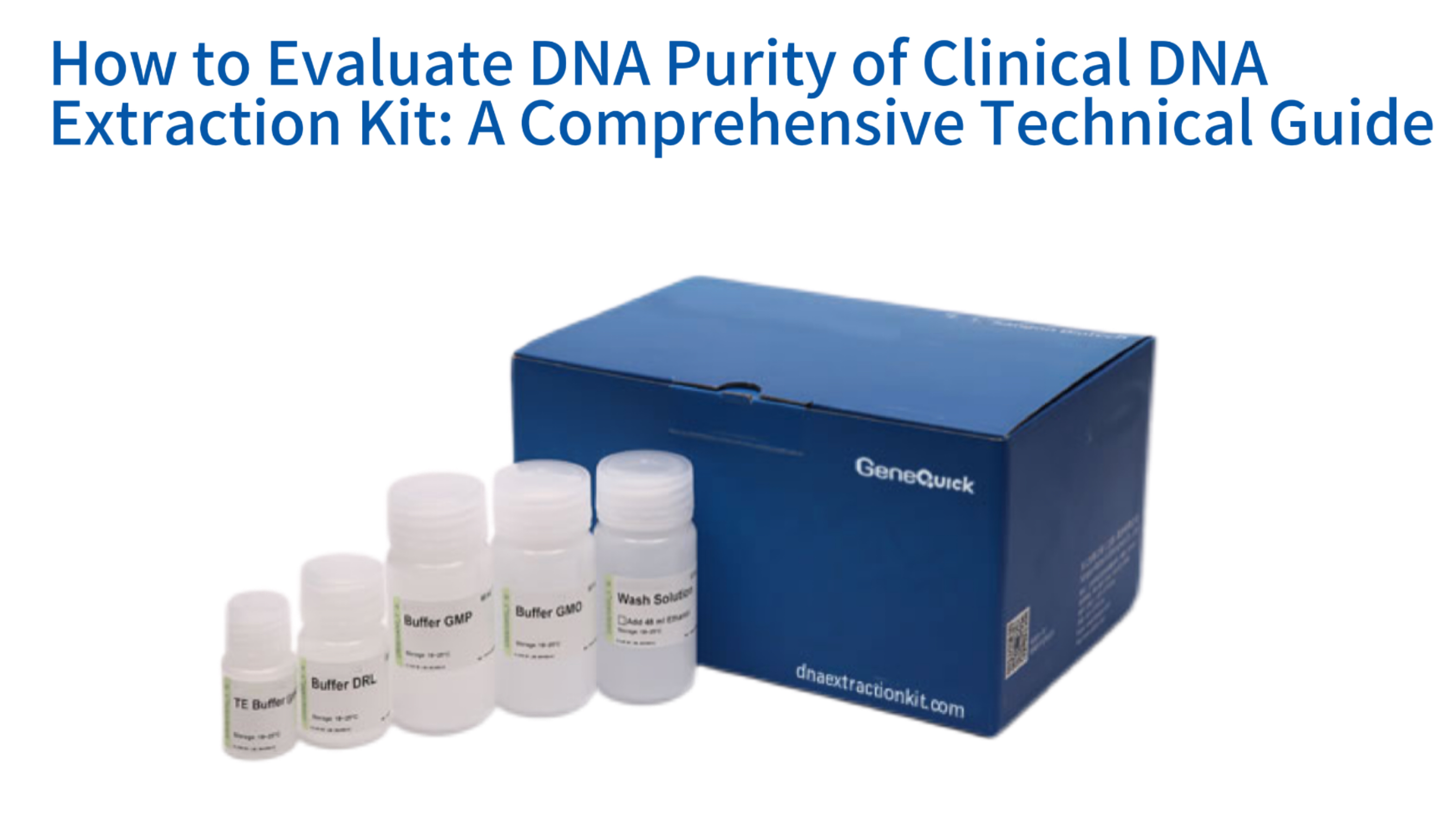
The process of evaluating a clinical DNA extraction kit transcends simple yield measurement; it is a critical examination of purity that determines the success or failure of downstream molecular diagnostics. For clinicians, laboratory technicians, and researchers, understanding the nuances of purity assessment is essential for ensuring that the nucleic acids fed into sensitive platforms like qPCR or next-generation sequencing are free from contaminants that could obscure or distort results. This guide delves into the technical depths of purity evaluation, moving beyond basic spectrophotometric ratios to explore the molecular mechanisms of extraction, the challenges posed by diverse clinical specimens, and the stringent standards required for modern diagnostic applications. By integrating insights from recent studies and established quality benchmarks, this resource aims to equip professionals with the knowledge to select and validate the most appropriate extraction system for their specific workflow, ensuring that the DNA they work with is not just present, but truly pure and performant.
Understanding the Foundational Metrics of DNA Purity
Key DNA Purity Metrics & Interpretation
| Ratio | Optimal Range | What It Measures | Interpretation of Low Values |
|---|---|---|---|
| A260/A280 | 1.8 - 2.0 | Protein/phenol contamination | Presence of proteins/phenols (inhibits PCR polymerase) |
| A260/A230 | 2.0 - 2.2 (min >1.8) | Salt/polysaccharide/humic acid contamination | Residual chaotropic salts (guanidine) or polysaccharides |
Quantification Method Comparison
Measures purity ratios (A260/280, A260/230)
Limited reliability < 17.5 ng/μL DNA concentration
RNA inflates A260 (falsely high purity ratios)
Accurate dsDNA yield quantification
High sensitivity for low-yield samples (liquid biopsies)
No purity ratio information
The initial assessment of DNA purity almost invariably begins with ultraviolet spectrophotometry, a technique that measures light absorption at specific wavelengths to identify common contaminants. The ratio of absorbance at 260 nm and 280 nm (A260/A280) is the primary indicator of protein or phenol contamination, with a value between 1.8 and 2.0 generally accepted as pure for DNA. A ratio significantly below 1.8 suggests the presence of proteins, phenols, or other contaminants that absorb strongly at 280 nm, which can interfere with enzymatic reactions like PCR by inhibiting polymerase activity. However, relying solely on this ratio can be misleading, as the presence of RNA will inflate the A260 reading, potentially masking protein contamination and giving a falsely reassuring ratio .
Equally important is the A260/A230 ratio, which detects contaminants that absorb at 230 nm, such as chaotropic salts from the extraction buffer, polysaccharides, phenols, and humic acids. For high-purity DNA, this ratio should typically be higher than 1.8, and ideally between 2.0 and 2.2. A low A260/A230 ratio is a red flag for downstream applications, as residual guanidine salts from lysis buffers can inhibit PCR enzymes just as effectively as protein. It is critical to understand that spectrophotometry has a limit of quantification, and its reliability diminishes at low DNA concentrations. Studies have shown that the reproducibility of UV spectroscopy measurements decreases for DNA concentrations less than 17.5 ng/μL, making it an unsuitable sole method for evaluating precious or low-yield clinical samples such as liquid biopsies or micro-dissected tissues . For these samples, fluorometry using DNA-binding dyes like PicoGreen or Qubit provides a more accurate and sensitive quantification of double-stranded DNA, but it does not provide information on purity. A comprehensive purity evaluation, therefore, integrates spectrophotometric ratios for contamination assessment with fluorometric quantification for accurate yield measurement.
Molecular Mechanisms and Their Impact on Final Purity
Solid-Phase DNA Extraction Workflow
Chaotropic salts + Proteinase K
DNA to silica (membrane/beads)
Ethanol/salt buffers
Low-salt buffer/water
Extraction Format Comparison
| Feature | Spin Column (Silica Membrane) | Magnetic Beads (Silica-Coated) |
|---|---|---|
| Binding Mechanism | Centrifugation through membrane | Magnetic separation in solution |
| Washing Efficiency | Single-pass wash (risk of inhibitor carryover) | Multiple re-suspension washes (superior cleaning) |
| Amplification Efficiency | Equivalent (if optimized) | Equivalent (if optimized) |
| Automation Compatibility | Limited | High (ideal for high-throughput labs) |
The Core Phases of Solid-Phase Extraction
Most modern clinical extraction kits rely on solid-phase extraction principles, where DNA binds to a substrate—silica membranes in spin columns or silica-coated magnetic beads—under specific chemical conditions. The process is a delicate interplay of three fundamental steps: lysis, binding, and washing, each of which must be optimized to ensure the final eluate is free from inhibitors. During the lysis phase, a chaotropic salt solution, often containing guanidine hydrochloride or isothiocyanate, disrupts cellular and nuclear membranes and denatures proteins. This creates an environment where the exposed DNA can dehydrate and form hydrogen bonds with the silica substrate. If this lysis is incomplete, particularly in tough samples like Gram-positive bacteria or fibrous tissues, DNA yield will be low; more critically, it can trap DNA within incompletely digested protein complexes, leading to co-elution of proteins in the final step.
The binding and washing steps are where purity is truly defined. In spin column formats, the lysate is centrifuged through a silica membrane, where DNA adsorbs while proteins and polysaccharides pass through in the flow-through. Subsequent washes with buffers containing ethanol and chaotropic salts are designed to remove residual contaminants without eluting the bound DNA. A common source of downstream inhibition is the carryover of these ethanol-based wash buffers into the final elution. If the membrane is not dried sufficiently through extended centrifugation, trace ethanol can elute with the DNA and directly inhibit polymerase enzymes in PCR setups. Magnetic bead technology offers a different dynamic; beads are mixed in the lysate, allowing DNA to bind, and then are pulled to the side of the vessel by a magnet. This allows for more thorough washing as the beads can be re-suspended and captured repeatedly. A recent study comparing these formats for DNA methylation analysis found no significant difference in final amplification efficiency between spin-column and magnetic bead methods, provided the kits were optimized for the specific sample type, highlighting that successful purification depends on the chemistry's robustness and the protocol's strict adherence .
Navigating Purity Challenges Across Diverse Clinical Specimens
Clinical Sample Purity Challenges & Mitigation
| Sample Type | Key Inhibitors/Challenges | Specialized Extraction Requirements | Purity Assessment Methods |
|---|---|---|---|
| Whole Blood | Heme, IgG (PCR inhibitors) | Proteinase K + salting-out; heme denaturation | A260/280 (1.8-2.0), A260/230 (>2.0) |
| FFPE Tissues | Cross-linking, DNA fragmentation/deamination | Extended proteinase K digestion; high-temp cross-link reversal | Microfluidic electrophoresis (Bioanalyzer/TapeStation) + ratios |
| Forensic/Low-Biomass | Humic acids, microbial DNA, low DNA yield | Concentration steps; targeted inhibitor removal | qPCR inhibition assay + fragment size analysis (>300 bp) |
Forensic Sample Purity Validation
Overcoming Inhibitors in Blood and Complex Tissues
Clinical laboratories encounter a vast array of sample types, each presenting a unique set of purity challenges. Whole blood is a common starting material, but it is rich in heme and immunoglobin G, both potent inhibitors of PCR. A high-quality blood extraction kit must effectively separate DNA from these components. For instance, protocols may employ proteinase K digestion followed by a salting-out step to precipitate proteins, leaving DNA in solution, or use lysis conditions that specifically denature hemoglobin. The A260/A280 and A260/A230 ratios are critical here, as a successful extraction from blood should consistently yield ratios within the optimal ranges, indicating the efficient removal of heme (which absorbs around 400 nm) and proteins. Formalin-fixed paraffin-embedded (FFPE) tissues represent one of the most difficult sample types, as the fixation process causes cross-linking between nucleic acids and proteins, as well as deamination and fragmentation of the DNA. Extraction from FFPE samples for oncology research requires specialized kits with extended proteinase K digestion times and high-temperature incubation to reverse cross-links. Purity assessment for FFPE DNA must go beyond standard ratios, as the fragmented nature of the DNA can skew spectrophotometric readings. Here, microfluidic electrophoresis, such as that performed on a Bioanalyzer or TapeStation system, is indispensable for assessing the degree of fragmentation and ensuring that the extracted DNA includes fragments of sufficient length for the intended assay, such as the long-range PCR sometimes needed for comprehensive mutation analysis.
Addressing Purity in Specialized Samples
Forensic and low-biomass samples demand an even higher level of purity scrutiny. Samples like touched objects, hair shafts, or aged bone contain minute quantities of DNA amidst a background of environmental contaminants, including humic acids from soil or microbial DNA. Forensic extraction kits are specifically designed to concentrate DNA while washing away these environmental PCR inhibitors. The evaluation of purity for such samples often involves a functional assay rather than just optical density. For example, a qPCR inhibition assay, where a known quantity of an internal positive control is spiked into the reaction, can reveal whether the extracted DNA sample contains substances that delay or prevent amplification. A significant shift in the cycle threshold value of the control indicates the presence of inhibitors that the spectrophotometric ratios failed to detect due to the low total DNA concentration . Furthermore, the physical integrity of the DNA, or intactness, is paramount. Degraded DNA, characterized by fragments shorter than 300 base pairs, may fail to amplify in assays targeting larger amplicons, compromising the ability to generate a full short tandem repeat profile. Therefore, a comprehensive evaluation for forensic or challenging clinical samples integrates quantitative PCR for yield, a functional inhibition assay, and an assessment of fragment size distribution.
Matching Purity to the Demands of Downstream Applications
DNA Purity Requirements by Downstream Application
| Application | Minimum Purity Ratios | Key Contaminant Concerns | Functional Purity Tests |
|---|---|---|---|
| Standard PCR | A260/280
≥1.7 A260/230 ≥1.6 | Protein, EDTA, ethanol | Amplification success (no failed reactions) |
| Quantitative PCR (qPCR) | A260/280 1.8-2.0 A260/230 ≥1.8 | Trace inhibitors (shift Ct values) | Ct value consistency (CV<5% across replicates) |
| Next-Generation Sequencing (NGS) | A260/280 1.8-2.0 A260/230 ≥1.9 | RNA, fragmented DNA, cross-linking agents | Library yield, mapping quality, clonality rate |
NGS Performance Impact of DNA Purity (Clinical Sepsis Diagnosis)
| Extraction Method | Median A260/A230 |
| Automated Magnetic Bead | 1.96 |
| Manual Spin Column | 1.48 |
Automated method produced significantly more total reads
Higher proportion of reads correctly classified to pathogen species level
Direct impact on clinical treatment decisions
Purity Requirements for PCR and Quantitative PCR
The stringency of purity requirements escalates with the sensitivity of the downstream technology. For standard PCR and even for many quantitative PCR (qPCR) assays, the primary concern is the absence of enzyme inhibitors. Co-purified phenolic compounds, ethanol, EDTA, or high salt concentrations can bind magnesium ions or directly interact with the polymerase, leading to reduced amplification efficiency, increased cycle threshold values, or complete reaction failure. A DNA sample considered pure by spectrophotometry (with A260/A280 of 1.85) might still contain trace amounts of an inhibitor that subtly shifts qPCR curves, leading to inaccurate quantification in viral load or gene expression analyses. This is why many clinical diagnostic guidelines recommend validating each new lot of extraction kits with a panel of known positive samples to ensure consistent amplification performance before they are used for patient testing . The functional purity of the DNA is as important as its chemical purity, and this is best assessed by its performance in the specific enzymatic reaction for which it is intended.
The High-Stakes Purity Needed for Next-Generation Sequencing
Next-generation sequencing (NGS) imposes the most rigorous demands on DNA purity and integrity. NGS workflows involve multiple enzymatic steps, including end-repair, adapter ligation, and PCR amplification, all of which can be derailed by contaminants. Furthermore, the presence of contaminating RNA can lead to inaccurate quantification and skewed library preparation, as RNA molecules may also be adapter-ligated and sequenced, wasting valuable sequencing real estate. For clinical applications in oncology, such as detecting low-frequency mutations, the purity of the input DNA directly impacts the assay's sensitivity. A magnetic beads DNA extraction kit for FFPE samples must not only remove cross-linking agents but also effectively eliminate the fragmented, damaged DNA that can lead to sequencing artifacts. Studies have shown that the proportion of usable NGS reads is directly correlated to the purity of the extracted DNA, with cleaner samples resulting in higher mapping quality and lower clonality . For example, in a clinical setting using nanopore sequencing for rapid sepsis diagnosis, an automated extraction method that yielded purer DNA (median A260/A230 of 1.96 compared to 1.48 with a manual method) produced significantly more total reads and a much higher proportion of reads correctly classified to the pathogen species level, directly impacting patient treatment decisions . This demonstrates that purity is not an abstract quality metric but a tangible factor that defines the clinical utility of a diagnostic test.
Establishing a Rigorous Evaluation Protocol for Your Laboratory
Clinical DNA Extraction Kit Evaluation Framework
| Evaluation Parameter | Acceptance Criteria (Blood for Genetic Testing) | Measurement Method |
|---|---|---|
| Yield | >50 ng/μL | Fluorometry (Qubit/PicoGreen) |
| Purity | A260/280:
1.8-2.0 A260/230: >2.0 | UV Spectrophotometry |
| Amplification Consistency | CV<5% for control gene | qPCR (multiple replicates) |
| Integrity | Minimal fragmentation | Microfluidic electrophoresis |
Automated vs Manual Extraction (Blood Culture Broths)
Hands-on time: 90 minutes
Variable wash step execution
Higher inhibitor carryover risk
Shorter DNA fragment lengths
Hands-on time:<5 minutes
Standardized wash protocols
Lower inhibitor carryover
Longer, more intact DNA fragments
Scalable for high-throughput testing
Implementing a Multi-Tiered Validation Strategy
A robust evaluation protocol for DNA extraction kits must move beyond single-point testing and embrace a multi-tiered validation approach that mirrors real-world clinical conditions. The first tier involves performance testing with well-characterized reference materials, such as commercially available control DNA or proficiency testing samples, to establish baseline yield and purity metrics. The second tier requires testing with a diverse panel of clinical specimens—including difficult-to-extract samples like FFPE tissues, whole blood, and low-biomass swabs—to assess kit performance across the spectrum of samples encountered in the laboratory. Finally, the third tier involves longitudinal stability testing, where extracted DNA is stored under typical laboratory conditions (4°C, -20°C, -80°C) and re-tested at defined intervals to ensure that purity and integrity are maintained over time.
Critical to this process is the inclusion of both quantitative metrics (yield, purity ratios, fragment size) and qualitative assessments (amplification success, sequencing quality). It is also essential to establish acceptance criteria based on the intended use of the extracted DNA; for example, a kit used for routine PCR genotyping may have more lenient purity requirements than one used for sensitive NGS-based cancer mutation detection. By documenting performance across these multiple dimensions, laboratories can make data-driven decisions about which extraction kits best align with their specific workflow needs and clinical goals.
Continuous Monitoring and Quality Control
Selecting and validating an extraction kit is not a one-time event but an ongoing process that requires continuous monitoring and quality control. Clinical laboratories should implement regular in-process checks, such as daily positive and negative controls for extraction runs, to ensure consistent performance. Additionally, periodic re-validation of kits—at least annually or whenever a significant change is made (e.g., lot number, reagent formulation)—helps to identify drift in performance before it impacts patient results. External quality assessment (EQA) programs, where laboratories test blind samples alongside peers, provide an invaluable benchmark for comparing extraction performance against industry standards.
Ultimately, the goal of a rigorous evaluation protocol is to ensure that the DNA extraction process is not a source of variability in clinical testing. By systematically assessing yield, purity, integrity, and functional performance across diverse sample types and downstream applications, laboratories can confidently select extraction kits that deliver consistent, reliable results—results that clinicians can trust to guide patient care.
Conclusion
Evaluating the purity of DNA extracted with clinical kits is a multifaceted process that extends far beyond simple absorbance ratio measurements. It requires a deep understanding of the molecular mechanisms of extraction, the unique challenges posed by different sample types, and the specific purity demands of downstream applications from standard PCR to high-throughput NGS. A truly comprehensive evaluation integrates spectrophotometric and fluorometric quantification with functional assays that test the performance of the DNA in the actual assays for which it is intended. For clinical laboratories, establishing a structured, multi-tiered validation protocol is essential for selecting extraction kits that balance yield, purity, and practicality, ensuring that the nucleic acids used in diagnostic testing are not just present, but of sufficient quality to drive accurate, actionable clinical decisions. In an era where molecular diagnostics are increasingly central to patient care, the rigorous evaluation of DNA extraction kits is not just a best practice—it is a cornerstone of reliable clinical testing.