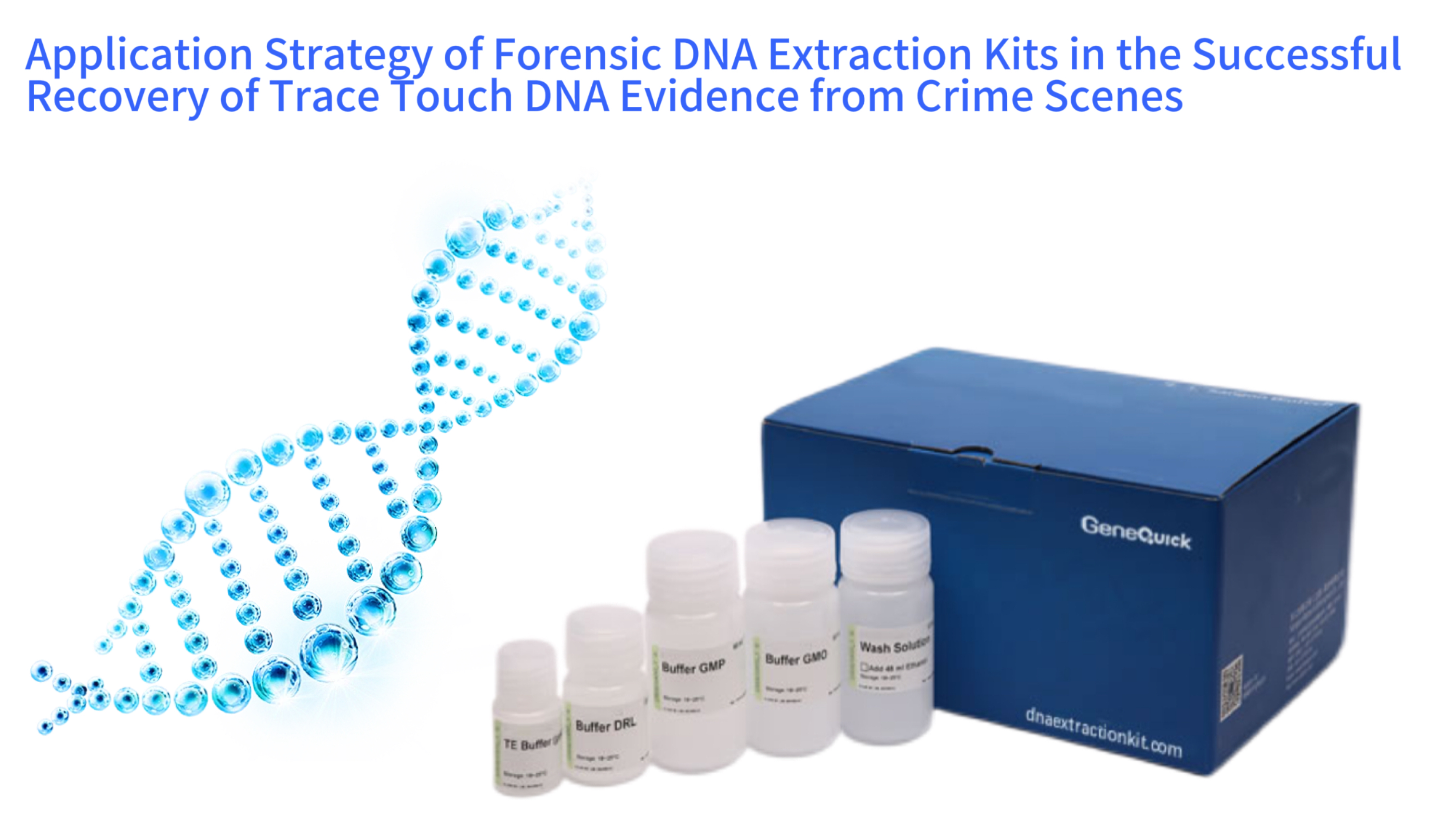
Trace touch DNA evidence, comprising invisible cellular material transferred through skin contact with objects, represents one of the most challenging yet powerful forms of forensic intelligence. Its successful recovery and analysis hinge on a meticulously planned and executed strategy centered on specialized forensic DNA extraction kits. This comprehensive guide details the end-to-end application strategy, from initial crime scene assessment and sample collection through to optimized laboratory processing, designed to maximize the recovery of probative genetic profiles from minute biological traces. We will explore the scientific principles that govern touch DNA transfer and persistence, the critical pre-analytical considerations, the tactical selection and use of extraction technologies, and the rigorous quality control measures necessary to transform latent evidence into court-admissible results. This holistic approach is essential for converting the theoretical sensitivity of modern DNA analysis into practical, reliable outcomes for criminal investigations.
Understanding the Nature and Challenges of Trace Touch DNA
Core Data of Trace Touch DNA
| Parameter | Typical Value | Implications |
|---|---|---|
| Number of Deposited Cells | < 20 - 30 cells | Extreme low input for conventional DNA analysis |
| Total DNA Mass | < 100 picograms | Requires high-sensitivity extraction & amplification |
| Max STR Profile Persistence (Indoor, Non-porous) | Several weeks | Sharply reduced by outdoor/heat/moisture exposure |
Touch DNA originates from the shed skin cells, sweat, and other biological materials left on surfaces through casual contact. Unlike visible biological stains, these deposits are typically fewer than 20-30 cells, often less than 100 picograms of total DNA, placing them at the extreme low end of what conventional DNA analysis can reliably process. The primary challenge is not merely the scarcity of genetic material but its variable quality. Cells deposited in this manner are often degraded due to environmental exposure—factors like ultraviolet light, humidity, and microbial activity can fragment DNA strands, compromising the success of downstream short tandem repeat (STR) analysis, which requires intact template molecules for amplification.
Furthermore, touch DNA evidence is frequently found on complex, porous, or dirty substrates that introduce potent PCR inhibitors. These can include dyes from fabrics, soil minerals, heavy metals from tools, or residues from cleaning products. A successful extraction strategy must, therefore, accomplish two competing goals: the efficient liberation and capture of a minuscule amount of target human DNA while simultaneously purifying it from a potentially overwhelming background of co-extracted inhibitors and non-human DNA. The inherent variability in the amount and quality of DNA deposited, influenced by an individual's shedder status and the nature of the contact, means the extraction process must be robust and forgiving, capable of handling a wide dynamic range of input material without fail.
The Science of Transfer, Persistence, and Recovery
The process of DNA transfer and its persistence on a surface is governed by principles of cell adhesion and environmental science. Epithelial cells are not uniformly sticky; their transfer depends on the moisture present (eccrine sweat), the pressure and friction of contact, and the texture of the surface. Smooth, non-porous surfaces like glass or plastic typically yield higher recovery rates than porous, fibrous materials like cotton or wood, which can trap cells deep within their matrix. Once deposited, DNA degrades through hydrolytic and oxidative damage. Studies published in forensic science journals indicate that under ideal indoor conditions, full STR profiles can be obtained from touch DNA on non-porous surfaces for several weeks, but this window shrinks dramatically outdoors or in the presence of heat and moisture.
Recovery efficacy is the first critical step in the chain. The choice of collection tool—cotton swabs, nylon flocked swabs, or adhesive tape—directly impacts the number of cells transferred from the evidence to the extraction tube. Nylon flocked swabs, with their perpendicular fibers, have been shown in validation studies to release a higher percentage of collected cells into the lysis buffer compared to traditional wound-fiber cotton swabs. The moistening agent used during collection, often sterile water or a proprietary buffer, must hydrate the cells to aid release without promoting microbial growth or adding contaminants that could interfere with the subsequent magnetic beads DNA extraction kit for forensic samples. This pre-analytical phase is where a significant portion of potential DNA is irrevocably lost, making technique and tool selection paramount.
Inhibitors and Substrate Interference in Touch DNA Samples
The surfaces bearing touch DNA are rarely forensically pristine. Common substrates like denim jeans contain indigo dye, a known inhibitor of the Taq polymerase used in PCR. Firearm grips may contain traces of lubricants or gunshot residue. Currency notes harbor dirt, oils, and dyes. During the lysis step of DNA extraction, these substances are solubilized alongside the cellular material. If not effectively removed, they co-purify with the DNA and are carried into the amplification reaction, where they can bind to the polymerase or compete for essential magnesium ions, leading to partial or complete amplification failure, manifesting as allele drop-out or a negative result.
A forensic DNA extraction kit engineered for trace evidence must incorporate wash buffers of sufficient stringency to dissociate these inhibitors from the silica binding matrix or magnetic beads. This often involves washes with ethanol-based buffers containing detergents and chaotropic salts at carefully controlled pH levels. The kit's ability to remove humic acids (from soil), melanin (from highly pigmented surfaces), and ionic detergents is a key differentiator. The final eluate must be compatible with the highly sensitive quantification and amplification kits used downstream, requiring the extraction chemistry to leave behind no residual salts or alcohols that could affect these assays.
Pre-Analytical Phase: Strategic Evidence Collection and Handling
Comparison of Forensic Sampling Tools
| Sampling Tool | Cell Release Efficiency | Advantages | Limitations |
|---|---|---|---|
| Traditional Cotton Swabs | Low (poor cell release to lysis buffer) | Low cost, widely available, familiar protocol | Traps cells in wound fibers, high DNA loss |
| Nylon Flocked Swabs | High (perpendicular fibers release more cells) | Superior for trace touch DNA, higher recovery yield | Slightly higher cost, requires validated protocols |
Before a forensic DNA extraction kit is even opened, a series of strategic decisions determines the potential success of the analysis. The process begins at the crime scene with a thorough assessment to identify surfaces most likely to have been touched by a perpetrator under probative circumstances. This involves considering the flow of activity, points of entry/exit, and items that may have been manipulated. Prioritization is essential, as not every surface can or should be sampled; resources must focus on items offering the highest likelihood of yielding a pure, interpretable profile from a relevant individual. Scene investigators must also meticulously document the collection process to establish chain of custody and context for the biological material.
Upon arrival at the laboratory, the evidence undergoes an examination and sampling phase. This may involve visual inspection under alternative light sources to locate latent stains, but for touch DNA, it is largely presumptive. The analyst must decide on a sampling strategy: should a large area be swabbed to maximize cell recovery, or should discrete, small areas be targeted to minimize the chance of creating a complex mixture from multiple contributors? The choice of swabbing technique—a single moistened swab, a double-swab technique (wet then dry), or a specialized forensic swab pre-moistened with a surfactant—is dictated by the substrate and the laboratory's validated protocols. This phase bridges the gap between the macro-world of the crime scene and the micro-world of molecular biology, setting the stage for the extraction chemistry.
Targeted Sampling and Contamination Prevention Protocols
Effective sampling for touch DNA is a balance between being exhaustive and being specific. A common strategy involves dividing a large surface, like a steering wheel or a windowsill, into logical zones that can be sampled independently. This allows the laboratory to determine if a DNA profile is consistent across the item or localized to a specific area, which can be forensically significant. The technique used must apply consistent, firm pressure and rotation to dislodge adhered cells without destroying the substrate. For porous items like clothing, cutting a small section for direct lysis may be more efficient than swabbing. Each decision is documented to allow for the reconstruction of the sampling process, which may be scrutinized in court.
Preventing contamination is a non-negotiable pillar of the pre-analytical strategy. Laboratories working with trace DNA operate under stringent contamination control protocols, often aligned with standards like ISO 18385 for forensic grade products. This involves the use of personal protective equipment (gloves, masks, lab coats), dedicated pre-PCR workspaces with unidirectional workflow, UV irradiation of workspaces and equipment, and the routine use of negative controls (reagent blanks). The tools themselves, such as rapid DNA extraction kits or automated platforms, must be selected and used in a manner that minimizes the introduction of exogenous DNA from manufacturers, laboratory personnel, or previous samples. The integrity of the result is built upon this foundation of cleanliness.
Initial Sample Processing and Lysate Preparation
Once collected, the swab or substrate cutting becomes the forensic sample. The first laboratory step is often the release of cells from the collection medium into a liquid lysate. For swabs, this involves placing the swab head into a microcentrifuge tube containing the proprietary lysis buffer from the extraction kit. The buffer typically contains a detergent (like SDS) to disrupt cell and nuclear membranes, a chaotropic salt (like guanidine hydrochloride) to denature proteins and facilitate subsequent DNA binding, and often proteinase K, an enzyme that digests histone proteins and other cellular proteins that bind DNA. The sample is incubated at an elevated temperature, often 56°C, for a period ranging from 30 minutes to several hours, depending on the kit and sample type.
This lysis incubation is a critical point for inhibitor management. For samples known to be challenging, such as those from leather or dyed fabrics, additional pre-treatment steps may be incorporated. These can include a preliminary wash of the swab head with a mild buffer to remove soluble dyes before lysis, or the addition of specialized enhancers to the lysis buffer that compete with or sequester specific inhibitor classes. The goal is to create a homogenous lysate where the DNA is fully accessible and the inhibitors are either neutralized or in a form that will be efficiently separated in the subsequent purification steps. The quality of this lysate directly dictates the performance of the binding and washing phases of the extraction.
Tactical Selection and Application of Forensic DNA Extraction Kits
Comparison of Forensic DNA Extraction Platforms
| Extraction Platform | Core Principle | Key Advantages | Considerations |
|---|---|---|---|
| Silica-Based Spin Columns (spin column DNA extraction kit for forensic samples) | DNA binds to silica membrane in high chaotropic salt concentration; centrifugation for washes/elution | Simple operation, low equipment requirement, reliable for swab lysates, cost-effective | Risk of incomplete binding for fragmented DNA, prone to clogging with dirty samples, manual workflow |
| Magnetic Bead Systems (magnetic beads DNA extraction kit for forensic samples) | DNA binds to silica-coated paramagnetic beads; magnet immobilization for washes/elution | Superior fragmented DNA recovery, no clogging, amenable to automation, reduced contamination risk | Requires magnetic separation equipment, higher initial cost, optimized for high-throughput labs |
The core of the trace DNA recovery strategy is the selection and precise application of an appropriate forensic DNA extraction kit. The market offers several technological platforms, primarily silica-based spin columns and magnetic bead systems, each with distinct advantages for trace evidence. Spin column kits are widely used due to their simplicity, reliability, and low equipment requirements. They operate on the principle of DNA binding to a silica membrane in the presence of high concentrations of chaotropic salt, followed by centrifugal washes and elution. For low-volume lysates from swabs, they can be very effective, though there is a risk of incomplete binding or loss of very small DNA fragments.
Magnetic bead technology has gained prominence in high-throughput and automated forensic labs. In this system, silica-coated paramagnetic beads are added to the lysate. DNA binds to the beads, which are then immobilized against the tube wall using a magnet while wash buffers are added and removed. The beads with bound DNA are then moved to a clean tube for elution. This solution-based method often shows superior recovery of fragmented DNA and is less prone to clogging from particulate matter in dirty lysates. It is also inherently amenable to automation on liquid handling platforms, which standardizes the process and minimizes hands-on time, reducing the risk of human error and contamination—a significant advantage when processing large batches of evidence. The choice between these platforms often depends on laboratory infrastructure, sample volume, and the need for integration with downstream automated quantification systems.
Optimized Binding and Wash Conditions for Maximum Recovery
The binding step is where DNA is captured from the complex lysate. For both column and bead systems, efficiency depends on the optimal concentration of chaotropic salt and the presence of a carrier. Many specialized forensic kits include an exogenous carrier, such as linear acrylamide or glycogen. This carrier does not co-purify with the DNA but serves a crucial function: it provides a non-specific substrate that saturates potential binding sites on the tube walls and the silica matrix that might otherwise irreversibly adsorb the precious trace DNA molecules, effectively increasing the effective recovery yield. The binding incubation time and temperature are also optimized in kit protocols to ensure even minute amounts of DNA have sufficient opportunity to interact with the binding surface.
Following binding, a series of wash steps purify the DNA. These washes, typically two or three, employ buffers with decreasing concentrations of chaotropic salt and often contain ethanol. Their purpose is to remove proteins, cellular debris, salts, and the inhibitor compounds discussed earlier, while the DNA remains tightly bound. The exact composition of these wash buffers is proprietary and represents a key area of kit performance differentiation. A common challenge is balancing purification strength with DNA retention; overly stringent washes can strip off the very low-mass, fragmented DNA typical of touch evidence. Forensic-optimized kits are designed with wash buffers that achieve a high level of purity without significant loss of low-copy-number DNA, ensuring the final eluate is both clean and representative of the original sample.
Elution Strategy: Volume, Temperature, and Buffer Composition
The final step, elution, releases the purified DNA from the silica matrix into a small volume of a low-ionic-strength buffer, usually Tris-EDTA (TE) buffer or a similar formulation at a slightly alkaline pH (8.0-8.5). The elution strategy is critical for trace DNA. A smaller elution volume, such as 15-25 µL, concentrates the DNA, increasing its concentration for the subsequent quantification and PCR steps. However, too small a volume risks incomplete coverage of the column membrane or bead pellet, leading to variable and suboptimal recovery. The standard protocol often involves incubating the elution buffer on the column or beads at an elevated temperature (e.g., 70°C) for several minutes to promote complete dissociation of the DNA from the silica.
Some laboratories employ a two-stage elution process, where a first small volume is collected, followed by a second elution with fresh buffer to maximize recovery. The combined eluate, while larger in volume, may capture a greater total yield of DNA. The choice depends on the sensitivity of the downstream quantification system. The elution buffer itself must be free of contaminants and compatible with the DNA quantification assay, which is often a real-time PCR method targeting human-specific loci. The success of the entire extraction is quantified in this small tube of clear liquid, which now contains the purified genetic blueprint from a fleeting touch.
Integration with Downstream Analysis and Quality Assurance
Forensic DNA Analysis: Quality Assurance Core Control Points
| Workflow Phase | Key QA Controls | Acceptance Criteria | Standards Reference |
|---|---|---|---|
| Pre-Analytical (Sampling) | Negative controls (blank swabs), chain of custody documentation | No exogenous DNA in blank swabs, complete & unbroken custody records | ISO 18385 |
| Extraction (rapid DNA extraction kits) | Reagent blanks, positive control (known DNA) | No signal in reagent blanks, positive control yields expected DNA concentration | SWGDAM Guidelines |
| Amplification & Electrophoresis | Internal PCR controls (IPC), allelic ladder controls | IPC amplifies successfully (no inhibitors), allelic ladder peaks are well-resolved | SWGDAM Guidelines |
| Data Interpretation | Probabilistic genotyping software validation, inter-analyst review | Consistent interpretation across analysts, stochastic effects are documented | Forensic Science Regulator (FSR) |
The extracted DNA is not an end product but the starting material for a series of sensitive molecular assays. The first of these is DNA quantification, an absolutely critical step for touch DNA analysis. Modern forensic quantification uses real-time PCR to measure the amount of amplifiable human DNA in the extract, often providing an assessment of the presence of PCR inhibitors through the analysis of internal PCR controls. This quantitative data informs the decision on how much DNA to input into the subsequent STR amplification reaction. For low-template DNA, over-amplification can lead to increased stochastic effects and artifact peaks, while under-amplification can cause allele drop-out. The quantification result allows the analyst to apply a rational, evidence-based strategy, often using the maximum recommended input for low-level samples to optimize the chance of obtaining a complete profile.
Following quantification, the DNA undergoes STR amplification using commercial kits that co-amplify 20 or more autosomal loci, the amelogenin sex-determining locus, and quality indicators. The thermal cycling conditions are meticulously controlled. The amplified products are then separated by capillary electrophoresis, detected by laser-induced fluorescence, and analyzed by specialized software to generate an electropherogram—the DNA profile. At every stage, from the opening of the extraction kit to the final data review, a comprehensive quality assurance framework is applied. This includes the analysis of extraction blanks (reagent controls), positive controls, and amplification controls alongside the evidentiary samples. Any signal in the extraction blank invalidates the entire batch, underscoring the need for the clean techniques and reliable kits discussed throughout this strategy.
Data Interpretation and Reporting Considerations
The electropherogram from a touch DNA sample often requires nuanced interpretation. Unlike high-quality single-source samples, trace DNA profiles may exhibit stochastic effects: allele drop-out (where one of two alleles at a heterozygous locus fails to amplify), allele drop-in (a sporadic, low-level contaminant allele), and elevated baseline noise. Forensic biologists use probabilistic genotyping software to evaluate the likelihood of the observed data given different proposed contributor profiles. This sophisticated statistical approach is essential for interpreting complex, low-level mixtures that are common in touch DNA evidence. The initial extraction yield and purity directly influence the complexity of this interpretation phase; a cleaner extract with less inhibitor-induced noise yields a clearer, more interpretable result.
The final report must clearly and accurately convey the results and their limitations. It will state the DNA profile obtained, whether it is a single source or a mixture, and provide a statistical assessment of its rarity, often as a likelihood ratio. The report will also document the methods used, including the specific spin column DNA extraction kit for forensic samples and the STR amplification kit, and note the presence of any indicators of low-template or degraded DNA. This transparent reporting is essential for the trier of fact to understand the weight of the DNA evidence. The entire chain, from strategic sampling to final statistical calculation, is built upon the foundation of a successful DNA extraction, making the application strategy for the forensic DNA extraction kit the cornerstone of modern trace evidence analysis.
Continuous Improvement and Validation
A static strategy is insufficient in a dynamic field. Forensic laboratories must engage in continuous method validation and improvement. This involves regularly testing new kit formulations or technologies on mock casework samples to assess potential gains in sensitivity, inhibitor tolerance, or workflow efficiency. Internal validation studies, following guidelines from bodies like the Scientific Working Group on DNA Analysis Methods (SWGDAM), are conducted to establish the laboratory's specific performance characteristics with their chosen methods—determining limits of detection, reproducibility, and robustness with various challenging sample types. This culture of validation ensures that the applied strategy is not only theoretically sound but also empirically proven to work reliably within the specific operational environment of the laboratory, ensuring the integrity of the justice system it serves.