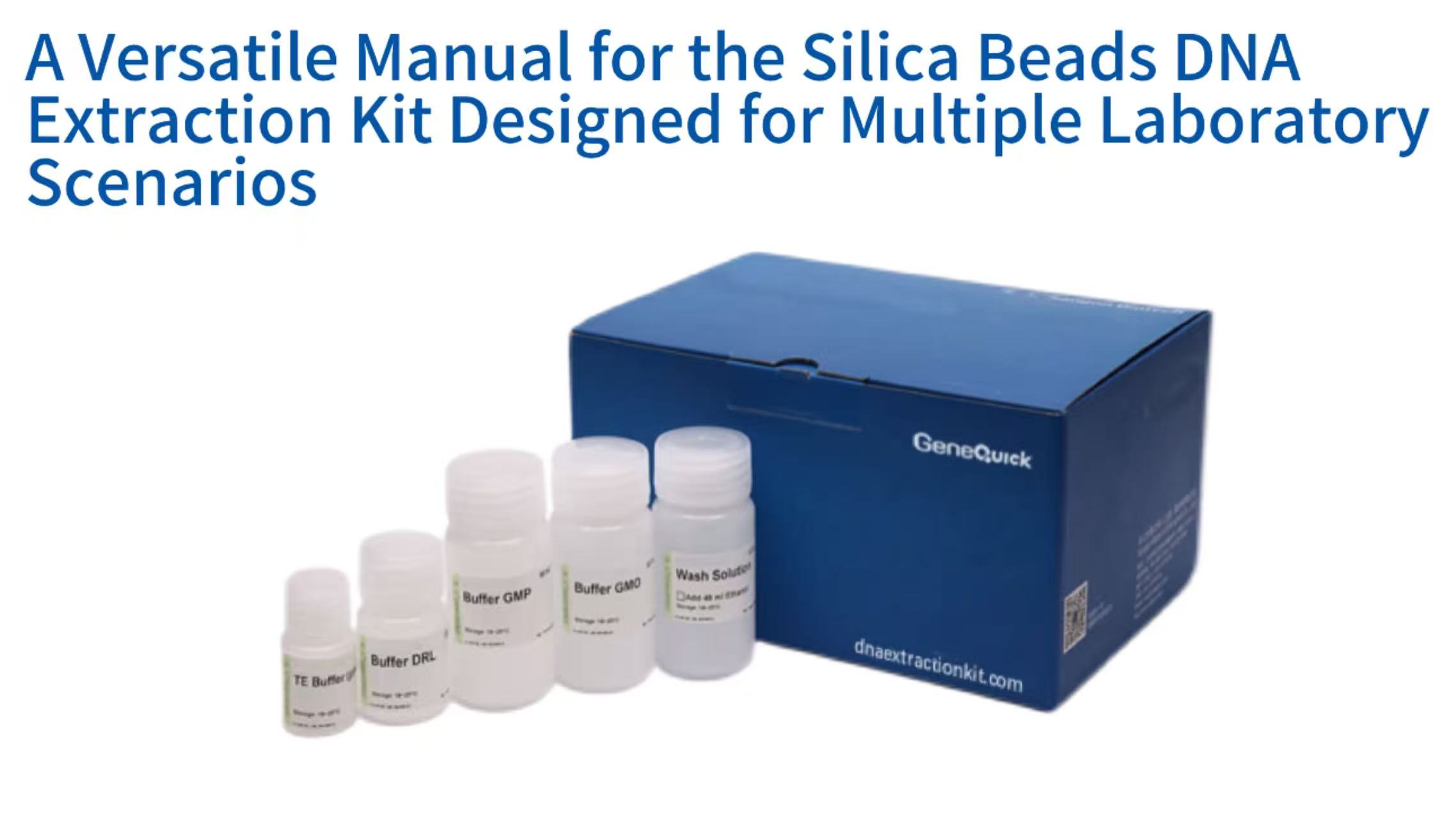
In the diverse landscape of molecular biology research, clinical diagnostics, and forensic analysis, the demand for a reliable and adaptable DNA extraction method remains constant. The silica beads DNA extraction kit has emerged as a cornerstone technology, prized for its ability to deliver high-purity nucleic acids from an extraordinary range of sample types. This manual serves as a comprehensive guide to understanding and utilizing a silica beads kit engineered for versatility, whether the starting material is a routine blood sample, a challenging forensic trace, or complex environmental soil. By detailing the underlying principles, providing scenario-specific protocols, and outlining critical quality control measures, this document aims to empower laboratory professionals to achieve consistent, high-quality results across all their applications.
Foundational Technology: The Universal Chemistry of Silica Beads
Core Workflow of Silica Beads DNA Extraction
Membrane disruption & nuclease inactivation
DNA adsorption to silica beads
Remove proteins/salts/inhibitors
Purified DNA release
The remarkable versatility of the silica beads DNA extraction kit is rooted in a simple yet powerful chemical principle that operates independently of the sample's origin. This section explores the core mechanisms of lysis, binding, washing, and elution, explaining how these steps work in concert to selectively purify DNA from a complex biological mixture. A deep understanding of this foundation allows users to troubleshoot effectively and appreciate how minor protocol adjustments can accommodate vastly different sample types.
The Chemistry of Cellular Lysis and Nuclease Inactivation
The initial and most critical step in any DNA extraction is the complete disruption of cellular and nuclear membranes to liberate the genomic material. In a silica beads kit, this is achieved using a lysis buffer containing high concentrations of chaotropic salts, such as guanidine hydrochloride or guanidine isothiocyanate. These powerful agents disrupt the hydrogen bonding network of water, leading to protein denaturation and membrane dissolution. Simultaneously, these salts play a vital role in inactivating endogenous nucleases, enzymes that would otherwise rapidly fragment the DNA. The inclusion of Proteinase K in the protocol further enhances this process by digesting histones and other DNA-associated proteins, resulting in a cleared lysate where the DNA is freely accessible for the subsequent binding step.
Selective DNA Adsorption on the Silica Surface
Following lysis, the DNA must be separated from the myriad of other cellular components, including proteins, polysaccharides, and lipids. This separation is achieved through the unique adsorptive properties of silica beads. When the lysate is mixed with a binding buffer that elevates the chaotropic salt concentration, the environment becomes conducive to DNA binding. Under these high-salt conditions, the negatively charged phosphate backbone of DNA is dehydrated, allowing it to come into close contact with the similarly hydrophilic silica surface. The chaotropic ions act as a molecular bridge, facilitating the electrostatic and hydrogen bonding interactions that securely anchor the DNA to the beads while most contaminants remain in solution.
Rinsing Away Impurities with Wash Buffers
With the DNA firmly bound to the solid phase of silica beads, the contaminants can be efficiently washed away. This purification step relies on wash buffers that typically contain ethanol or isopropanol along with a lower concentration of chaotropic salts. The alcohol maintains the DNA in its precipitated, bound state on the silica, while solubilizing the residual proteins, salts, and other organic molecules. The sequential application of wash buffers, often two or three times, ensures that inhibitors like heme from blood or humic acids from soil are thoroughly removed. A critical drying step follows the final wash to evaporate any residual ethanol, as alcohol carryover can severely inhibit downstream enzymatic reactions such as PCR.
The Controlled Release of Purified DNA
The final stage of the extraction process reverses the binding chemistry to recover the purified DNA in a stable, ready-to-use solution. This elution step involves applying a low-salt buffer, typically Tris-EDTA or simply nuclease-free water, to the dried silica beads. In this low-ionic-strength environment, the forces that held the DNA to the silica are disrupted, allowing the nucleic acid to rehydrate and diffuse back into the solution. The pH of the elution buffer is typically maintained in the range of 8.0 to 8.5 to optimize release and ensure long-term stability of the DNA. Elution efficiency can be maximized by pre-heating the buffer and allowing adequate incubation time on the beads, which is particularly important for recovering high molecular weight DNA fragments.
Scenario-Based Protocol Adaptations for Diverse Sample Types
Protocol Adaptations for Different Sample Types
| Sample Type | Key Challenges | Critical Adaptations | Ideal Elution Volume |
|---|---|---|---|
| Blood/Saliva | Nuclease activity, low WBC count | Immediate lysis, buffy coat enrichment | 50-100 μL |
| Plant Tissues | Cell walls, polyphenols/polysaccharides | Bead beating, CTAB pre-treatment, PVP addition | 100-200 μL |
| Environmental/Soil | Humic/fulvic acids, low biomass | Increased wash steps, inhibitor removal buffer | 50-100 μL |
| Forensic Trace (Hair/Bone) | Low biomass, degraded DNA | Scaled-down protocol, carrier RNA addition | 30-50 μL |
| Animal Tissues | Fat content, tough tissue structure | Extended Proteinase K incubation, fat removal step | 50-100 μL |
The true power of a versatile silica beads DNA extraction kit lies in its adaptability. While the core chemistry remains constant, minor modifications to the front-end sample preparation or the relative volumes of reagents can dramatically improve performance across different starting materials. This section provides detailed guidance on optimizing the protocol for the most common laboratory scenarios, ensuring that users can confidently extract high-quality DNA from virtually any sample.
Processing Routine Biological Fluids and Blood Products
For standard samples like whole blood, serum, plasma, or saliva, the manufacturer's default protocol typically performs exceptionally well. Blood samples collected in EDTA tubes are ideal, and for most applications, a 200 microliter input volume is sufficient. The key to success with these sample types is thorough mixing immediately after adding the lysis buffer to ensure instant nuclease inactivation. For samples with expected low white blood cell counts, such as from immunocompromised patients, using the buffy coat layer after centrifugation can significantly boost DNA yield. Laboratories working extensively with blood may find a dedicated clinical DNA extraction kit for infectious diseases provides additional validation for diagnostic workflows.
Navigating the Complexities of Plant and Agricultural Samples
Plant tissues present unique challenges due to their rigid cell walls and the presence of secondary metabolites like polysaccharides and polyphenols, which can co-purify and inhibit downstream reactions. For samples such as leaves, seeds, or roots, an initial mechanical disruption step, often using bead beating or grinding in liquid nitrogen, is essential to break the cell wall. Following this, many protocols recommend a modified lysis buffer with increased concentrations of detergents or the inclusion of reagents like polyvinylpyrrolidone to adsorb phenolic compounds. For particularly challenging plant tissues, a CTAB-based pre-treatment before proceeding with the silica beads protocol can dramatically improve purity. When working with plant leaves for genetic analysis, these adaptations are crucial for obtaining DNA suitable for PCR.
Overcoming Inhibitors in Environmental and Soil Samples
Environmental samples, especially soil and sediment, are notoriously difficult due to the presence of humic and fulvic acids, which are potent inhibitors of polymerases. The silica beads method is often the preferred approach because the wash steps can be made more stringent to remove these contaminants. A common adaptation is to increase the number of wash steps or to include a specialized inhibitor removal buffer in the protocol. Additionally, starting with a larger sample volume and scaling the reagents accordingly can help maximize yield from the often low biomass present in environmental samples. For researchers studying microbial communities, an environmental DNA extraction kit for soil is specifically formulated to address these challenges and ensure representative recovery of metagenomic DNA.
Maximizing Recovery from Forensic and Trace Evidence
Forensic laboratories face the dual challenge of precious, often degraded samples and the need for absolute chain-of-custody and contamination control. When working with trace evidence like bloodstains, semen stains, or single hairs, the protocol must be scaled down to minimize losses. Using smaller elution volumes, often 30 to 50 microliters, can concentrate the DNA from these low-biomass samples. Carrier RNA is sometimes added to the lysis buffer to improve binding efficiency by co-precipitating with trace amounts of DNA. Furthermore, all kit components intended for forensic use should adhere to standards like ISO 18385 to minimize the risk of human DNA contamination. The successful extraction of DNA from compromised samples like bone often relies on these specialized adaptations, as seen with a forensic bone DNA extraction kit.
Processing Animal Tissues and Diverse Biological Materials
Animal tissues, ranging from soft organs like liver to tough materials like skin or fur, require efficient digestion to release cellular DNA. The standard protocol often begins with a small piece of tissue, typically up to 25 milligrams, which is finely minced or disrupted before lysis. Increasing the Proteinase K concentration and extending the lysis incubation time, sometimes overnight, ensures complete digestion of the sample. For tissues rich in fats, such as brain or adipose tissue, an additional centrifugation step after lysis to remove the fatty layer can prevent clogging of the silica beads during binding. These flexible protocols are routinely employed in wildlife research and veterinary diagnostics, and a specialized animal tissue DNA extraction kit can streamline these workflows.
Quality Control Metrics for Versatile DNA Outputs
Regardless of the starting material, the ultimate value of the extracted DNA is determined by its quality. A versatile manual must therefore include clear guidance on how to assess the purity, quantity, and integrity of the final product. These quality control metrics are not one-size-fits-all; the acceptable thresholds depend heavily on the intended downstream application, from routine PCR to high-throughput sequencing.
Spectrophotometric Purity Assessment for Inhibitor Detection
The most immediate quality check following elution is spectrophotometric analysis, which provides insights into potential contamination. The A260/280 ratio is a primary indicator of protein or phenol contamination, with a value of approximately 1.8 being widely accepted as pure for DNA. A significantly lower ratio signals the need for re-purification or a more stringent washing protocol in future extractions. The A260/230 ratio is equally important, as it detects the presence of chaotropic salts, carbohydrates, and other organic compounds that absorb at 230 nanometers. Values below the expected range of 2.0 to 2.2 are a clear warning that inhibitors may be present, which could compromise downstream enzymatic steps. These measurements are essential first-pass checks for any DNA sample, regardless of its origin.
Fluorometric Quantification for Accurate Downstream Input
While spectrophotometry estimates total nucleic acid content, it cannot differentiate between DNA, RNA, and free nucleotides. For applications requiring precise DNA input, such as quantitative PCR or next-generation sequencing library preparation, fluorometric quantification is indispensable. Dyes that specifically bind double-stranded DNA, like those used in Qubit assays, provide an accurate measurement of dsDNA concentration. This precision is critical for normalizing samples before pooling or for ensuring that reactions are set up with the correct amount of template. The yield, measured in micrograms, can then be compared against expected values based on sample type and input volume, helping to identify extraction failures early.
Integrity Assessment for Demanding Genomic Applications
The physical size of the DNA fragments, or its integrity, is a quality parameter often overlooked until a downstream application fails. For many PCR-based assays, some level of degradation is tolerable as long as the target region is intact. However, for applications like whole-genome sequencing or long-range PCR, high molecular weight DNA is non-negotiable. Traditional agarose gel electrophoresis can provide a rough visual estimate of integrity, with intact genomic DNA running as a high band above 10 kilobases. More advanced systems like the Agilent TapeStation or the QIAxcel provide a quantitative DNA Integrity Number, offering a precise and objective measure. A high DIN value, typically above 8, is required for the most demanding NGS applications.
Operational Best Practices for Consistent Kit Performance
Operational Best Practices Workflow
To fully leverage the versatility of a silica beads DNA extraction kit, consistent laboratory practices must be followed. Variability in technique is a major source of irreproducible results. This section outlines the essential operational considerations, from proper reagent handling and storage to equipment maintenance, ensuring that the kit performs optimally every time it is used, across all scenarios.
Reagent Storage, Handling, and Preparation
The stability of kit components is paramount to successful extractions. Most buffers, particularly those containing enzymes like Proteinase K, require storage at specific temperatures, often 2 to 8 degrees Celsius. Chaotropic salt buffers may precipitate when cold; they must be inspected before each use and, if necessary, warmed gently to 37 degrees Celsius to redissolve any crystals before use. Wash buffers containing ethanol must be handled with care to prevent evaporation, which would alter their concentration and compromise washing efficiency. It is a best practice to prepare fresh ethanol-based wash buffers and to clearly label all bottles with dates of preparation and expiration.
The Critical Role of Equipment Calibration
Several pieces of equipment are central to the extraction workflow, and their proper calibration directly impacts results. Centrifuges must be calibrated to ensure the correct relative centrifugal force is achieved; too low a force may not pellet beads effectively, while too high a force could shear genomic DNA. Heat blocks and water baths used for lysis and elution should have their temperatures verified with a calibrated thermometer, as deviations of even a few degrees can affect enzyme activity and elution efficiency. Vortex mixers should be used at consistent speeds to ensure thorough mixing without excessive foaming. Regular maintenance and calibration logs are a hallmark of a quality-focused laboratory.
Minimizing Cross-Contamination Risks
With the ability to process diverse sample types comes an increased risk of cross-contamination. Strict adherence to aseptic technique is necessary, particularly when working with high-copy-number samples or those intended for sensitive detection methods. Using aerosol-barrier pipette tips for all liquid transfers prevents sample carryover. Dedicated work areas and equipment for pre- and post-amplification steps should be maintained. When processing samples with widely varying DNA concentrations, it is advisable to handle them in separate batches or to include extraction blanks as negative controls to monitor for any contamination introduced during the process. Forensic laboratories adhere to the most stringent guidelines, often relying on a forensic swab DNA extraction kit validated for its low-contamination profile.
Troubleshooting Versatile Applications: A Guide to Common Challenges
Troubleshooting Common Extraction Issues
| Issue | Common Causes | Corrective Actions |
|---|---|---|
| Low DNA Yield |
• Insufficient lysis/digestion • Improper ethanol volume in binding step • Low biomass samples • Sample degradation |
• Extend Proteinase K incubation • Verify binding buffer/ethanol ratios • Add carrier RNA for trace samples • Process samples immediately |
| Poor Purity (Low A260/280/230) |
• Inadequate washing • Ethanol carryover • Sample-specific inhibitors • Contaminated reagents |
• Increase wash steps • Ensure complete drying post-wash • Use inhibitor removal buffer • Validate reagent integrity |
| DNA Degradation |
• Nuclease activity • Harsh mechanical handling • Improper sample storage • Over-vortexing |
• Inactivate nucleases immediately • Use gentle inversion instead of vortexing • Store samples at -80°C • Use wide-bore pipette tips |
Even with a robust and adaptable kit, challenges can arise, particularly when pushing the boundaries of sample type or input volume. This section provides a practical troubleshooting guide, linking observed problems to their likely causes and offering corrective actions. This empowers users to quickly diagnose and resolve issues, ensuring that their work continues with minimal interruption.
Addressing Low DNA Yield Across Different Scenarios
When the final eluate contains less DNA than anticipated, the cause often lies in the sample itself or the initial steps of the protocol. For tissues, insufficient tissue digestion due to inadequate Proteinase K or too short an incubation is a common culprit. For blood, using samples that have been stored improperly or frozen for extended periods can lead to pre-extraction DNA degradation and low recovery. During the binding step, failing to add the correct volume of ethanol to the lysate can drastically reduce the efficiency of DNA adsorption to the silica beads. For samples with very low biomass, such as trace forensic evidence, using a carrier RNA can enhance binding and improve yields. If all else fails, eluting in a smaller volume can increase concentration, albeit at the expense of total yield.
Correcting Purity Issues and Inhibitor Carryover
Contamination, evidenced by poor A260/280 or A260/230 ratios, often indicates that the wash steps were not sufficiently rigorous. This can happen if the wash buffers were prepared with incorrect ethanol concentrations, or if the beads were not fully resuspended during washing, leaving some surfaces unexposed to the cleaning solutions. Incomplete removal of the final wash buffer before elution is a major cause of ethanol carryover, which manifests as a low A260/230 ratio. Ensuring a complete drying step, where no visible liquid remains and the bead pellet appears dry and slightly cracked, is critical. For samples inherently rich in inhibitors, such as soil or certain plants, a second round of washing or using a kit with a specialized inhibitor removal step, such as an environmental DNA extraction kit for plant material, may be necessary.
Managing DNA Degradation and Shearing
Degraded DNA, appearing as a smear on a gel, is often an irreversible problem, making prevention the only effective strategy. Ensuring that samples are processed quickly or stored under conditions that minimize nuclease activity is the first line of defense. For example, blood samples should be lysed immediately upon thawing, without allowing them to sit at room temperature. During the extraction process, harsh mechanical forces should be avoided. Vigorous vortexing of the lysate after DNA has been released can shear long fragments, as can passing the solution through a narrow pipette tip too forcefully. For applications requiring ultra-high molecular weight DNA, such as long-read sequencing, protocols should be modified to use wide-bore tips and to mix by gentle inversion rather than vortexing.
Selecting the Right Kit and Planning for Downstream Applications
Kit Selection Decision Tree
The versatility of the silica beads platform means that kits are available in various formats and configurations, each optimized for particular workflows. Making an informed choice based on sample throughput, automation potential, and downstream application requirements is essential for laboratory efficiency and data quality. This final section provides a strategic framework for kit selection and integration into broader experimental pipelines.
Question 1: Defining Your Sample Throughput and Workflow Scale
A laboratory's sample volume is the primary driver of kit format selection. For a research lab processing a few dozen samples per week, manual kits in a spin-column or single-tube bead format are cost-effective and perfectly adequate. These protocols are easy to follow and require no specialized equipment beyond a microcentrifuge and a heat block. However, a clinical diagnostic lab or a large biobank processing hundreds of samples daily must consider automation. Magnetic bead-based silica kits are ideal for such high-throughput environments, as they can be easily adapted to liquid handling workstations. These automation-ready kits, often supplied in prefilled 96-well plates, minimize hands-on time and the risk of pipetting errors, significantly increasing throughput and reproducibility.
Question 2: Matching DNA Quality to Downstream Application Needs
The intended use of the DNA is the ultimate arbiter of kit choice. For routine PCR and genotyping, a standard kit that reliably yields inhibitor-free DNA is sufficient. The key requirement here is the absence of PCR inhibitors, which can be ensured by consistent A260/230 ratios above 1.8. For more demanding applications like NGS, the kit must not only provide pure DNA but also preserve fragment integrity. This often favors kits with gentler lysis conditions and minimal vortexing steps. For oncology research applications, where accurate mutation detection from fragmented circulating tumor DNA is critical, kits optimized for recovering short fragments from plasma are essential. The kit's specifications should always be reviewed in the context of the most demanding downstream application it will support.
Question 3: Evaluating Regulatory Compliance and Quality Assurance
For laboratories operating under strict regulatory frameworks, such as those accredited to ISO 15189 for clinical diagnostics or those following forensic standards, the choice of kit is heavily influenced by compliance. IVD-certified kits come with validated performance claims and regulatory approvals necessary for generating clinical reports. In forensics, adherence to ISO 18385, which ensures that the manufacturing process minimizes human DNA contamination, is a non-negotiable requirement for any kit used in casework. These certified kits provide the chain of traceability and quality assurance that is foundational to the credibility of the laboratory's results.
By systematically considering sample type, throughput, downstream application, and regulatory needs, any laboratory can harness the full power of the versatile silica beads DNA extraction kit. Whether processing routine blood samples for a biobank, challenging soil for an environmental study, or precious trace evidence for a forensic investigation, this adaptable technology provides a reliable pathway to high-quality DNA. The investment in understanding the kit's principles and optimizing its protocols pays dividends in the form of reproducible, publishable, and clinically actionable results.