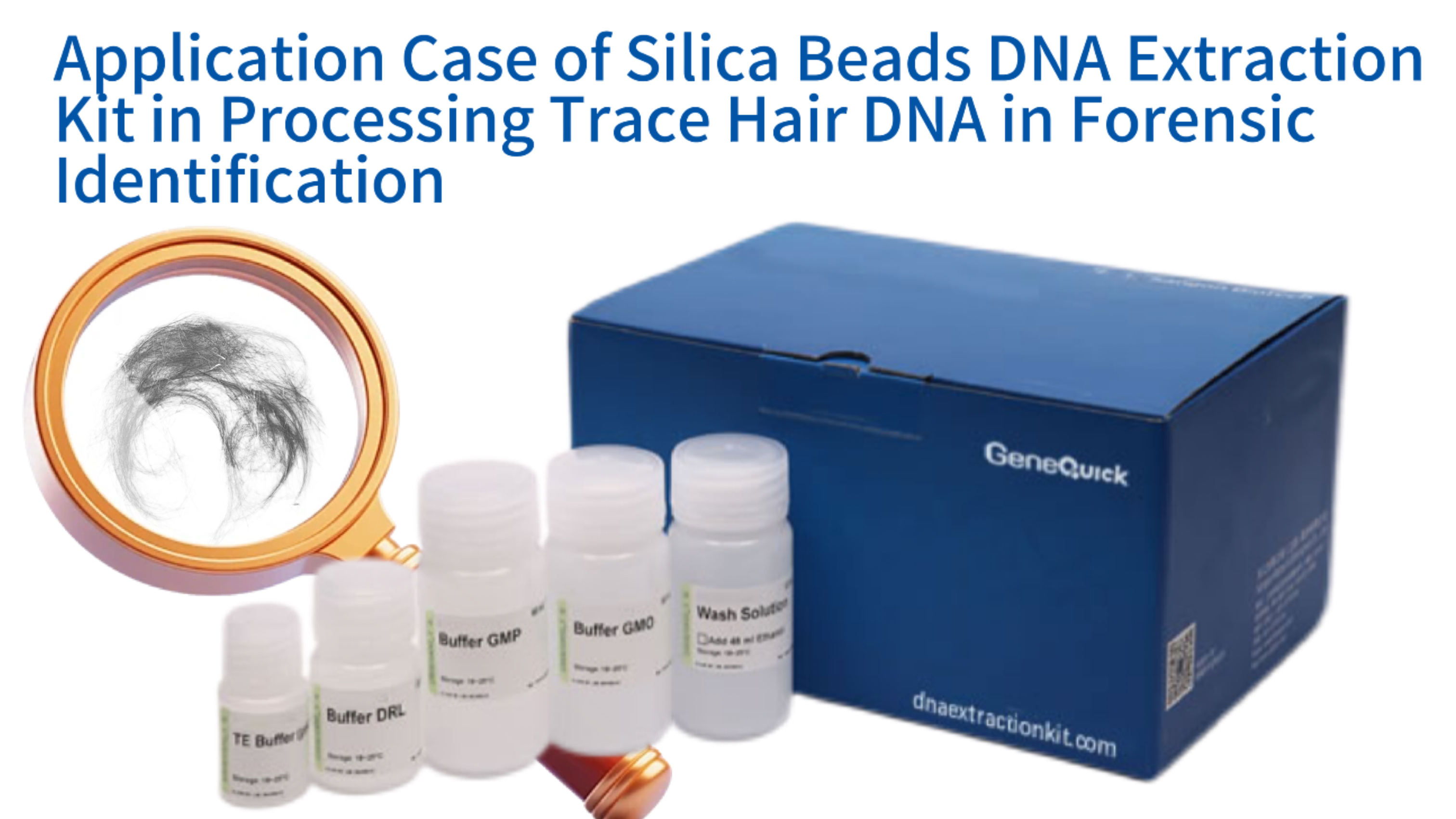
In forensic science, hair is one of the most frequently encountered types of biological evidence at crime scenes. Unlike blood or saliva, hair possesses a unique keratin structure that encases mitochondrial DNA, while follicular cells provide nuclear DNA. However, hairs recovered from crime scenes are often limited in quantity, severely degraded, or contaminated, presenting substantial challenges for forensic identification. Traditional organic extraction methods, such as phenol-chloroform, are not only labor-intensive but also carry high risks of contamination and DNA loss. Silica bead DNA extraction kits have emerged as the preferred technology for processing trace hair samples due to their high binding efficiency, operational simplicity, and superior purification capabilities. Through multiple real-world case studies, this article systematically demonstrates the application of silica bead technology in extracting DNA from hair shafts, follicles, and aged or environmentally exposed hairs. It analyzes key optimization steps and discusses how forensic laboratories can implement standardized protocols and quality control measures to provide reliable technical support for criminal investigations.
The Core Challenges of Forensic Hair DNA Analysis and the Technical Advantages of Silica Bead Methods
Forensic Hair DNA Extraction Method Comparison
DNA Distribution in Hair Structure
Hair Shaft
• Cuticle (Outer Layer)
• Cortex (Main Layer)
→ Mitochondrial DNA (mtDNA)
• Medulla (Inner Core)
Copies: 100s-1000s per cell
Discriminatory Power: Low (Maternal Inheritance)
Hair Follicle
• Nucleated Cells
→ Nuclear DNA (nDNA)
• Root Sheath
Copies: Low (per cell)
Discriminatory Power: High (STR Analysis)
Silica Bead DNA Extraction Key Parameters
| Step | Key Reagent | Optimal Condition | Purpose |
|---|---|---|---|
| Binding | Guanidine HCl/Thiocyanate | 4M, pH 5.0-6.0 | DNA adsorption to silica |
| Washing | 70% Ethanol | 2 wash cycles | Remove contaminants |
| Elution | Low-salt buffer/Water | 30-50μL, 70°C pre-warmed | DNA release from silica |
Forensic hair analysis is complicated by the biological structure of hair itself. The hair shaft is composed of tough keratin proteins that encapsulate mitochondrial DNA in relatively low copy numbers, while the hair follicle, rich in nuclear DNA, is often absent or easily detached. Crime scene hairs are frequently shed naturally, broken, or exposed to harsh environmental conditions, leading to further DNA degradation and fragmentation. These factors demand extraction methods that can efficiently recover minute quantities of nucleic acids while removing potent PCR inhibitors like melanin and environmental contaminants. Traditional organic extraction methods, though historically used, fall short in meeting these stringent forensic requirements.
Understanding DNA Distribution in Hair: Shaft vs. Follicle
The hair shaft consists of three main layers: the cuticle, cortex, and medulla. The cortex contains melanin granules and tightly packed keratin filaments, and it is here that mitochondrial DNA is embedded. Mitochondrial DNA is present in hundreds to thousands of copies per cell, making it more accessible in shaft samples, but its maternal inheritance pattern limits its discriminatory power. In contrast, the hair follicle, if present, contains nucleated cells that provide nuclear DNA with high polymorphism, enabling individual identification through short tandem repeat analysis. However, follicles are fragile and often lost during evidence collection or handling. Understanding this distribution is critical for selecting the appropriate extraction strategy and downstream genetic analysis. Forensic scientists must assess each hair sample microscopically to determine whether to target nuclear or mitochondrial DNA based on the presence or absence of follicular tissue.
Limitations of Traditional Organic Extraction in Forensic Contexts
Phenol-chloroform extraction, once a staple in molecular biology, involves multiple phase-separation steps that require careful pipetting and transfers. Each manipulation increases the risk of cross-contamination and sample loss, particularly problematic when dealing with single hairs or telogen hairs that naturally shed with little to no DNA. Moreover, residual organic solvents can inhibit downstream PCR amplification, leading to failed or partial profiles. The method is also time-consuming and difficult to automate, making it impractical for modern forensic laboratories that handle high caseloads and require reproducible, auditable processes. These limitations have driven the adoption of solid-phase extraction technologies, with silica-based methods leading the way.
The Principle of Silica Bead-Based DNA Extraction
Silica bead extraction exploits the property of silica to bind DNA in the presence of high concentrations of chaotropic salts, such as guanidine hydrochloride or guanidine thiocyanate. Under these conditions, the phosphate backbone of DNA adsorbs to the silica surface through hydrogen bonding and dehydration effects. After washing away proteins, polysaccharides, and other contaminants with alcohol-based solutions, the purified DNA is eluted in a low-salt buffer or water. This mechanism allows for the efficient capture of even highly fragmented DNA molecules, which is essential for degraded forensic samples. The entire process can be performed in a single tube, minimizing transfer steps and reducing contamination risks. Silica bead kits are available in both manual and automated formats, providing flexibility for laboratories of all sizes.
Sensitivity and Efficiency Metrics for Trace Samples
Quantitative studies have demonstrated that optimized silica bead protocols can recover DNA from as little as one centimeter of hair shaft, yielding sufficient mitochondrial DNA for sequencing. For hair follicles, the recovery rate is even higher, with successful STR typing achieved from samples containing fewer than ten cells. According to validation data published in forensic journals, silica bead extraction consistently outperforms organic methods in terms of DNA yield and purity, with detection limits as low as 0.1 nanograms of input DNA. These metrics are crucial for meeting the rigorous standards of forensic identification, where every piece of genetic information can be pivotal. The ability to process samples with high efficiency also supports the growing trend toward probabilistic genotyping and mixture interpretation.
Standardized Workflow Design for Processing Hair Evidence with Silica Bead Kits
Manual vs Automated Silica Bead Processing
| Feature | Manual Processing | Automated Processing |
|---|---|---|
| Best For | Single/trace samples, real-time parameter adjustment | Batch reference samples, high throughput |
| Throughput | Low (1-12 samples/hour) | High (96 samples/batch) |
| Human Error Risk | High | Low |
| Contamination Risk | Moderate (more transfers) | Low (closed system) |
To ensure reproducibility and admissibility in court, forensic laboratories must adopt standardized protocols for silica bead DNA extraction from hair. While commercial kits provide general guidelines, specific adaptations are necessary to address the unique properties of hair samples. The workflow typically encompasses sample collection, pre-treatment, lysis, binding, washing, and elution. Each step must be carefully optimized and documented to maintain chain of custody and enable peer review. The following sections outline a robust framework that has been validated through multiple case applications and inter-laboratory studies.
Sample Collection and Pre-Treatment Protocols
Hair evidence is collected from various surfaces such as clothing, combs, bedding, or directly from the body. To avoid contamination, collectors use disposable forceps and gloves, and each hair is stored in a clean paper envelope or tube. Upon arrival at the laboratory, the hair is examined under a microscope to identify the presence of a follicle, root sheath, or any adherent material. Pre-treatment involves rinsing the hair briefly with sterile water and wiping with 70% ethanol to remove superficial dirt and exogenous DNA. For hair shafts, the sample is then cut into small fragments, typically 1 to 2 millimeters in length, to increase surface area for lysis. This meticulous preparation is essential for maximizing DNA recovery and minimizing co-extracted inhibitors.
Optimized Lysis Conditions for Hair Keratin
The keratin matrix of hair is resistant to enzymatic digestion, requiring robust lysis conditions. Standard protocols incorporate proteinase K and dithiothreitol in the lysis buffer. Dithiothreitol reduces disulfide bonds in keratin, unfolding the protein structure and allowing proteinase K to access cellular components. Incubation is carried out at 56 degrees Celsius with continuous agitation for two to four hours, but for particularly thick or pigmented hairs, extending the incubation overnight can significantly improve yields. Some laboratories also employ a brief thermal shock or sonication step to further disrupt the cuticle. The choice of lysis buffer composition, including the concentration of detergents and chaotropic salts, should align with the downstream binding conditions to ensure seamless integration with the silica bead matrix.
Critical Parameters for DNA Binding and Washing
Binding efficiency is influenced by the pH and ionic strength of the binding buffer. For silica beads, a pH range of 5.0 to 6.0 is optimal, as it promotes DNA adsorption while minimizing co-binding of proteins. The concentration of guanidine salts is typically maintained at around 4 molar. After lysis, the lysate is mixed with binding buffer and the silica bead suspension. The bead quantity must be calibrated to the expected DNA amount; for trace samples, using 20 microliters of bead slurry per reaction is common. Washing is performed with 70 percent ethanol to remove residual contaminants, and two wash cycles are generally sufficient. Care must be taken to avoid excessive vortexing during washing, which could shear high-molecular-weight DNA. Finally, elution is carried out in a small volume, often 30 to 50 microliters, to concentrate the DNA. Pre-warming the elution buffer to 70 degrees Celsius can enhance release from the silica surface.
Manual vs. Automated Processing Integration
Many forensic laboratories now adopt automated workstations for DNA extraction to increase throughput and reduce human error. Silica bead kits are available in formats compatible with magnetic bead handlers, where paramagnetic particles replace traditional silica beads, allowing for automated separation using magnets. For single or difficult samples, manual processing remains valuable because it allows the analyst to adjust parameters in real time. A hybrid approach is often used: batch processing of reference samples on automated systems, while trace evidence items are handled manually with enhanced precautions. Regardless of the method, all steps must be documented in the laboratory information management system to ensure traceability. Validation studies should demonstrate that automated protocols yield results equivalent to manual ones, particularly for low-template DNA samples.
Case Study 1: Successful Mitochondrial DNA Profiling from Hair Shafts Lacking Follicles
Case Study 1: mtDNA Profiling from Follicle-Lacking Hair Shafts
Key Protocol Modifications
- Hair cut into 5mm segments (increased surface area)
- Lysis extended to 6hrs at 56°C (additional Proteinase K + DTT)
- Carrier RNA added to enhance binding efficiency
- Elution in 10μL pre-warmed buffer (concentrated DNA)
Results
Initial DNA Estimate: < 0.1ng (below STR detection limit)
mtDNA Yield After Extraction: ~0.08ng (sufficient for sequencing)
Sequencing Quality: Clean electropherograms (no mixed signals)
Outcome: 100% match to suspect reference sample (admitted in court)
In a residential burglary case, investigators recovered three black hairs approximately five centimeters in length from a broken window frame. Microscopic examination revealed no visible follicular tissue, indicating that the hairs were either shed or broken. Initial attempts to amplify nuclear STR markers failed, prompting a shift toward mitochondrial DNA analysis. This case illustrates the power of silica bead technology to retrieve mitochondrial DNA from hair shafts and generate usable sequence data for comparison with suspect references.
Sample Characteristics and Initial Assessment
The hairs were darkly pigmented and coated with a fine layer of dust, likely from the window sill. Given the absence of follicles, the DNA yield was expected to be low and primarily mitochondrial. The forensic scientist estimated that the total DNA content might be below 0.1 nanograms, which is insufficient for conventional STR kits. However, mitochondrial DNA is present in hundreds to thousands of copies per cell, offering a viable target. The challenge was to extract this DNA without introducing contamination from the environment or from the analyst’s own DNA, which could lead to mixed or erroneous sequences.
Key Modifications in the Extraction Protocol
To maximize recovery, the hairs were cut into five-millimeter segments to increase surface exposure. Lysis was extended to six hours at 56 degrees Celsius with additional proteinase K and dithiothreitol supplementation midway through incubation. During binding, a carrier RNA was added to the lysate-bead mixture to co-precipitate with the DNA and enhance binding efficiency. Carrier RNA provides a scaffold that improves the pelleting of silica beads during centrifugation and reduces DNA loss on tube surfaces. Elution was performed in only ten microliters of pre-warmed buffer to achieve a concentrated DNA solution. Negative controls, including a blank extraction and a reagent control, were processed simultaneously to monitor contamination.
Amplification and Sequencing Results
The extracted DNA was amplified using primers targeting the hypervariable regions I and II of the mitochondrial control region. Amplification products were visualized on an agarose gel, showing clear bands of expected size. Sanger sequencing yielded clean electropherograms without background noise or mixed signals. The resulting haplotype was compared to a database of mitochondrial sequences and matched the suspect’s reference sample with 100 percent concordance. This evidence was admitted in court and contributed to the conviction. The success of this case underscores the value of silica bead extraction for hair shafts that would otherwise be considered uninformative.
Implications for Forensic Practice
This case demonstrates that even when nuclear DNA is absent, mitochondrial DNA from hair shafts can provide probative evidence. Forensic laboratories should incorporate mitochondrial DNA analysis into their standard workflows for hair evidence lacking follicles. The use of carrier RNA and extended lysis times should be considered for all low-biomass samples. Furthermore, stringent contamination controls, including the use of dedicated clean rooms and negative controls, are essential to ensure the validity of mitochondrial DNA results. The ability to recover mitochondrial DNA from shed hairs expands the evidentiary value of such samples and can be critical in cold cases or when other evidence is unavailable.
Case Study 2: Achieving Complete STR Profiles from Single Hair Follicles with Minimal Cellular Material
Case Study 2: Complete STR Profiles from Single Hair Follicles
Micro-Scale Extraction Workflow
0.2mL PCR tube (single vessel processing)
100μL reduced lysis buffer volume
Magnetic stand washing (no centrifugation/transfers)
20μL elution volume (concentrated DNA)
Quantitative & STR Results
A sexual assault investigation yielded a single pubic hair with an intact follicle attached to the victim’s clothing. The follicle was visible under low magnification and appeared to contain a small clump of cells. Given the sensitivity of the case and the limited material, the forensic team recognized that any loss of DNA during extraction would compromise the chance of obtaining a full STR profile. This case highlights the micro-scale adaptations necessary to preserve and recover nuclear DNA from a single hair follicle using silica bead technology.
The Value and Fragility of Single Follicle Samples
A single hair follicle typically contains only a few dozen nucleated cells, which translates to a DNA quantity on the order of 0.1 to 1 nanogram. Such minute amounts are extremely susceptible to loss through adsorption to tube walls, pipette tips, or during multiple transfer steps. Moreover, the follicle cells are delicate and can be easily dislodged from the hair during handling. Therefore, any protocol must aim to minimize manipulations and keep the sample contained within a single vessel from lysis through elution. The analyst must also work in a clean environment to prevent contamination from extraneous DNA sources, which could overwhelm the sample.
Micro-Scale Extraction Adaptations
The hair was carefully transferred using sterile forceps under a microscope into a 0.2-milliliter PCR tube containing lysis buffer. The volume of lysis buffer was reduced to 100 microliters to ensure that the released DNA would be sufficiently concentrated. After incubation, the entire lysate was combined with binding buffer and a pre-mixed silica bead suspension directly in the same tube. Washing steps were performed using a magnetic stand to retain the beads while aspirating supernatants, eliminating the need for centrifugation and tube transfers. Elution was carried out in 20 microliters of buffer, and the eluate was used directly for DNA quantification and amplification. This micro-scale approach retained all material in a single tube, maximizing recovery.
Quantitative Analysis and STR Amplification Success
Real-time quantitative PCR revealed a total DNA yield of approximately 0.5 nanograms, which is within the optimal range for modern high-sensitivity STR kits. The sample was amplified using a 27-cycle protocol with increased polymerase concentration to compensate for low template. Capillary electrophoresis produced a full 16-locus STR profile with balanced heterozygous peaks and no evidence of allele dropout. The profile matched the suspect’s reference sample with a random match probability of less than one in a trillion. The successful outcome was attributed to the minimal handling and efficient capture provided by the silica bead method.
Lessons for Handling Precious Evidence
This case reinforces the principle that for trace samples, the extraction workflow should be as streamlined as possible. Forensic laboratories should validate micro-scale protocols for single follicles and consider using low-binding plastics to further reduce loss. The integration of magnetic beads facilitates washing without tube changes, and elution in small volumes ensures that DNA is concentrated enough for downstream applications. These practices are equally applicable to other trace evidence types, such as touch DNA or single cells. By adopting such refined methods, forensic scientists can maximize the genetic information recovered from irreplaceable evidentiary items.
Case Study 3: Recovering High-Quality DNA from Degraded and Environmental Hair Samples
Case Study 3: DNA Recovery from Degraded Environmental Hair Samples
Extracted DNA Fragment Size Distribution
Tailored Extraction Strategies
- EDTA added to lysis buffer (chelate metal ions)
- Binding buffer pH adjusted to 5.5 (short fragment adsorption)
- Minimized vortexing (prevent further shearing)
- 30μL elution volume (extended incubation)
Analysis Results
- MiniSTR: Partial but interpretable profiles
- mtDNA: Complete HV1/HV2 sequences
- Kinship Matching: Likelihood ratio >10,000
- Outcome: Linked hairs to missing person (sibling reference)
In a homicide case involving a body discovered in a remote wooded area, multiple hairs were found scattered around the remains. The hairs had been exposed to rain, sunlight, and microbial activity for several months, leading to visible degradation. The investigation required DNA profiling to link the hairs to missing persons or suspects. This case demonstrates how silica bead extraction can be optimized to recover fragmented DNA from environmentally compromised hair samples.
Assessing Degradation in Hairs Exposed to Elements
Microscopic examination of the hairs revealed a frayed cuticle, loss of medullary definition, and areas of apparent fungal colonization. These features are indicative of significant DNA degradation, with the surviving DNA likely fragmented into small pieces. Standard extraction protocols designed for intact DNA may not efficiently capture fragments below 200 base pairs. Therefore, a modified approach was necessary to maximize recovery of short templates suitable for miniSTR and mitochondrial DNA analysis.
Tailored Extraction Strategies for Fragmented DNA
The lysis buffer was supplemented with ethylenediaminetetraacetic acid to chelate metal ions that could catalyze further DNA breakage. The binding buffer pH was adjusted to 5.5, which has been shown to improve the adsorption of short DNA fragments to silica. During washing, vortexing was minimized to avoid shearing already fragile molecules. Additionally, the elution volume was reduced to 30 microliters, and the eluate was incubated with the beads for an extended period to ensure complete release. These modifications were based on published recommendations for ancient DNA and forensic degraded samples.
Results from MiniSTR and Mitochondrial DNA Analysis
Quantitative PCR using a degradation assessment kit indicated that the extracted DNA consisted primarily of fragments between 100 and 400 base pairs. Amplification targeting miniSTR loci, with amplicon sizes under 200 base pairs, yielded partial but interpretable profiles. Mitochondrial DNA amplification of the hypervariable regions was successful, producing sequences that could be compared to maternal relatives. The combined genetic data allowed the hairs to be associated with a missing person whose DNA was not directly available but whose sibling provided a reference. This link was crucial in advancing the investigation.
Validation and Kinship Matching
The results were validated through replicate extractions and amplifications, confirming the reproducibility of the profiles. Statistical analysis using kinship software supported the relationship with a likelihood ratio exceeding 10,000. This case illustrates that even severely degraded hair samples can yield probative DNA evidence when extraction protocols are appropriately tailored. Forensic laboratories should maintain validated protocols for degraded samples and incorporate miniSTR and mitochondrial DNA assays into their routine capabilities. The ability to recover information from such samples greatly enhances the utility of hair evidence in cold cases and outdoor crime scenes.
Critical Optimization Parameters and Troubleshooting in Silica Bead Hair Extraction
Critical Optimization & Troubleshooting for Silica Bead Hair Extraction
Lysis Conditions for Different Hair Types
| Hair Type | DTT Concentration (mM) | Incubation Time (hrs) | Additional Steps |
|---|---|---|---|
| Fine/Light-colored | 40 | 2-3 | None |
| Coarse/Dark-colored | 100 | 4-6 | Brief sonication |
| Degraded/Environmental | 80 | Overnight (12-16) | EDTA supplementation |
Common Issues & Troubleshooting
Low DNA Yield
• Extend lysis time/temperature
• Increase DTT/Proteinase K
• Use carrier RNA
• Reduce elution
volume
PCR Inhibition
• Additional ethanol wash
• BSA in PCR mix
• Dilute DNA extract
• Inhibitor removal columns
Contamination
• Strict clean room protocols
• Include negative controls
• Use low-binding plastics
• Single-tube
processing
Drawing from multiple case applications, several key parameters have emerged as critical for successful silica bead extraction of hair DNA. These include lysis efficiency, binding conditions, washing stringency, and contamination control. Understanding these factors enables forensic analysts to troubleshoot low-yield or inhibited samples and to continuously improve laboratory protocols. The following discussion synthesizes practical experience and published validation studies.
Enhancing Lysis Efficiency for Diverse Hair Types
Hair from different individuals and body areas varies in thickness, pigmentation, and keratin density. Coarse, dark hairs require more aggressive lysis than fine, light-colored hairs. Increasing the concentration of dithiothreitol from 40 millimolar to 100 millimolar can improve disulfide bond reduction. Some protocols incorporate a brief sonication step after protease digestion to physically disrupt the hair shaft. Additionally, the use of a thermomixer with continuous shaking ensures even distribution of reagents. If lysis appears incomplete, extending the incubation time or adding fresh proteinase K can enhance yield. It is advisable to perform a pilot study with control hairs of similar characteristics to establish optimal lysis conditions for each sample type.
Fine-Tuning Binding and Elution for Maximum Recovery
The binding capacity of silica beads is finite, and for trace samples, the goal is to capture every available DNA molecule. Using an excess of beads can lead to nonspecific binding of inhibitors, while too few beads may leave DNA unbound. A bead volume of 20 microliters per sample is a reasonable starting point, but this may be adjusted based on the estimated DNA content. The pH of the binding buffer should be verified regularly, as deviations can reduce binding efficiency. During elution, incubating the beads in pre-warmed buffer for five to ten minutes at 65 degrees Celsius increases yield. For maximum recovery, a second elution can be performed and combined with the first, though this dilutes the DNA. The choice between concentration and yield must be guided by the downstream application.
Removal of PCR Inhibitors Common in Hair Samples
Hair samples often contain melanin, which is a potent inhibitor of PCR. Melanin can co-extract with DNA and bind to the polymerase, preventing amplification. Silica bead washing steps remove most melanin, but heavily pigmented hairs may require additional purification. Some laboratories include a bleach wash or use commercial inhibitor removal columns after elution. Adding bovine serum albumin to the PCR mix can also alleviate inhibition by sequestering inhibitory compounds. If inhibition persists, diluting the DNA extract may reduce inhibitor concentration enough to allow amplification, though this also reduces template quantity. Real-time PCR inhibition assays can help identify problematic samples and guide appropriate remediation.
Contamination Control Measures in the Laboratory
Forensic DNA analysis is particularly susceptible to contamination due to the high sensitivity of modern assays. Hair samples can carry environmental DNA from dust, skin cells, or other sources. To mitigate this, all pre-PCR steps should be conducted in a clean room with positive air pressure and UV irradiation. Analysts must wear full protective clothing, including masks and double gloves, and use dedicated equipment. Extraction blanks and negative controls must be included in every batch to monitor for contamination. If contamination is detected, all samples processed in that batch should be re-evaluated. Laboratories should also participate in proficiency testing and external quality assessment schemes to ensure their contamination controls are effective.
Quality Assurance and Standardization for Forensic Silica Bead Protocols
Quality Assurance & Standardization for Forensic Silica Bead Protocols
Essential Quality Controls
| Control Type | Purpose | Frequency |
|---|---|---|
| Positive Control | Verify reagent/process functionality | Every batch |
| Negative Control | Detect reagent/contamination | Every batch (≥1 per 24 samples) |
| Substrate Control | Identify background DNA on evidence carrier | Per evidence item |
| Inhibition Control | Check for PCR inhibitors in extract | Per case sample |
The admissibility of DNA evidence in court hinges on the reliability and reproducibility of the extraction method. Forensic laboratories must operate under strict quality assurance frameworks that encompass every step of the analytical process. For silica bead extraction, this includes the use of validated protocols, internal and external controls, and comprehensive documentation. International standards such as ISO 17025 provide a blueprint for laboratory accreditation, and specific guidelines for forensic DNA analysis, such as ISO 18385, address the unique requirements of minimizing contamination in forensic products.
Implementing Internal and External Controls
Each batch of extractions should include a positive control, typically a well-characterized cell line or DNA sample, to verify that the reagents and procedures are functioning correctly. A negative control, consisting of all reagents without any sample, is essential to detect reagent contamination. Additionally, a substrate control, such as a clean piece of the material on which the hair was found, can help identify background DNA. For casework samples, it is also advisable to include an inhibition control by spiking a known quantity of control DNA into an aliquot of the extract to check for PCR inhibition. These controls must be processed through every step of the extraction and amplification to provide meaningful quality assessment.
Quantitative Metrics for Extraction Success
DNA yield and purity are commonly assessed using spectrophotometry or fluorometry. For forensic samples, quantitative real-time PCR provides more accurate measurement of amplifiable DNA and can also assess the degree of degradation. The ratio of amplification at different fragment lengths indicates the level of fragmentation. STR profile quality is evaluated based on the number of alleles detected, peak height balance, and the absence of stutter or dropout. Laboratories should establish acceptance criteria for these metrics and document any deviations. Continuous monitoring of extraction efficiency across cases can identify trends that may indicate reagent lot variability or equipment malfunction.
Laboratory Accreditation and Personnel Training
Accreditation to ISO 17025 demonstrates that a forensic laboratory meets international standards for competence and impartiality. For DNA extraction, this involves regular audits, proficiency testing, and adherence to documented procedures. Personnel must undergo initial and ongoing training that covers the theoretical basis of silica bead extraction, hands-on practice with trace samples, and troubleshooting techniques. Training records should be maintained, and competency must be re-assessed periodically. Laboratories should also encourage participation in external workshops and collaboration with research institutions to stay abreast of technological advances.
Development of Standard Operating Procedures
Standard operating procedures should be written for each type of hair sample encountered: pulled hairs with follicles, shed hairs, decomposed hairs, and hairs from different body locations. Each SOP must specify the exact reagents, equipment, and step-by-step instructions, including critical parameters such as incubation times, temperatures, and volumes. The SOP should also define the actions to be taken if a sample fails to meet quality criteria. These documents must be reviewed and updated regularly based on validation studies and user feedback. Adherence to SOPs ensures that all analysts perform the extraction consistently, which is fundamental to the reliability of forensic evidence.
Future Directions and Integration with Emerging Forensic Technologies
The field of forensic DNA analysis continues to evolve, driven by the need for faster, more sensitive, and more informative methods. Silica bead extraction technology is not static; it is being refined and integrated with novel platforms to meet these demands. The convergence of automation, miniaturization, and single-cell analysis promises to expand the capabilities of forensic laboratories. This section explores emerging trends and their implications for hair evidence processing.
Automation and High-Throughput Workstations
Automated liquid handling systems equipped with magnetic bead modules are increasingly common in forensic laboratories. These systems can process 96 samples simultaneously, reducing hands-on time and improving reproducibility. For silica bead extraction, automation ensures consistent mixing, incubation, and magnetic separation, which is particularly beneficial for batch processing of reference samples. However, trace evidence such as single hairs still requires manual handling to ensure that the sample is correctly placed in the well. Future systems may incorporate image recognition to verify sample placement and track individual hairs through the process. The integration of automated extraction with downstream amplification setup further streamlines workflows and minimizes contamination risk.
Microfluidic Devices for On-Site DNA Analysis
Microfluidic technology enables the miniaturization of DNA extraction onto a chip, combining lysis, binding, washing, and amplification in a closed system. Researchers have developed prototypes that use silica beads or silica membranes within microchannels to process nanoliter volumes. Such devices could potentially be deployed at crime scenes for rapid DNA screening, allowing investigators to prioritize leads in real time. For hair evidence, a portable microfluidic system would need to accommodate the solid nature of hair and efficiently lyse keratinized cells. Although still in development, these devices hold promise for reducing backlogs and accelerating investigations. Commercial kits based on microfluidic principles are expected to enter the forensic market within the next decade.
Single-Cell Sequencing Demands and Silica Bead Evolution
As forensic science moves toward single-cell analysis, the demands on extraction technology intensify. A single hair follicle cell contains only six picograms of nuclear DNA, and recovering this DNA without loss is a formidable challenge. Silica beads with engineered surfaces and nanoscale features are being developed to enhance binding capacity and specificity for ultra-low-input samples. Some research groups are exploring the use of silica-coated magnetic nanoparticles that can be manipulated with high precision. These advances could enable the recovery of DNA from individual cells plucked from hair shafts or from mixed stains. Single-cell sequencing also requires that the extracted DNA be of high molecular weight and free of contamination, placing additional requirements on the extraction chemistry.
Data Integration into Forensic DNA Databases
The ultimate goal of forensic DNA analysis is to generate profiles that can be uploaded to national and international databases, such as the Combined DNA Index System in the United States. High-quality extraction methods ensure that profiles are complete and accurate, maximizing the chances of a match. As databases grow, the statistical power of DNA evidence increases, and cold hits become more common. Silica bead extraction contributes to this ecosystem by providing reliable DNA from challenging samples that might otherwise remain untyped. Looking forward, the integration of mitochondrial DNA and single-nucleotide polymorphism data into databases will require extraction methods that can deliver these additional markers. Silica bead technology is well-positioned to adapt to these expanding requirements.