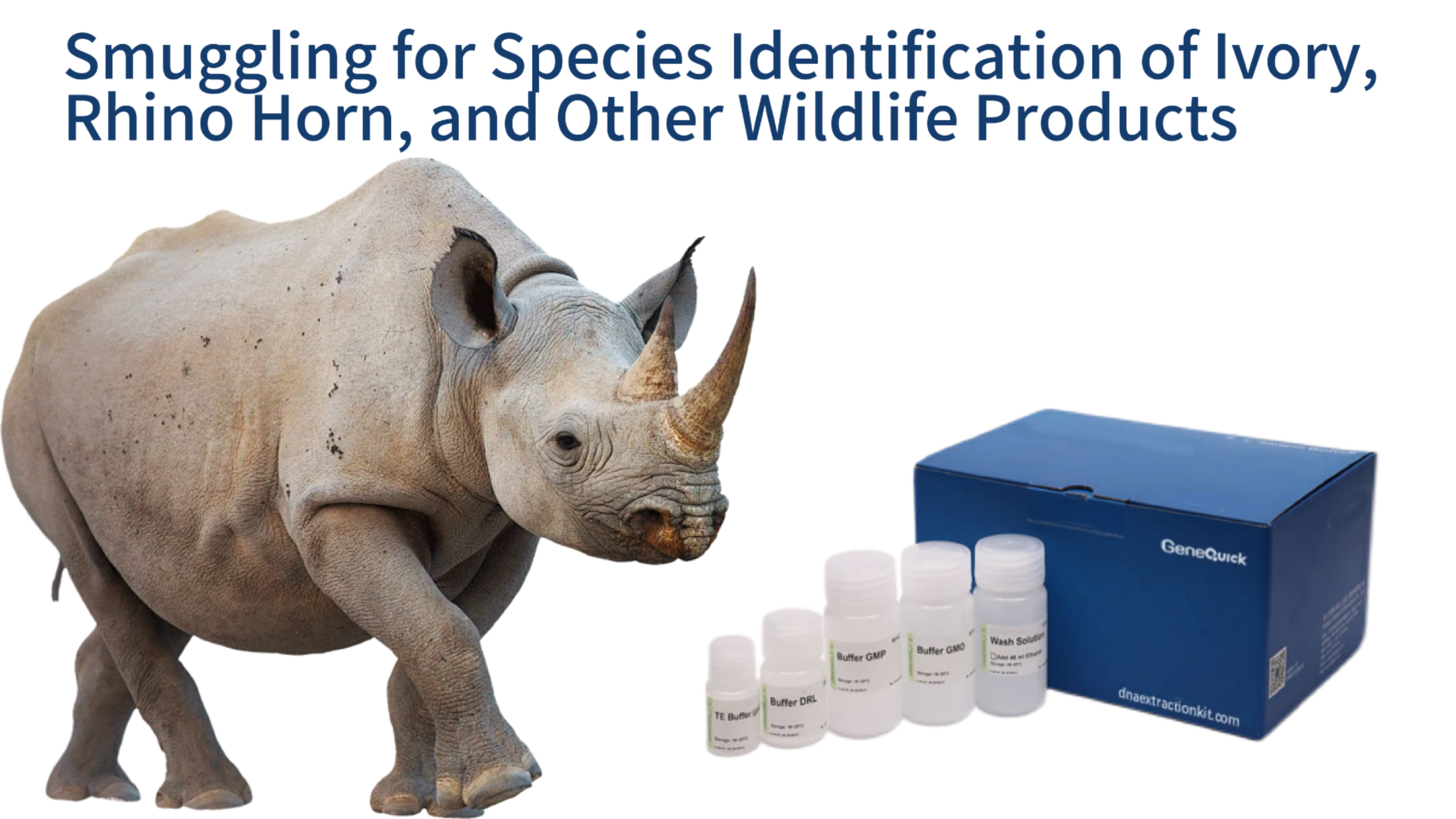
The global illegal wildlife trade, valued in the billions of dollars annually, represents a severe threat to biodiversity and international security. Customs and border protection agencies worldwide serve as the critical frontline defense against this illicit traffic. Intercepting smuggled goods such as carved ivory, powdered rhino horn, or traditional medicine derivatives is only the first step. The definitive identification of the biological source material is paramount for successful prosecution under international treaties like CITES (the Convention on International Trade in Endangered Species of Wild Fauna and Flora) and for directing conservation efforts. Forensic DNA analysis has emerged as the gold standard for this task, providing unambiguous species-level identification where visual inspection fails. The reliability of this entire analytical chain hinges on the initial, and most challenging, step: the consistent extraction of high-quality, inhibitor-free DNA from often degraded, processed, or miniscule biological samples. Specialized forensic DNA extraction kits are engineered explicitly to meet this formidable challenge, transforming a piece of seized evidence into a robust genetic profile that can withstand legal scrutiny.
The Forensic Challenge: Obtaining DNA from Non-Ideal Wildlife Samples
Highly mineralized calcified tissue matrix
DNA trapped in microscopic odontoblast tubules
Severe DNA degradation from processing
Requires 24-48hr decalcification (EDTA-based)
Calcium ions as primary PCR inhibitor
Densely packed keratin fiber structure
Strong disulfide bonds in keratin matrix
Low cellular material content
Requires harsh detergents/reducing agents
Protein/keratin co-purification as inhibitor
Wildlife products intercepted at borders present a unique set of forensic obstacles distinct from typical human DNA casework. These materials are frequently subjected to extensive processing. Ivory may be carved, polished, and stained; rhino horn is often ground into a fine powder or shaved into flakes for medicinal use. Such processes degrade the structural integrity of cells and expose the DNA within to heat, chemical agents, and oxidative damage over time. The resulting DNA is typically fragmented and present in very low quantities, co-purified with a complex background of inhibitors like calcium from bone, dyes, oils, or other contaminants introduced during carving and handling.
Furthermore, the sample itself may be forensically limited. A customs officer might only be able to obtain a minute swab from the surface of a carved artifact without damaging it, or a tiny amount of powder from a larger seizure. This necessitates an extraction protocol of exceptional sensitivity and efficiency, capable of capturing and purifying trace amounts of compromised DNA while simultaneously removing a wide array of potential polymerase chain reaction (PCR) inhibitors. The success of downstream genetic analysis, whether targeting mitochondrial genes for species ID or nuclear microsatellites for individual assignment or geographic provenance, is entirely dependent on the quality of the DNA extract provided by this first, crucial kit-based step.
Anatomy of a Seized Sample: Ivory and Rhino Horn as Prime Examples
Elephant ivory is composed primarily of dentin, a mineralized tissue containing small cellular structures called odontoblasts within microscopic tubules. While highly mineralized, these tubules can retain cellular material even in worked ivory, though the DNA is often severely degraded. The challenge is to demineralize the hard tissue effectively to release the entrapped genetic material without causing further DNA damage. This requires specialized lysis buffers containing reagents like EDTA to chelate calcium and proteinase K to digest the organic matrix over an extended incubation period, sometimes lasting 24 to 48 hours. A standard silica beads DNA extraction kit for bone is often adapted for this purpose, as the chemistry is designed to handle calcified tissues.
Rhinoceros horn, in contrast, is not true horn or bone but consists of densely packed keratin fibers, similar to hair and nail. Its dense structure makes cellular lysis difficult. Effective extraction requires harsh lysis conditions with strong detergents and reducing agents to break the disulfide bonds in the keratin matrix and access the follicular or intercellular material containing DNA. The resulting lysate is rich in proteins and keratins that can interfere with silica-based binding, necessitating a robust purification chemistry. Protocols often derive from those optimized for hair samples, but with intensified lysis steps to address the horn's density.
The Critical Role of Inhibition Removal in Forensic Contexts
PCR inhibition is the single most common cause of analysis failure in wildlife forensics. Inhibitors co-purified with DNA can bind directly to the DNA polymerase enzyme or interfere with the necessary co-factors, preventing amplification. Common inhibitors in wildlife samples include humic acids from soil contamination (if the specimen was buried), hematin from blood, polyphenols from plant-based adhesives or packaging, and high concentrations of calcium ions. A forensic-grade extraction kit must incorporate efficient wash steps to remove these substances.
This is achieved through carefully formulated wash buffers. An initial wash may contain guanidine salts to remove proteins and some organic contaminants, while a subsequent wash with an alcohol-based solution removes salts and other small molecules. The specificity of the DNA binding to the silica membrane or magnetic beads under high-salt conditions allows these washes to strip away impurities while the DNA remains immobilized. The final elution in a low-ionic-strength buffer like Tris-EDTA or nuclease-free water releases pure, inhibitor-free DNA. The effectiveness of this process is so vital that validation studies for customs labs must include tests spiking samples with known inhibitors to prove the kit's resilience.
Validating Methods for Legal Admissibility
For evidence to be admissible in court, the entire analytical process, starting with the DNA extraction, must be validated according to international forensic standards. This means the specific kit and protocol used by a customs laboratory must be proven to be reliable, reproducible, and fit-for-purpose for the sample types in question (e.g., powdered horn, carved ivory). Validation involves testing key parameters: extraction efficiency (yield), sensitivity (minimum sample input), precision (consistency between replicates), robustness (tolerance to minor protocol deviations), and inhibitor removal capacity.
Furthermore, laboratories must rigorously guard against contamination, a serious concern when analyzing trace DNA. This aligns with standards like ISO 18385, which specifies requirements for products used in the collection, storage, and analysis of forensic DNA to minimize contamination risk. Forensic DNA kits intended for this market are often manufactured and packaged in controlled, nuclease-free environments and include reagents like dithiothreitol (DTT) to break down contaminating enzymes. The use of such certified kits forms the foundation of a quality management system that allows a customs lab to testify to the integrity of its genetic evidence chain-of-custody.
Core Technologies: How Forensic DNA Kits Are Optimized for Wildlife Samples
| Extraction Technology | Inhibitor Removal | Throughput | Fragment Recovery | Best For |
|---|---|---|---|---|
| Silica-Membrane Spin Columns | High | Low | Medium | Unique evidence (ivory), maximum purity |
| Magnetic Silica Beads | High | Very High | High | High-throughput (powdered horn), automation |
| Rapid Direct PCR | Low | Very High | Medium | Frontline screening, non-destructive swabs |
The technological heart of a forensic DNA extraction kit lies in its method for selectively isolating nucleic acids from a complex lysate. While the fundamental steps of lysis, binding, washing, and elution are universal, the mechanics of DNA capture differ, each offering distinct advantages for the challenges of wildlife forensics. The choice between silica-membrane spin columns, magnetic silica beads, and pure silica bead methods is driven by factors such as required throughput, the level of automation desired, the starting sample volume and type, and the need for maximum yield from trace evidence. Customs laboratories, which may process a high volume of varied seizures, often require flexible platforms that can be scaled from manual, evidence-preserving protocols for a single unique artifact to automated, high-throughput processing for batches of similar samples like powder vials.
Recent advancements have focused on increasing the binding capacity of silica matrices to capture more DNA from large-volume lysates (common in ivory powder extractions) and improving wash formulations to remove an ever-broader spectrum of environmental inhibitors without compromising DNA integrity. Furthermore, the development of dedicated kits or supplementary reagent packs for specific difficult tissues, such as formalin-fixed paraffin-embedded (FFPE) museum specimens used for reference databases, extends the utility of forensic genetics in historical trafficking investigations. These technological refinements directly translate to higher success rates in obtaining reportable DNA profiles from the most degraded and challenging contraband items.
Silica-Membrane Spin Column Technology
The spin column format is a widely trusted workhorse in forensic and research labs. In this system, the sample lysate is passed through a microcentrifuge tube containing a silica-based membrane under centrifugal force. Under high-salt conditions, DNA molecules bind to the silica surface through salt-bridge interactions. Contaminants are removed through a series of wash steps, and pure DNA is eluted in a low-salt buffer. This method is highly effective for inhibitor removal and yields DNA of excellent purity, which is critical for sensitive downstream applications like sequencing.
For customs work, its main advantage is procedural control and evidence handling. Each sample is processed in an individual, discrete column, minimizing cross-contamination risk—a paramount concern. It allows for visual inspection of the membrane and is adaptable; for instance, lysis from a large piece of ivory can be performed in a separate tube, and only a portion of the lysate is loaded onto the column. However, it is more manual and time-consuming for large batches. It is the preferred method for crucial, one-of-a-kind evidence where the highest purity is required, effectively serving as a specialized spin column DNA extraction kit for forensic samples adapted for hard tissue.
Magnetic Bead-Based Extraction Systems
Magnetic bead technology utilizes superparamagnetic silica particles suspended in solution. When added to the lysate under binding conditions, the DNA adsorbs to the bead surface. A powerful magnet is then used to pull the beads (with bound DNA) to the side of the tube, allowing the supernatant containing impurities to be aspirated away. Washes are performed by resuspending the beads in wash buffers and re-applying the magnet. This solution-based interaction often provides higher binding capacity and recovery efficiency for fragmented DNA, which is typical in degraded wildlife products.
This platform is highly amenable to automation. Robotic liquid handlers can process 96 samples simultaneously, making it ideal for customs labs facing large seizures of similar materials, such as hundreds of packets of suspected pangolin scales or bear bile. The automation standardizes the process, reduces hands-on time, and decreases the potential for human error. The method's efficiency in capturing small DNA fragments makes a magnetic beads DNA extraction kit for tissue a powerful tool even when the starting material is a tiny scraping from a worked ivory surface. The closed-tube nature of many automated magnetic bead protocols further reduces aerosol contamination risks.
Direct and Rapid PCR Approaches for Preliminary Screening
Emerging as a powerful tool for frontline screening are "direct-to-PCR" or rapid extraction methods. These are not pure extraction kits in the traditional sense but simplified protocols or reagent mixes designed to quickly lyse cells and neutralize common PCR inhibitors, allowing a small aliquot of the crude lysate to be added directly to a PCR master mix. They sacrifice some purity and template quality for unparalleled speed, often delivering a result in under an hour from sample to amplified product.
In a customs checkpoint scenario, this speed is transformative. Officers can perform an initial, non-destructive swab test on a suspicious item. A positive screen for a CITES-listed species like elephant or rhinoceros provides probable cause for seizure and detailed laboratory analysis. This triage capability allows labs to focus their full, validated extraction and sequencing resources on confirmed positive samples. While not a replacement for court-admissible validation, a rapid DNA extraction kit for forensic samples acts as a critical force multiplier, enabling more intelligent and efficient allocation of forensic resources at busy ports of entry.
The Integrated Workflow: From Customs Seizure to Genetic Report
The application of a DNA extraction kit is not an isolated event but the pivotal technical step within a meticulously designed forensic workflow. This workflow begins the moment a customs officer identifies a suspicious item and extends through to the submission of a genetic report as evidence in legal proceedings. Each stage is governed by strict protocols to maintain the chain of custody, prevent contamination, and ensure the analytical results are scientifically defensible. The selection and use of the extraction kit are embedded within this framework, with its performance parameters directly influencing the choices and success of every subsequent step, from quantification to data interpretation.
Customs laboratories operate under significant pressure, balancing the need for rapid turnaround to facilitate timely legal action with the imperative for absolute accuracy. A standardized, kit-based extraction protocol brings essential consistency to this high-stakes environment. It allows different analysts to process different seizures over time, knowing that the foundational quality of the DNA input into the genetic analyzer is constant and validated. This reproducibility is key to building a robust database of wildlife genetic profiles and to comparing new seizures against known reference samples from geographic populations, a technique used to determine the probable origin of poached animals.
Step 1: Evidence Collection and Pre-Lysis Sample Preparation
The forensic process is only as good as the sample collected. For a large ivory tusk, this may involve drilling a small core from an inconspicuous area, taking care to use sterile, disposable drill bits to prevent cross-contamination between seizures. For a powder, a small, weighed aliquot is taken. The sample is then transferred to a sterile tube, often containing an initial digestion buffer. A critical pre-lysis step for calcified materials like ivory involves a prolonged incubation in a decalcifying buffer. This step, which can be part of the kit's protocol or a separate pre-treatment, is non-negotiable for accessing the cellular material locked within the mineral matrix.
For keratinous materials like horn, the sample might be pulverized further using a sterile mortar and pestle or a bead mill to increase the surface area for lysis. Throughout this preparation, forensic analysts wear full personal protective equipment (PPE) and work in dedicated pre-PCR laboratories, often with UV-treated airflow hoods, to ensure no external DNA from the analysts or the environment contaminates the evidence. This rigorous pre-analytical phase ensures the extraction kit receives a sample that has been optimally prepared to release its maximal genetic content.
Step 2: The Extraction Process and Post-Elution QC
The prepared sample enters the core extraction procedure as defined by the chosen kit's protocol. This involves the combined chemical and enzymatic lysis to break open any remaining cells and degrade proteins, followed by the binding, washing, and elution stages. For critical evidence, the process is often performed in duplicate or triplicate to provide technical replicates and ensure recovery. The final eluate, typically in a volume of 50-100 µL, is the product of the kit.
Before proceeding to amplification, the success of the extraction must be quantified. This is done using fluorometric methods like Qubit, which specifically quantifies double-stranded DNA, or by real-time PCR assays that measure both the quantity and the amplifiability of the extracted DNA (assessing the presence of residual inhibitors). This quality control (QC) data is recorded and becomes part of the case file. It informs the analyst how much DNA template to use in the subsequent species identification PCR and provides a metric for the kit's performance on that specific sample type. A failed QC indicates a need for re-extraction, potentially with a modified protocol or a different kit chemistry better suited to the sample's particular inhibitors.
Step 3: Downstream Genetic Analysis for Species Identification
With high-quality DNA in hand, the customs laboratory can proceed to genetic analysis. The most common method for species identification is PCR amplification of a short, conserved region of a mitochondrial DNA gene, such as cytochrome b or cytochrome c oxidase I, followed by Sanger sequencing. These regions evolve at a rate that provides clear differences between species but are conserved enough within a species to be reliably amplified even from degraded DNA. The extracted DNA is used as the template in this PCR.
The purity of the extract is critical here. Any residual inhibitors from the ivory or horn will affect the PCR efficiency, potentially causing amplification failure or yielding weak, unsequenceable product. The eluted DNA is combined with species-specific primers, nucleotides, a thermostable DNA polymerase, and buffer. The success of this reaction is a direct testament to the efficacy of the extraction kit's wash steps. The resulting DNA sequence is compared against curated international databases like GenBank or the Barcode of Life Data System to obtain a definitive species identification with a statistical confidence measure.
Step 4: Reporting and Contribution to Intelligence Databases
The final report synthesizes all findings: the chain of custody, the extraction and QC data, the genetic sequencing results, and the database match confirming the species. This report is submitted to the relevant legal and conservation authorities. Beyond the individual case, the genetic profile derived from the kit-extracted DNA holds further value. It can be uploaded to intelligence databases such as the Rhinoceros DNA Index System or the Elephant Trade Information System genetic database.
These databases enable wildlife forensics laboratories to link different seizures to the same individual animal or the same poaching event, even if the seizures occurred in different countries or at different times. This capability, known as "genetic linkage," provides powerful intelligence for law enforcement, helping to map trafficking networks and target kingpins rather than just couriers. Each successful DNA extraction from a seized product thus contributes not only to a single prosecution but also to a growing global intelligence asset in the fight against wildlife crime.
Future Directions and Evolving Technologies in Wildlife Forensic Genetics
NGS-based analysis of mixed samples (traditional medicines) with unbiased lysis of multi-species DNA
Population-specific genetic markers analysis requiring high-yield extraction from limited evidence
Portable integrated devices with lyophilized extraction chemistry for on-site confirmatory analysis
Harmonized kit-based protocols for cross-border legal admissibility and capacity building
The field of wildlife forensic science is dynamic, driven by both the escalating sophistication of trafficking networks and continuous advancements in molecular biology. Next-generation sequencing technologies are beginning to move from pure research into applied forensic casework. These platforms allow for the simultaneous analysis of multiple genetic markers, including nuclear microsatellites for individual identification and population assignment, and even genomic-scale single nucleotide polymorphisms, all from the same DNA extract. This imposes new demands on extraction kits; they must now provide DNA that is not only pure and amplifiable but also of sufficient fragment length and integrity for more complex library preparation protocols.
Concurrently, there is a strong push toward field-deployable genetic technologies. The ideal scenario for a customs officer at a remote border post is to have a fully integrated, portable device that can perform extraction, amplification, and analysis in a single cartridge within minutes. While current rapid tests offer screening, the future lies in confirmatory, court-admissible analysis in the field. This evolution will require the re-engineering of extraction chemistry into stable, lyophilized formats within disposable microfluidic chips, a significant departure from the liquid reagents and columns of today's lab-bound kits. The core principle of selective nucleic acid purification will remain, but its implementation will become faster, more robust, and more accessible at the point of need.
Metabarcoding and Environmental DNA for Bulk Seizures
A significant challenge arises when customs intercepts complex products like traditional medicine powders, which may contain mixtures of dozens of plant and animal species. Traditional Sanger sequencing is ill-suited for mixtures. The solution lies in metabarcoding, an NGS-based approach that uses the DNA extract to amplify and sequence multiple "barcode" genes simultaneously, revealing all species present in the sample. This requires extraction kits that provide unbiased lysis of different cell types (plant, animal, fungal) and recovery of DNA across a broad range of fragment sizes without preferential amplification of one species over another.
The principles of this bulk mixture analysis are closely related to the field of environmental DNA extraction, where the goal is to capture total DNA from a complex substrate. Kits optimized for this purpose, often involving larger binding surfaces or enhanced lysis cocktails, will become essential tools for comprehensively profiling the contents of mixed seizures, ensuring no protected species component goes undetected due to technical limitations in the extraction phase.
Provenance Determination and Geographic Origin Tracing
Beyond simple species identification, a paramount question for enforcement is: "Where did this animal come from?" Determining the geographic origin of seized ivory or horn can help pinpoint poaching hotspots and disrupt specific trafficking routes. This requires analyzing population-specific genetic markers, which are often more sensitive to DNA quality and require a higher quantity of input DNA. Extractions must therefore maximize yield from limited evidence.
Advanced studies in this area, sometimes involving reference samples from bone marrow or tissue banks of known origin, push extraction protocols to their limits to obtain every possible molecule of genetic material. The development of kits with higher binding capacities and more efficient recovery from highly processed materials will directly enhance the ability of forensic labs to perform these sophisticated population assignments, turning a piece of contraband into a geographic clue.
Standardization and Global Capacity Building
The ultimate effectiveness of DNA analysis in combating wildlife crime depends on its consistent and reliable application across all range, transit, and destination countries. This necessitates global standardization of methods, including DNA extraction. International bodies and leading forensic institutes are working to establish and promulgate validated, kit-based protocols that any accredited laboratory can implement. This includes standardized extraction methods for animal tissue that cover the spectrum from fresh muscle to processed keratin and dentin.
Capacity-building efforts focus on training analysts in these standardized protocols, emphasizing the critical importance of the extraction step. By ensuring that laboratories from Nairobi to Hanoi to Miami are using harmonized, high-performance kits and methods, the global community ensures that genetic evidence generated in one country will be reliable and admissible in the courts of another, strengthening international legal cooperation against transnational wildlife crime syndicates.