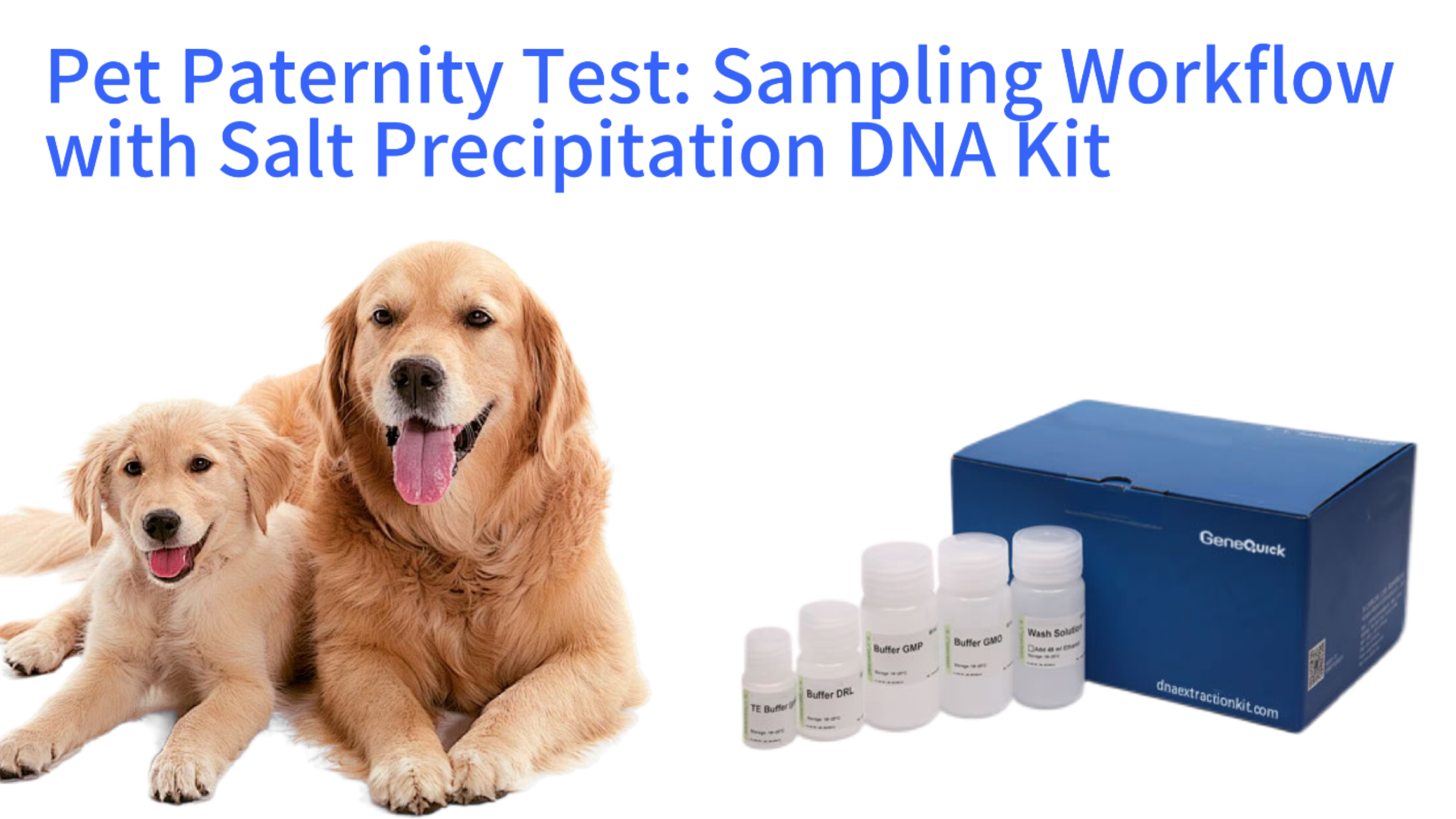
This comprehensive guide details the workflow for a pet paternity test, focusing on the use of a salt precipitation DNA extraction kit. We will explore the fundamental principles of DNA isolation, compare core extraction technologies, and provide a step-by-step walkthrough for collecting and processing common pet samples like cheek swabs and hair. The article further examines how to adapt the protocol for challenging samples, matches the resulting DNA quality to downstream analytical needs, and concludes with a practical framework for selecting the most appropriate extraction method for your specific project, ensuring reliable and conclusive results for pet parentage verification.
Pet Paternity Test Workflow with Salt Precipitation DNA Kit
Understanding the Foundation of DNA Extraction
The quest to verify pet parentage begins with obtaining a pure sample of DNA. Modern DNA extraction is a sophisticated process built upon a consistent biochemical framework. The core workflow involves four critical phases: lysis, binding, washing, and elution. Each stage is designed to separate the delicate DNA molecule from the complex cellular environment without causing damage.
Lysis is the initial step where the sample's cellular and nuclear membranes are disrupted. This is typically achieved using a combination of mechanical action, detergents, and enzymes. A common buffer contains sodium dodecyl sulfate (SDS), a potent detergent that solubilizes lipid membranes, and proteinase K, an enzyme that digests histones and other proteins bound to DNA. For robust samples like cheek cells, gentle lysis suffices, while more resilient samples like hair follicles or formalin-fixed tissues require harsher conditions or specialized pretreatment protocols. The goal is to liberate the genomic material into a solution while keeping it structurally intact.
DNA Extraction Technology Comparison
Low cost & minimal equipment
Moderate purity (A260/A280: 1.7-1.9)
Suitable for routine PCR/STR analysis
1.5-2 hours processing time
High purity (A260/A280: 1.8-2.0)
Low inhibitor carryover
Compatible with NGS applications
1 hour processing time
Automation-friendly (96-well format)
High purity & reproducibility
Ideal for high-throughput processing
Higher initial capital cost
Fast (minutes vs hours)
No dedicated extraction step
Sample-dependent reliability
High inhibitor sensitivity
The Molecular Mechanism of Salt Precipitation
Salt precipitation, a form of solution-based extraction, relies on the differential solubility of DNA and other cellular components in varying salt concentrations. Following lysis, a high concentration of a salt like sodium chloride or ammonium acetate is introduced. DNA, with its negatively charged phosphate backbone, becomes heavily shielded by the positive sodium ions from the salt. This neutralization dramatically reduces the electrostatic repulsion between DNA strands and between DNA and water molecules.
As the electrostatic charges are neutralized, the DNA becomes less soluble in the aqueous solution. The addition of alcohol, most commonly isopropanol or ethanol, further decreases the dielectric constant of the solution. This environment promotes the aggregation and precipitation of the now poorly soluble DNA into a visible thread-like mass or a pellet at the bottom of a tube. Contaminants like proteins, which may remain soluble or precipitate differently under these conditions, are left behind in the supernatant when the DNA is collected by centrifugation.
Comparing Core Extraction Technologies
The landscape of DNA purification is dominated by several key technologies, each with distinct advantages. Spin-column kits, which utilize a silica membrane, are renowned for delivering high-purity DNA critical for sensitive applications like next-generation sequencing (NGS). The binding of DNA to silica in the presence of chaotropic salts is highly selective, effectively removing inhibitors. Magnetic bead technology offers automation-friendly workflows and is gaining significant traction; a report in Nature Methods noted that bead-based methods now account for a growing percentage of NGS library preparations due to their suitability for high-throughput liquid handling systems.
In contrast, traditional organic extraction using phenol-chloroform, while effective, poses significant health and environmental hazards. The salt precipitation method occupies a unique niche. It is a remarkably simple and cost-effective solution-based technique that requires minimal specialized equipment. It forgoes the need for silica membranes or magnetic beads, instead relying on fundamental chemistry to pellet the DNA. While its purity yield may not consistently match that of column or bead-based systems, especially from complex samples, its simplicity and low cost make it a viable option for many routine applications, including straightforward PCR-based pet paternity tests where inhibitor load can be managed.
The Impact of Direct PCR Technologies
The emergence of direct PCR technologies represents a notable shift in sample preparation philosophy. These protocols bypass the dedicated extraction and purification steps altogether by using specially formulated buffers that lyse cells and neutralize PCR inhibitors directly within the PCR reaction mix. This approach can reduce processing time from hours to minutes and eliminates the risk of DNA loss during purification. For high-volume, single-gene tests like some kinship verifications, this presents a compelling alternative.
However, this innovation does not render traditional extraction kits obsolete. Direct PCR is highly sensitive to sample type and inhibitor content. Complex samples like bone, certain tissues, or forensic samples with environmental contaminants often produce unreliable results without prior purification. Furthermore, the extracted DNA from a dedicated kit is a stable, quantifiable resource that can be used for multiple downstream assays, archived, or subjected to rigorous quality control. Therefore, while direct PCR streamlines specific workflows, robust extraction methods remain the cornerstone of reliable genetic analysis across diverse scenarios.
Executing a Reliable Sampling and Extraction Workflow
A successful paternity test is contingent upon proper sample collection and meticulous laboratory execution. The integrity of the final result is directly linked to the care taken at the very beginning of the process. Contamination from other animals or human handlers must be scrupulously avoided, and samples must be collected in a manner that preserves cellular material for effective lysis. This section outlines a generalized yet reliable workflow utilizing a salt precipitation kit, highlighting steps that are crucial for success.
Prior to any collection, proper documentation is essential. Each sample must be permanently labeled with a unique identifier linking it to a specific animal. Buccal (cheek) swabs are a standard, non-invasive collection method. It is important to use swabs with synthetic tips, as cotton may contain plant DNA that can interfere. Vigorous rubbing inside the pet's cheek for 20-30 seconds ensures adequate collection of epithelial cells. For hair samples, the root follicle is a rich source of nucleated cells; plucking hairs to include the root is far superior to collecting shed hair.
Salt Precipitation Protocol Step-by-Step
Step-by-Step Salt Precipitation Protocol
The laboratory workflow commences with sample lysis. The swab tip or hair follicle with root is placed directly into a microcentrifuge tube containing the lysis buffer and proteinase K. The tube is then incubated, often at 56°C for 30-60 minutes, with occasional vortexing to ensure complete digestion. The elevated temperature enhances enzyme activity, breaking down cellular and nuclear structures to release DNA. For particularly tough samples, extending this incubation time or adding a mechanical disruption step like bead beating may be necessary, though standard pet samples typically lyse efficiently.
Following complete lysis, the precipitation step begins. A concentrated salt solution is added to the lysate and mixed thoroughly. This is followed by the addition of a pre-chilled alcohol, such as isopropanol. The tube is gently inverted several times, and a white, thread-like precipitate of DNA may become visible. The tube is then centrifuged at high speed, which forces the DNA to form a tight, often translucent pellet at the bottom of the tube. The supernatant, containing salts, proteins, and other cellular debris, is carefully decanted or removed with a pipette without disturbing the pellet.
Washing and Final Elution for Pure DNA
The DNA pellet, while isolated, is still coated with residual salts and contaminants from the lysis and precipitation solutions. To purify it, a wash step is performed. A wash buffer, typically 70-80% ethanol, is added to the tube without resuspending the pellet. The tube is centrifuged again, which washes the pellet and removes the remaining impurities into the ethanol supernatant. This ethanol wash is then carefully removed, and the pellet is allowed to air-dry for a short period to evaporate all residual alcohol, which is a potent inhibitor of enzymatic reactions like PCR.
The final step is elution, or resuspension, of the purified DNA. The dried pellet is resuspended in a low-salt buffer or nuclease-free water. The elution buffer is often slightly alkaline, with a pH between 8.0 and 8.5, as this environment helps to dissolve the DNA and maintain its long-term stability. The tube is incubated at 65°C for several minutes to aid dissolution, followed by gentle vortexing. The resulting solution contains the purified genomic DNA ready for quantification and analysis. For protocols involving forensic samples like hair, additional concentration steps might be integrated here.
A Practical Case in Pet Parentage Analysis
Consider a scenario where a breeder needs to verify the sire of a litter. Buccal swabs are collected from the mother, the potential father, and all offspring. Using a salt precipitation kit, a laboratory technician processes all samples in parallel. The extracted DNA from each individual is quantified using a spectrophotometer or fluorometer. The purity, indicated by the A260/A280 ratio, is checked to ensure it falls within an acceptable range of 1.7 to 1.9, suggesting minimal protein contamination. The DNA is then standardized to a uniform concentration for the subsequent PCR reaction.
The PCR targets specific short tandem repeat (STR) markers, which are highly variable between individuals. The amplified fragments from the mother, potential father, and offspring are compared. For each STR marker, an offspring must inherit one allele from the mother and one from the true father. If the potential father's DNA profile does not contribute the required allele for multiple markers, paternity can be excluded. The success of this entire analytical chain hinges on the initial extraction step yielding inhibitor-free, amplifiable DNA from each swab, a task for which a well-executed salt precipitation protocol is often perfectly adequate. Similar principles apply when working with animal tissue samples from biopsies.
Adapting the Method for Diverse Sample Types
While the salt precipitation protocol provides a robust framework, optimal results require adjustments based on the biological source material. Different sample types present unique challenges in cell lysis and co-purification of inhibitors. A one-size-fits-all approach can lead to low DNA yield or poor quality, compromising downstream analysis. Understanding these nuances allows researchers to modify the standard protocol to maximize success rates across a spectrum of samples relevant not only to pet testing but also to broader fields like environmental studies.
Cellular density and the presence of inhibitory substances are the two primary variables. A buccal swab from a dog contains a monolayer of epithelial cells relatively free of strong PCR inhibitors. In contrast, a blood sample contains hemoglobin, which can inhibit PCR, and a large volume of nucleated cells packed with DNA. Plant material contains complex polysaccharides and polyphenols that co-precipitate with DNA, while soil and fecal samples harbor humic acids that are potent inhibitors of enzymatic reactions. Each requires a tailored strategy during the initial lysis phase.
Sample-Specific Protocol Adjustments
Processing Common Pet Biological Samples
For routine pet paternity tests, buccal swabs, hair follicles, and blood are the most common sample types. Buccal swabs processed with a standard salt precipitation protocol generally yield sufficient DNA. Hair samples, especially those with intact follicles, require a more vigorous lysis step, often with extended proteinase K digestion and potential addition of dithiothreitol (DTT) to break down keratin. Blood samples, due to their high protein and heme content, benefit from an initial wash step with a specialized buffer or a slightly modified lysis buffer with enhanced detergent to fully neutralize hemoglobin before salt addition.
When moving beyond standard pets to other species or sample matrices, adaptations become more critical. Avian and reptile blood, for instance, contain nucleated red blood cells, altering the cell count-to-DNA yield ratio. Feathers or scales may require specialized digestion buffers. The principles of adjusting lysis conditions based on sample composition remain constant, underscoring the need for protocol optimization. For dedicated work with specific matrices, kits designed for feathers or blood may offer more reliable performance.
Addressing Challenging and Inhibitor-Rich Matrices
Environmental samples represent the extreme end of complexity for DNA extraction. Soil, water filters, and fecal matter are teeming with a diverse microbiome but also contain substances like humic acids, fulvic acids, and heavy metals that bind irreversibly to DNA or inhibit polymerases. A standard salt precipitation from such samples often results in darkly colored, inhibitor-laden DNA. Pre-treatment steps are essential. For soil, physical separation of cells from particles or the use of polyvinylpolypyrrolidone (PVPP) to bind polyphenols can be incorporated before lysis.
Plant tissues are another classic challenge. The recommended expert approach often involves a preliminary step using cetyltrimethylammonium bromide (CTAB) buffer. CTAB forms complexes with polysaccharides and polyphenols during lysis, allowing them to be separated from the nucleic acids in a later chloroform extraction step before the salt precipitation. This hybrid method, combining CTAB and salt precipitation, is a standard for obtaining high-quality plant DNA suitable for demanding applications. Similar considerations are vital for processing agricultural plant tissue.
Maintaining Integrity with Aged or Processed Samples
Not all samples are fresh. Archival samples, such as dried blood spots, historical hair specimens, or formalin-fixed paraffin-embedded (FFPE) tissues, present the challenge of degraded and cross-linked DNA. For FFPE samples, a mandatory deparaffinization step with xylene or a specialized buffer precedes lysis. The lysis buffer often requires a more robust formulation and a longer, hotter digestion period to reverse formaldehyde-induced cross-links. While salt precipitation can recover fragmented DNA from such samples, the yield and fragment size will be limited by the extent of degradation.
The success with these difficult samples underscores a critical point: the choice of extraction method must be aligned with the sample's starting condition and the requirements of the final analysis. While magnetic bead or column-based systems may offer advantages in purity and automation for high-throughput processing of challenging samples, the fundamental understanding of sample-specific challenges applies universally. For specialized workflows involving forensic bone samples or research FFPE samples, protocols are often extensively optimized.
Aligning DNA Output with Downstream Analytical Needs
The ultimate purpose of DNA extraction is to provide a substrate suitable for a specific analytical technique. Different downstream applications impose different quality requirements on the input DNA. Therefore, selecting an extraction method, including evaluating the suitability of a salt precipitation kit, cannot be done in isolation. It must be informed by the needs of the subsequent step, whether it is a simple PCR, quantitative PCR (qPCR), microarray analysis, or next-generation sequencing (NGS).
The key parameters of extracted DNA are concentration, purity, integrity (fragment size), and the absence of specific inhibitors. A standard endpoint PCR for pet STR analysis is relatively forgiving; it requires DNA free of potent polymerase inhibitors but can tolerate moderate levels of salt or protein contamination and works well with partially degraded DNA. In contrast, long-range PCR or NGS library preparation for whole-genome sequencing demands high-molecular-weight, intact DNA with an exceptionally high purity profile to ensure accurate and efficient enzymatic processing.
DNA Quality Requirements by Downstream Application
A260/A280: 1.7-1.9
Fragment size: 100-400 bp
Minimal polymerase inhibitors
Concentration: ≥ 10 ng/μL
Salt precipitation compatible
A260/A280: 1.8-2.0
No residual ethanol/salts
Low inhibitor content
Concentration: ≥ 5 ng/μL
Fluorometric quantification required
A260/A280: 1.8-2.0
A260/A230: > 2.0
High molecular weight DNA
No detergents/solvents
Column/bead purification preferred
A260/A280: 1.8-1.95
Low RNA contamination
Concentration: ≥ 50 ng/μL
Consistent fragment size
Minimal carryover contaminants
Requirements for PCR and Genetic Fingerprinting
Polymerase Chain Reaction is the workhorse of genetic testing, including pet paternity analysis via STR profiling. The primary requirement for PCR is the absence of substances that inhibit the DNA polymerase enzyme. Common inhibitors include salts carried over from the extraction, heparin from blood, humic acids from soil, or residual phenol from organic extraction. Salt precipitation, when performed with careful washing, effectively removes proteins and many organic contaminants, but trace salts can remain. This is why the final ethanol wash and thorough drying are critical steps in the protocol.
For STR analysis, the DNA does not need to be exceptionally high molecular weight, as the amplified fragments are typically short, between 100 and 400 base pairs. This makes the technique compatible with DNA that is moderately degraded, such as that from old samples or harsh collection conditions. The success metric is clean amplification with specific, reproducible peaks in the subsequent capillary electrophoresis. The cost-effectiveness and simplicity of salt precipitation make it a pragmatic choice for this application, provided the sample is not inherently rich in PCR inhibitors. This logic also applies to other targeted assays like those in clinical genetic testing.
Demands of Next-Generation Sequencing Platforms
Next-generation sequencing represents a paradigm shift, requiring input DNA of the highest quality. Library preparation for NGS involves multiple enzymatic steps: fragmentation (if not using sheared DNA), end-repair, adapter ligation, and PCR amplification. Each enzyme in this cascade is sensitive to inhibitors. Furthermore, the physical integrity of the DNA is paramount. Techniques like whole-genome sequencing or mate-pair sequencing require long, unbroken DNA strands to generate large, contiguous assemblies. Salt-precipitated DNA can be suitable for some NGS applications, particularly those targeting smaller amplicons or using reduced-representation approaches.
However, for the most demanding NGS workflows, silica-membrane column or magnetic bead-based purifications are often preferred. These methods consistently deliver DNA with higher purity levels, as measured by spectrophotometric ratios (A260/A280 and A260/A230), and are better at removing elusive inhibitors like detergents or organic solvents. The controlled binding and washing on a solid phase offer reproducibility that is critical for generating uniform sequencing libraries. When planning a project, matching the extraction method's typical output to the NGS platform's input specifications is a non-negotiable step for success.
Special Considerations for Quantitative and Sensitive Assays
Quantitative PCR (qPCR) and digital PCR (dPCR) are extremely sensitive techniques used for measuring gene expression, viral load, or copy number variation. These assays are highly susceptible to the presence of inhibitors, which can cause underestimation of the target concentration or complete amplification failure. Even small amounts of contaminants can alter the reaction efficiency, leading to inaccurate quantitative results. Therefore, DNA purity is of utmost importance.
While salt precipitation can yield DNA suitable for qPCR, the margin for error is smaller. Any deviation in the washing or drying steps that leaves behind ethanol or excess salt can significantly impact the qPCR curve. Fluorometric quantification, which uses DNA-binding dyes, is also recommended over spectrophotometry for qPCR applications, as it is less affected by common contaminants. For the highest confidence in sensitive quantitative results, many laboratories opt for purification methods with a proven track record of producing inhibitor-free DNA, though optimized salt precipitation protocols can be validated for this purpose. Similar rigor is applied for infectious disease testing.
Key Parameters for Selecting an Extraction Kit
Navigating the market of DNA extraction kits requires a clear understanding of one's own project parameters. A method that is optimal for a high-throughput clinical lab is likely over-engineered and over-budget for a small breeding operation performing occasional paternity checks. The selection process should be guided by a balanced consideration of several interdependent factors: the sample type, the required DNA quality, the number of samples, the available budget, and any necessary compliance standards.
A fundamental mistake is prioritizing cost above all else without considering the downstream consequences of poor-quality DNA. Failed reactions, inconclusive results, and repeated experiments ultimately incur greater expense than investing in a slightly more costly but reliable method from the start. Conversely, employing the most advanced, high-purity kit for a simple application is an unnecessary allocation of resources. The goal is to find the point where technical performance adequately meets application requirements at a sustainable cost.
Extraction Kit Selection Evaluation Metrics
Evaluating Performance Metrics: Yield, Purity, and Speed
The advertised performance metrics of a kit are the first point of comparison. DNA yield is typically reported in micrograms per milligram of starting material or per volume of liquid sample. It is important to note the sample type used for this claim, as yield varies dramatically. Purity is assessed by spectrophotometric ratios; an A260/A280 ratio near 1.8 indicates minimal protein contamination, while an A260/A230 ratio above 2.0 suggests low levels of salt or organic solvent carryover. Salt precipitation kits may show slightly lower A260/A230 ratios due to their chemistry, which does not necessarily preclude successful PCR.
Processing speed, or hands-on time, is another critical factor. A rapid DNA extraction kit can process samples in under 30 minutes, which is valuable for quick turnarounds. Salt precipitation protocols are generally moderate in speed, often taking 1.5 to 2 hours from start to finish due to incubation and drying times. Throughput, or the ability to process many samples simultaneously, is high for solution-based methods like salt precipitation, as it is easily scalable in a standard microcentrifuge rack. In contrast, column-based methods are limited by the number of spaces in a centrifuge rotor or require a vacuum manifold.
Understanding Cost Structures and Compliance Needs
The cost per sample is a composite of the kit reagents, consumables like tubes and tips, and labor. Salt precipitation kits are often the most economical in terms of reagent cost, as the chemicals involved are inexpensive. Column and magnetic bead kits have a higher per-unit cost for the proprietary silica membranes or beads. However, labor costs can shift this balance; an automated magnetic bead system has a high initial capital cost but drastically reduces hands-on time for high-volume labs.
Certain applications require adherence to specific quality standards. Forensic laboratories, for instance, must follow strict anti-contamination protocols often outlined in standards like ISO 18385, which governs the manufacturing of consumables to minimize human DNA contamination. While a pet paternity test may not require this level of certification, laboratories operating in a regulated environment or those whose results may have legal implications must select kits and consumables that are validated and certified for their intended use. This is a non-negotiable criterion in fields like forensic analysis or clinical oncology testing.
The Role of Scalability and Automation
The expected sample volume is a decisive factor. For a one-off paternity test, manual processing with a simple kit is perfectly adequate. For a breeding facility that tests dozens of animals monthly, scalability becomes important. Salt precipitation scales linearly but requires manual handling at each step. Magnetic bead technology shines in this context, as it is readily adapted to 96-well plates and automated liquid handling robots, processing hundreds of samples with minimal intervention.
Automation not only increases throughput but also improves reproducibility by reducing human error and variability in pipetting and timing. When evaluating kits, one should consider both current and future needs. Investing in a platform that can grow with the lab's requirements may be a strategic decision. The flexibility to use the same core chemistry (e.g., magnetic beads) across different sample types from research microorganisms to animal saliva adds further value.
A Framework for Making the Informed Choice
Armed with an understanding of technologies, sample needs, and downstream applications, the final step is to synthesize this information into a decision. There is no universally "best" DNA extraction kit; there is only the most appropriate kit for a specific set of circumstances. By systematically evaluating project requirements against the capabilities of different methods, researchers and practitioners can make a confident, cost-effective choice that ensures the reliability of their genetic analyses, from a simple pet paternity test to complex research studies.
The process should move from broad considerations to specific technical matches. Begin by defining the primary goal and constraints of the project. What is the sample type, and how many samples will be processed regularly? What is the budgetary limit per sample? What level of purity and yield is non-negotiable for the planned analysis? Answering these foundational questions will narrow the field of viable options considerably.
Decision Framework for Extraction Method Selection
Sample type | Throughput needs | Downstream application | Budget constraints
Does the method meet purity/yield requirements? | Is equipment available? | Is processing time acceptable?
Total cost per sample (reagents + labor) | Scalability costs | Failure rate impact
Test 3-5 samples | Verify downstream performance | Compare against alternatives
Balance technical performance, cost, and practicality for your specific use case
Five Critical Questions to Guide Your Selection
To operationalize the selection process, consider the following five questions. First, what is the physical nature and source of your primary sample? A fresh buccal swab allows for many options, while a formalin-fixed tissue or a soil sample immediately points toward specialized kits or mandatory protocol modifications. Second, what is the key downstream application? A simple PCR for a single genetic marker has very different requirements than long-read whole-genome sequencing.
Third, what is your operational scale and throughput requirement? Processing four samples a month is vastly different from processing four hundred a day. Fourth, what is your total budget, inclusive of equipment, reagents, and labor? A low reagent cost may be offset by high labor time. Finally, are there any regulatory or certification standards that must be met? Adherence to specific standards may mandate the use of certain certified products or documented workflows.
Scenario-Based Recommendations for Common Use Cases
For a veterinary clinic or small breeder conducting occasional pet parentage tests using buccal swabs and STR PCR, a manual salt precipitation kit or a basic spin-column kit offers an excellent balance of low cost, simplicity, and sufficient DNA quality. The protocol is easy to master, requires no specialized equipment beyond a microcentrifuge and heat block, and delivers fit-for-purpose DNA. The high-throughput core facility preparing hundreds of human blood samples for genotyping microarrays would likely benefit from an automated magnetic bead purification system to ensure consistency, purity, and efficient use of technician time.
A research laboratory studying microbial diversity in environmental water samples faces the challenge of low biomass and high inhibitor content. Their optimal path might involve a specialized environmental DNA extraction kit that includes mechanical lysis (bead beating) and inhibitor removal technology, possibly based on a silica column format designed to handle complex matrices. Meanwhile, a plant genetics lab might routinely use a CTAB-based method followed by a secondary purification with a column kit to obtain the high-molecular-weight, inhibitor-free DNA needed for genome sequencing. Understanding these trade-offs is key, whether for silica bead-based kits or rapid extraction formats.
Validating the Chosen Method for Your Specific Context
Once a kit or method is selected, a final validation step is crucial before committing to its use for an entire project. This involves processing a small subset of representative samples in parallel with a previously validated method or a known positive control. The extracted DNA should be quantified and assessed for purity. Most importantly, it should be tested in the intended downstream application—whether it is a specific PCR assay, a qPCR run, or a library prep—to confirm that it performs reliably and meets all sensitivity and specificity requirements.
This empirical validation confirms that the theoretical advantages of the chosen kit translate into practical success in your hands, with your specific samples and protocols. It accounts for laboratory-specific variables and ensures that the entire workflow, from sample collection to data analysis, is robust and reproducible. This diligent approach transforms kit selection from a guessing game into a strategic, evidence-based decision, laying a solid foundation for any genetic inquiry, including the definitive answer to a question of pet parentage.