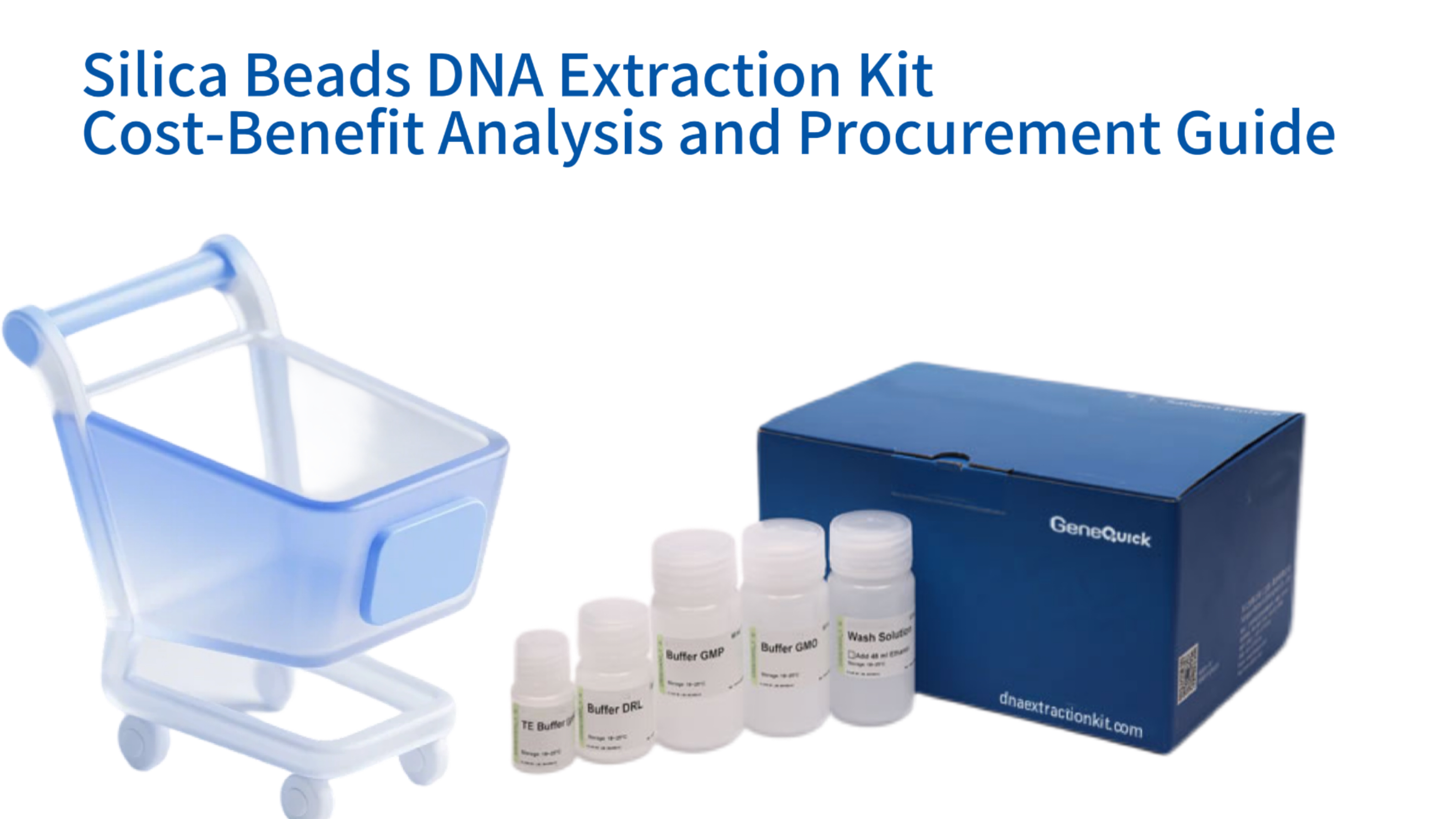
In molecular biology laboratories, DNA extraction serves as the foundational step for countless experimental workflows, and its efficiency directly determines the success of downstream applications. Silica beads DNA extraction kits have become a widely adopted tool for nucleic acid purification due to their high binding capacity, operational simplicity, and scalability. However, laboratory managers frequently face complex procurement decisions given the multitude of brands, specifications, and performance characteristics available. This guide provides a systematic analysis of the cost components and benefit dimensions associated with these kits. It explores critical purchasing factors from multiple perspectives and offers evidence-based recommendations to help laboratories achieve both quality assurance and resource optimization.
Basic Principles and Core Components of Silica Beads DNA Extraction Kits
Cell Lysis
Denature proteins, disrupt membranes (2-5 mins)
DNA Binding
Adsorb to silica beads in high salt (5-10 mins)
Washing
Remove contaminants (5-10 mins)
Elution
Release pure DNA (5-10 mins)
Purified DNA
Total time: 20-40 mins
| Component | Key Ingredients | Primary Function |
|---|---|---|
| Lysis Buffer | Guanidine HCl/Thiocyanate | Denature proteins, disrupt cell membranes, create high-salt environment |
| Binding Buffer | Salts + pH adjusters | Optimize DNA adsorption to silica beads |
| Wash Buffer | Ethanol/Isopropanol + salts | Remove contaminants while retaining DNA on beads |
| Elution Buffer | TE buffer / Nuclease-free water (pH 8.0-8.5) | Release purified DNA from silica beads |
| Silica Beads | 1-10μm silica (porous/non-porous/magnetic) | Selective DNA binding matrix |
Understanding the fundamental mechanisms and constituent elements of silica beads DNA extraction kits is essential for evaluating their performance and cost-effectiveness. These kits operate on well-established physicochemical principles that enable selective binding of nucleic acids under specific buffer conditions. The core technology has evolved over decades, incorporating refinements that enhance yield, purity, and processing speed. Researchers and procurement specialists must grasp these basics to make informed comparisons between different products and to anticipate how kit characteristics will align with their specific laboratory requirements.
Overview of the Silica Bead Extraction Principle
Silica beads possess the unique ability to bind DNA selectively in the presence of high concentrations of chaotropic salts. When cell lysates are mixed with silica beads under these conditions, DNA molecules adsorb onto the silica surface while proteins and other cellular debris remain in solution. Subsequent washing steps with alcohol-containing buffers remove contaminants, and finally, elution in low-salt buffers or water releases purified DNA. This solid-phase extraction approach eliminates the need for organic solvents and enables rapid processing of multiple samples simultaneously. The binding efficiency depends on factors such as bead surface chemistry, salt concentration, and pH, all of which are optimized in commercial kits.
The entire process typically completes within 20 to 40 minutes, depending on sample type and kit formulation. Unlike traditional methods that require multiple tube transfers, silica bead protocols often allow washing and elution in the same vessel, minimizing sample loss and cross-contamination risks. The principle supports both manual and automated workflows, making it adaptable to laboratories of varying throughput levels. Recent advances have further improved binding kinetics, enabling efficient recovery of fragment sizes down to 100 base pairs, which is particularly valuable for degraded samples.
Main Kit Components and Their Functions
A typical silica beads DNA extraction kit consists of several specialized buffers and the silica bead suspension. The lysis buffer contains chaotropic salts such as guanidine hydrochloride or guanidine thiocyanate, which denature proteins and facilitate cell membrane disruption. These salts also create the high-ionic-strength environment necessary for DNA binding to silica. The binding buffer, sometimes combined with lysis buffer, ensures optimal conditions for adsorption. Wash buffers generally contain ethanol or isopropanol to remove proteins, salts, and other contaminants while maintaining DNA bound to the beads. The elution buffer is typically Tris-EDTA or nuclease-free water with a slightly alkaline pH, promoting efficient release of purified DNA.
The silica beads themselves may be supplied as a ready-to-use suspension or as a dry powder requiring hydration. Bead size and surface modifications significantly influence performance; smaller beads offer larger surface area but may require centrifugation at higher speeds. Some kits include carrier RNA or poly-A carriers to improve recovery of low-concentration DNA, particularly valuable for forensic or environmental samples. Enzymatic options such as proteinase K are sometimes provided separately to enhance protein digestion during lysis. The precise formulation of each component determines the kit's effectiveness across different sample types and its compatibility with downstream applications like PCR or sequencing.
Characteristics of Different Silica Bead Types
Silica beads vary in diameter, porosity, and surface chemistry, directly impacting their DNA binding characteristics. Non-porous beads with diameters ranging from 1 to 10 micrometers are common in centrifugation-based protocols, offering rapid binding kinetics and easy sedimentation. Porous silica beads provide increased surface area and higher binding capacity but may require careful optimization to prevent DNA shearing during elution. Surface modifications with functional groups such as carboxyl or amino groups can alter binding specificity and elution efficiency. Magnetic silica beads incorporate iron oxide cores, enabling separation using magnetic fields rather than centrifugation, which simplifies automation and reduces processing time.
The choice of bead type depends on the intended application and laboratory infrastructure. For high-throughput clinical laboratories, magnetic silica beads integrated with automated workstations offer significant advantages in consistency and throughput. Research laboratories working with diverse sample types may prefer non-magnetic beads for their flexibility and lower equipment requirements. Bead size distribution also affects reproducibility; uniform beads provide more predictable binding and washing characteristics. Manufacturers continuously develop new bead formulations to address specific challenges, such as extracting DNA from inhibitors-rich samples or recovering ultrashort fragments from ancient specimens.
Kit Specifications and Packaging Formats
Silica beads DNA extraction kits are available in various sizes, typically designed for 50, 100, 200, or more reactions. The choice of kit size directly impacts per-sample cost and storage considerations. Larger kits offer lower per-reaction costs but require adequate freezer or refrigerator space and careful inventory management to prevent expiration before complete usage. Prefilled plate formats are increasingly popular for laboratories performing high-throughput processing on liquid handling workstations, as they eliminate manual pipetting steps and reduce the risk of cross-contamination.
Some manufacturers offer custom packaging options tailored to specific automation platforms or sample throughput requirements. The stability of kit components during shipping and storage varies; most buffers are stable at room temperature, while enzymes and beads may require refrigeration. Laboratories should evaluate their anticipated monthly consumption and storage capacity when selecting kit sizes. For facilities processing fewer than 50 samples monthly, smaller kits minimize waste and upfront investment, while high-volume operations benefit from bulk packaging and automated formats that streamline workflows.
Cost Structure Analysis of Silica Beads DNA Extraction Kits
| Kit Size (Reactions) | Total Kit Cost (USD) | Per-Reaction Cost (USD) | Cost Savings vs 50-Reaction Kit |
|---|---|---|---|
| 50 | 150.00 | 3.00 | 0% |
| 100 | 270.00 | 2.70 | 10% |
| 200 | 500.00 | 2.50 | 16.7% |
| 500 | 1100.00 | 2.20 | 26.7% |
The financial implications of adopting a particular DNA extraction kit extend far beyond the initial purchase price. A comprehensive cost analysis must consider direct acquisition costs, consumable usage patterns, indirect laboratory expenses, and the economic impact of batch purchasing decisions. Laboratories operating under strict budget constraints need to evaluate these factors systematically to identify the most economical option without compromising experimental quality. The following sections dissect the various cost layers associated with silica beads DNA extraction kits, providing a framework for accurate budgeting and cost containment.
Direct Acquisition Costs
The direct cost of a silica beads DNA extraction kit comprises the base product price, shipping fees, and any applicable customs duties or taxes. While the catalog price provides a starting point, volume discounts and contract pricing can substantially alter the effective cost per kit. Procurement departments should negotiate with suppliers based on anticipated annual consumption and consider long-term agreements that lock in favorable pricing. Comparison shopping across multiple distributors may reveal significant price variations for identical products, particularly when considering international suppliers.
Laboratories should also account for the cost of ancillary items not included in the kit, such as protease enzymes if not provided, or additional reagents for specialized sample pre-treatment. Some manufacturers offer starter packs that include all necessary consumables for initial validation, which can reduce the risk of purchasing incompatible components separately. The total direct cost calculation must be based on the complete set of materials required to process samples through the entire extraction workflow, from lysis to elution.
Per-Reaction Consumable Costs
Calculating the true per-sample cost requires careful consideration of reagent usage volumes and waste factors. Most kit protocols specify recommended volumes for lysis, binding, washing, and elution steps, but actual consumption may vary depending on sample type and operator technique. For example, viscous samples from plant tissue may require additional lysis buffer to achieve complete homogenization, increasing per-sample cost. Laboratories should measure their average reagent usage across multiple runs to establish realistic cost estimates.
Waste from partial kit utilization represents a hidden cost element. If a kit with 200 reactions is opened but only 150 samples are processed before the expiration date, the effective cost per reaction increases by 33%. This factor is particularly important for low-throughput laboratories or those working with seasonal sample collections. Tracking reagent stability after opening and implementing first-in-first-out inventory practices can minimize waste. Some manufacturers offer split kits or smaller packaging specifically designed for laboratories with variable throughput.
Indirect Costs and Hidden Expenses
The indirect costs associated with DNA extraction include laboratory consumables such as pipette tips, microcentrifuge tubes, and personal protective equipment. These items are consumed during every extraction and must be factored into the total cost per sample. For automated systems, the cost of specialized tips, plates, and sealers adds another layer of expense. Equipment depreciation, maintenance contracts, and calibration services for centrifuges, magnetic separators, or automated workstations also contribute to the overall cost structure, though these are typically allocated across multiple applications.
Operator training time represents a significant but often overlooked cost. New personnel must learn the specific protocol for each kit, and complex procedures may require supervised practice runs before independent operation. The cost of failed extractions due to technique errors includes not only wasted reagents but also the value of irreplaceable samples. Kits with simpler protocols and clear documentation reduce training requirements and error rates, indirectly lowering total operational costs. Waste disposal fees for chemical reagents, particularly those containing chaotropic salts or alcohols, should also be included in comprehensive cost models.
Economics of Bulk Purchasing and Long-Term Contracts
Bulk purchasing of silica beads DNA extraction kits offers substantial per-unit cost savings, but these must be balanced against inventory carrying costs and expiration risks. The shelf life of kit components typically ranges from six months to two years, depending on storage conditions. Laboratories considering large-volume purchases should verify the remaining shelf life upon delivery and ensure that their consumption rate will exhaust the stock before expiration. Cold storage capacity and utility costs for refrigerated or frozen storage also factor into the bulk purchase decision.
Long-term contracts with suppliers can provide price stability and guaranteed supply, but they may limit flexibility to switch to newer or more cost-effective products as the market evolves. Contracts should include provisions for technology upgrades, allowing laboratories to transition to improved formulations without penalty. Some suppliers offer consignment inventory programs, where payment occurs only upon consumption, reducing the laboratory's capital outlay and storage burden. Evaluating the total cost of ownership over a multi-year period helps determine whether bulk purchasing aligns with the laboratory's financial and operational goals.
Benefit Evaluation Dimensions for Silica Beads DNA Extraction Kits
Assessing the value of a DNA extraction kit requires examining multiple performance metrics that directly influence experimental success and laboratory productivity. Yield, purity, processing time, reproducibility, and compatibility with downstream applications collectively determine whether a kit delivers acceptable value for its cost. Laboratories must prioritize these dimensions based on their specific research or diagnostic objectives, as no single product excels in all categories. This section provides a structured framework for evaluating the benefits offered by different silica beads DNA extraction kits.
DNA Yield and Purity
DNA yield, typically measured in micrograms per sample, represents the most fundamental performance metric for extraction kits. High yields are essential for applications requiring abundant template, such as whole-genome sequencing or Southern blotting. However, yield must be considered in conjunction with purity, as contaminating proteins, RNA, or polysaccharides can inhibit enzymatic reactions and skew quantification measurements. Spectrophotometric ratios (A260/A280 and A260/A230) provide quick purity assessments, with values of 1.8 and 2.0 respectively indicating minimal protein and organic contamination.
For challenging samples such as forensic bone fragments or formalin-fixed tissues, yield may be limited, and maximizing recovery becomes the primary objective. Kits specifically formulated for these applications often incorporate extended lysis times or carrier molecules to enhance DNA capture. The trade-off between yield and purity requires careful consideration; aggressive lysis conditions may increase yield but co-extract more inhibitors. Laboratories should evaluate kit performance using their typical sample types under standardized conditions to generate meaningful comparison data.
Processing Time and Operational Convenience
Processing time directly affects laboratory throughput and personnel costs. Manual silica bead protocols typically require 30 to 60 minutes for complete extraction, including incubation periods. Kits that minimize hands-on time through simplified wash steps or reduced incubation periods offer significant labor savings in high-throughput environments. Some manufacturers provide rapid protocols that complete extraction in under 15 minutes by using optimized buffer formulations and increased centrifugation speeds, though these may sacrifice yield for speed.
Operational convenience encompasses factors such as the number of tube transfers, pipetting steps, and the need for specialized equipment. Kits that allow lysis, binding, and washing in a single tube reduce the risk of sample loss and simplify workflow. Compatibility with multichannel pipettes and automation platforms further enhances convenience for laboratories processing large sample batches. The learning curve associated with each kit also affects operational efficiency; well-designed protocols with clear instructions minimize errors and reduce training requirements.
Reproducibility and Stability
Reproducibility across different operators, reagent lots, and time points is critical for generating reliable experimental data. Silica beads DNA extraction kits should demonstrate consistent performance with coefficient of variation below 10% for yield measurements across replicate samples. Batch-to-batch consistency in reagent formulation ensures that protocol optimization performed with one kit lot remains valid for subsequent lots. Manufacturers with robust quality control systems provide certificates of analysis documenting lot-specific performance characteristics.
Stability under various storage conditions affects reproducibility over the kit's lifespan. Components that degrade during storage can lead to declining performance, particularly for kits stored near their expiration date. Laboratories should establish in-house quality control procedures, such as including a standard sample in every extraction run, to monitor kit performance over time. For regulated environments such as clinical diagnostics, kits must meet stringent reproducibility requirements and may require validation according to ISO or CLSI guidelines.
Impact on Downstream Applications
The ultimate value of an extraction kit is determined by the success of downstream applications. DNA purified with silica beads must be free of inhibitors that could interfere with PCR amplification, restriction enzyme digestion, or sequencing library preparation. Kits that efficiently remove humic acids, polyphenols, or other PCR inhibitors are essential for environmental or soil samples. The integrity of extracted DNA, measured by fragment size distribution on agarose gels or bioanalyzer traces, is crucial for applications requiring high molecular weight DNA, such as long-read sequencing or optical mapping.
Compatibility with specific downstream workflows varies among kits. Some formulations include additives that enhance performance in particular applications, such as bisulfite conversion for methylation analysis or fragmentation for NGS library prep. Laboratories should verify that the purified DNA meets the quality requirements of their specific assays, ideally by conducting pilot experiments with representative samples. Kits that consistently produce DNA suitable for multiple downstream applications offer greater flexibility and reduce the need for workflow-specific products.
Throughput and Automation Compatibility
For laboratories processing hundreds or thousands of samples monthly, throughput capacity becomes a primary consideration. Silica beads kits that integrate seamlessly with liquid handling workstations can process 96 samples in under two hours, dramatically increasing productivity. Automation-compatible kits typically feature standardized reagent volumes, plate-based formats, and protocols optimized for robotic systems. The availability of pre-filled reagent plates further reduces setup time and minimizes pipetting errors.
Manual protocols for lower-throughput laboratories should still allow parallel processing of multiple samples using multichannel pipettes or vacuum manifolds. The scalability of a kit from manual to automated workflows enables laboratories to increase throughput without changing products as their sample volume grows. Some manufacturers offer dedicated automation packages that include validated protocols for popular liquid handling platforms, reducing the development effort required for in-house automation implementation.
Safety and Environmental Considerations
The safety profile of extraction reagents affects laboratory operations and compliance with occupational health regulations. Silica beads kits that avoid hazardous organic solvents such as phenol or chloroform reduce fume hood requirements and exposure risks for laboratory personnel. Chaotropic salts used in lysis buffers are generally less toxic than organic solvents but still require proper handling and disposal. Kits that minimize the use of volatile alcohols or provide safer alternatives contribute to a healthier work environment.
Environmental sustainability is increasingly important in procurement decisions. Kits with reduced plastic waste, such as those using reusable magnetic racks instead of disposable columns, align with green laboratory initiatives. Some manufacturers offer recycling programs for used plates and tips, or use biodegradable materials in packaging. Laboratories pursuing LEED certification or institutional sustainability goals should consider these factors alongside traditional performance metrics when selecting extraction kits.
Comparison of Silica Beads Kits with Other DNA Extraction Methods
| Characteristic | Silica Beads | Phenol-Chloroform | Spin Columns | Magnetic Beads | Fully Automated |
|---|---|---|---|---|---|
| Per-Sample Cost (USD) | |||||
| Processing Time per Sample | |||||
| DNA Purity | |||||
| Automation Compatibility | |||||
| Safety | |||||
| Throughput Capacity |
While silica beads-based extraction dominates many application areas, alternative methods including phenol-chloroform, spin columns, magnetic beads, and fully automated systems each offer distinct advantages and limitations. Understanding the relative strengths of these approaches helps laboratories select the optimal technology for their specific needs. The comparison presented here focuses on practical trade-offs in cost, throughput, purity, and automation potential, enabling informed decisions that balance technical requirements with budgetary constraints.
Comparison with Traditional Phenol-Chloroform Extraction
Traditional phenol-chloroform extraction remains the gold standard for obtaining high molecular weight DNA with exceptional purity, particularly from challenging tissues. However, this method requires handling hazardous organic solvents, multiple tube transfers, and careful phase separation steps that are difficult to automate. The procedure typically takes two to three hours and exposes laboratory personnel to toxic fumes, necessitating fume hood operation and specialized waste disposal. In contrast, silica beads kits offer a safer, faster alternative that eliminates organic solvents entirely while providing sufficient purity for most downstream applications.
The cost comparison between these methods depends on scale. For occasional extractions, phenol-chloroform reagents are inexpensive, but when labor costs and safety equipment are factored in, silica beads kits become economically attractive. High-throughput laboratories particularly benefit from the streamlined workflow and automation compatibility of silica-based methods. However, for applications requiring extremely long DNA fragments or removal of specific contaminants, phenol-chloroform extraction may still be necessary, and some laboratories maintain both capabilities for specialized use cases.
Comparison with Spin Column Kits
Spin column kits, which use silica membranes embedded in disposable columns, offer convenience and rapid processing times of 20 to 30 minutes. The column format eliminates bead handling steps and provides consistent performance across a wide range of sample types. However, the per-sample cost of spin columns is generally higher than bulk silica beads due to the disposable plastic hardware. Spin columns also generate more plastic waste and are less amenable to scaling for very high throughput, as each sample requires a separate column.
Silica beads in suspension allow flexible scaling from single tubes to 96-well plates, with lower consumable costs per sample for large batches. The bead format also enables magnetic separation options that spin columns cannot accommodate. For laboratories processing fewer than 50 samples per week, the convenience of spin columns may justify their higher cost, while facilities with larger volumes achieve substantial savings with bead-based systems. Both methods deliver comparable purity and yield for standard samples, making the choice primarily economic and operational.
Comparison with Magnetic Bead Technology
Magnetic silica beads combine the binding properties of silica with the handling convenience of paramagnetic particles. These beads eliminate centrifugation steps, allowing separation using simple magnetic racks or automated workstations. Magnetic bead kits are particularly popular for high-throughput applications such as NGS library preparation and diagnostic testing, where they enable walkaway automation and reduce hands-on time. The magnetic format also facilitates gentle washing that minimizes DNA shearing, preserving fragment integrity.
However, magnetic beads typically cost more per sample than non-magnetic silica beads due to the additional manufacturing complexity. They also require magnetic separation equipment, representing an initial capital investment. Non-magnetic silica beads remain a cost-effective solution for laboratories with existing centrifugation infrastructure and moderate throughput requirements. The choice between magnetic and non-magnetic formats depends on automation goals, sample volume, and budget for capital equipment. Many suppliers offer both options, allowing laboratories to standardize on a single chemistry family while choosing the format that best fits each workflow.
Comparison with Fully Automated Extraction Systems
Fully automated DNA extraction systems integrate all steps from lysis to elution in a single instrument, processing samples with minimal user intervention. These systems typically use pre-filled reagent cartridges and proprietary extraction chemistries, including silica bead-based methods. Automation eliminates operator variability, reduces contamination risks, and enables 24/7 operation. For clinical laboratories processing hundreds of samples daily, automated systems provide unmatched consistency and throughput.
The capital cost of automated systems ranges from tens to hundreds of thousands of dollars, making them justifiable only for high-volume operations. Consumable costs per sample are also higher than manual methods due to the specialized cartridges. Laboratories with lower throughput or diverse sample types may find that manual or semi-automated silica beads kits offer greater flexibility at lower total cost. Hybrid approaches, such as using automated liquid handlers for pipetting while performing manual separations, can bridge the gap between manual kits and fully integrated systems.
Key Factors in Procurement Decisions for Silica Beads DNA Extraction Kits
Selecting the appropriate silica beads DNA extraction kit involves weighing multiple technical and commercial factors against the laboratory's specific requirements. Procurement decisions should be guided by the types of samples processed, downstream applications, regulatory environment, and budget constraints. A systematic evaluation framework ensures that all relevant considerations are addressed before committing to a particular product or supplier. This section outlines the critical factors that should influence the purchasing process.
Alignment with Experimental Requirements
The diversity of sample types encountered in molecular biology laboratories necessitates careful matching of kit characteristics to application needs. For routine blood or cultured cell samples, standard kits with broad-spectrum performance are usually sufficient. However, specialized samples such as soil, plant tissues with high polysaccharide content, or formalin-fixed paraffin-embedded sections require kits specifically formulated to address their unique challenges. Laboratories should maintain a portfolio of extraction kits optimized for different sample categories, rather than attempting to use a single product for all applications.
Downstream applications impose additional requirements on DNA quality. PCR-based assays tolerate some impurities but demand removal of specific inhibitors depending on the enzyme system used. Quantitative PCR requires highly reproducible yields to ensure accurate copy number measurements. Next-generation sequencing necessitates DNA of sufficient fragment length and minimal adapter contamination. Laboratories must verify that candidate kits produce DNA meeting the quality specifications of their core applications, ideally by conducting side-by-side comparisons using representative samples and endpoints.
Supplier Reputation and Technical Support
The reliability of the supplier significantly impacts the laboratory's ability to maintain consistent operations. Established manufacturers with robust quality management systems provide greater assurance of batch-to-batch consistency and product stability. Technical support responsiveness is critical when troubleshooting unexpected results or optimizing protocols for novel sample types. Suppliers offering application specialists who can visit the laboratory and provide hands-on training add value beyond the reagent cost.
Documentation quality, including detailed protocols, safety data sheets, and certificates of analysis, facilitates regulatory compliance and method validation. Suppliers that maintain local stock and offer rapid delivery reduce the risk of workflow interruptions. Laboratories should evaluate potential suppliers' track records through peer recommendations, published literature citations, and direct communication with their technical service departments. Long-term partnerships with reliable suppliers simplify procurement and enable collaborative problem-solving.
Regulatory and Certification Requirements
Laboratories operating under regulatory frameworks such as CLIA, CAP, or ISO 15189 must select extraction kits that meet corresponding validation requirements. For clinical diagnostics, kits with CE-IVD marking or FDA clearance provide documented evidence of performance for intended uses. Research laboratories may not require certified kits but should still ensure that their chosen products are manufactured under quality systems that ensure reproducibility. Forensic laboratories adhering to ISO 18385 require kits specifically designed to minimize human DNA contamination and manufactured in facilities with stringent cleanroom standards.
The documentation burden for method validation varies with the regulatory classification of the kit. Research-use-only kits require in-house validation protocols, while IVD kits come with pre-validated performance claims that simplify regulatory submissions. Laboratories should consider their current accreditation status and future plans when evaluating the regulatory suitability of different products. Switching between kits of different regulatory classes may require extensive revalidation, so initial selection should account for long-term compliance needs.
Supply Chain Stability
Uninterrupted access to extraction kits is essential for laboratories with ongoing projects or clinical testing obligations. Evaluating supplier reliability involves assessing their manufacturing capacity, raw material sourcing, and distribution networks. Suppliers with multiple production sites and safety stock policies offer greater resilience against disruptions. Laboratories should also consider the geopolitical stability of the supplier's home country and potential customs delays for international shipments.
Establishing relationships with at least two suppliers for critical kits provides backup options in case of supply chain interruptions. However, qualifying an alternative kit requires time and resources for validation. Long-term contracts with guaranteed supply clauses and penalty provisions for non-delivery can protect laboratories from shortages. Inventory management practices, such as maintaining a safety stock of several months' consumption, buffer against temporary supply disruptions. The cost of carrying this inventory must be weighed against the risk of workflow stoppage.
Trial Evaluations and User Feedback
Before committing to large-scale purchases, laboratories should conduct trial evaluations of candidate kits using their own sample types and operators. A structured evaluation protocol should include replicates of representative samples, measurement of yield and purity, and assessment of downstream assay performance. The trial should also evaluate ease of use, protocol clarity, and any equipment requirements. Operator feedback collected during the trial provides insights into practical considerations that may not be apparent from product specifications.
Published literature and user reviews offer additional perspectives on kit performance across diverse applications. Citations in peer-reviewed journals indicate that the kit has been successfully used by independent researchers, lending credibility to its claims. Online forums and user groups sometimes reveal practical tips or limitations not mentioned in official documentation. However, laboratories should verify that the sample types and applications discussed match their own needs, as performance can vary significantly with different matrices.
Procurement Recommendations and Best Practices Based on Cost-Benefit Analysis
Synthesizing the cost and benefit considerations outlined above, laboratories can develop procurement strategies that optimize value without compromising quality. The following recommendations synthesize industry best practices and economic principles to guide purchasing decisions. These guidelines emphasize systematic evaluation, strategic sourcing, and continuous improvement to ensure that DNA extraction workflows remain both cost-effective and scientifically robust.
Establishing Kit Performance Evaluation Standards
Laboratories should develop standardized protocols for evaluating candidate extraction kits, ensuring that comparisons are objective and reproducible. The evaluation panel should include representative sample types covering the full range of matrices routinely processed. Quantitative metrics such as yield, purity ratios, and PCR cycle threshold values provide baseline data for comparison. Qualitative assessments of DNA integrity via gel electrophoresis or fragment analysis add another dimension to the evaluation. All testing should be performed by the same operator using identical equipment to minimize variability.
Documentation of evaluation results creates an institutional knowledge base that informs future procurement decisions and supports method validation. The evaluation criteria should be reviewed periodically to incorporate new application requirements or technological advances. Laboratories may consider participating in inter-laboratory comparison studies to benchmark their performance against peers and identify potential areas for improvement. Establishing clear acceptance criteria before initiating evaluations ensures objective decision-making and prevents bias toward familiar products.
Implementing Tiered Procurement Strategies
Given the diversity of sample types and applications in most laboratories, a single extraction kit rarely represents the optimal choice for all workflows. Tiered procurement strategies involve selecting different kits for different categories of samples, balancing performance requirements against cost. For high-volume, routine samples such as blood or cultured cells, laboratories can prioritize cost-effectiveness and choose economical kits that meet basic quality standards. For challenging or high-value samples, such as forensic evidence or clinical biopsies, investing in premium kits with enhanced performance characteristics is justified.
This approach requires maintaining multiple kits in inventory and training staff on their proper use, but the overall cost savings and quality improvements outweigh the added complexity. Laboratories should periodically review their sample mix and adjust the tiered portfolio accordingly. Volume discounts can be negotiated for the high-volume kit, while the premium kit may be purchased in smaller quantities to minimize waste. Clear criteria for assigning samples to each tier ensure consistent application of the strategy and prevent inappropriate use of expensive kits for routine samples.
Evaluating Local Suppliers and Alternative Sources
Sourcing extraction kits from local distributors or regional manufacturers can reduce shipping costs, lead times, and customs complexities. Local suppliers often provide faster technical support and more flexible payment terms. The emergence of high-quality manufacturers in multiple regions has increased competition and expanded options for laboratories worldwide. While established global brands offer proven reliability, newer suppliers may provide comparable performance at lower prices, particularly for research-use applications.
Before switching to a new supplier, laboratories should conduct thorough validation studies to confirm that the alternative kit meets their quality requirements. The validation should include side-by-side comparisons with the incumbent product using a statistically significant number of samples. If performance is equivalent, the cost savings from switching can be substantial. However, laboratories should also assess the supplier's financial stability and long-term commitment to the product line to avoid future supply disruptions. Maintaining dual sourcing for critical applications provides a safety net during transitions.
Optimizing Inventory Management and Usage Practices
Effective inventory management minimizes waste and ensures that kits are used before their expiration dates. Laboratories should implement first-in-first-out rotation, clearly labeling receipt dates on all kits. Regular inventory audits identify slow-moving items that may expire before full utilization, prompting adjustments in ordering quantities. For kits with short shelf lives, just-in-time ordering strategies reduce storage requirements and waste, though they require reliable supplier delivery performance.
Standardizing protocols and providing operator training reduces reagent waste from pipetting errors or incorrect procedure execution. Written standard operating procedures with clear step-by-step instructions and visual aids help maintain consistency across different users. Periodic refresher training sessions reinforce proper technique and introduce any updates to kit protocols. Tracking reagent consumption per sample against theoretical values identifies opportunities for waste reduction, such as optimizing lysis buffer volumes for specific sample types.
Participating in Group Purchasing Organizations
Many laboratories can achieve significant cost savings by joining group purchasing organizations or institutional buying consortia. These entities leverage the collective purchasing power of multiple laboratories to negotiate preferential pricing with suppliers. Group purchasing agreements often include not only lower unit prices but also favorable payment terms, free shipping, and dedicated technical support. Laboratories should explore whether their institution or research network participates in such arrangements and evaluate the available contracts.
Even without formal group purchasing, laboratories can collaborate with neighboring institutions to coordinate purchases and share volume discounts. Joint procurement initiatives require alignment on preferred suppliers and kit selections, which may involve compromise. However, the potential savings often justify the coordination effort. Laboratories should also monitor supplier promotions and seasonal discounts, timing their purchases to coincide with favorable pricing while ensuring adequate inventory coverage.
Conducting Periodic Cost-Benefit Reviews
The landscape of DNA extraction technology continuously evolves, with new products and formulations entering the market regularly. Laboratories should schedule annual reviews of their extraction workflows, reassessing whether current kits remain optimal given changing requirements and emerging alternatives. The review should analyze consumption data, waste rates, and quality metrics to identify areas for improvement. Feedback from laboratory staff regarding ease of use and any recurring issues with current kits informs the evaluation.
Market surveillance through literature scanning, vendor presentations, and conference attendance keeps laboratories informed about innovative products. When promising new kits are identified, small-scale evaluations can determine whether they offer advantages over current selections. The cost of switching, including revalidation efforts and staff training, must be weighed against potential benefits. A structured decision matrix that weights performance, cost, and operational factors provides an objective basis for retention or replacement decisions.
Future Trends and Optimization Directions for Silica Beads DNA Extraction Technology
Novel Silica Materials
Mesoporous silica beads with tailored pore sizes, composite magnetic-silica beads, and functionalized surfaces for enhanced binding efficiency and purity.
Miniaturization
Microfluidic devices and nanowell plates for microliter-scale processing, reducing reagent consumption and enabling integration with downstream microfluidic assays.
Green Chemistry
Non-toxic chaotropic salt alternatives, water-based washing systems, and biodegradable packaging to reduce environmental impact and improve safety.
AI Optimization
Machine learning for real-time quality control, protocol optimization, and predictive maintenance of extraction equipment.
The field of nucleic acid extraction continues to advance through innovations in materials science, automation, and process integration. Emerging trends promise to further reduce costs, improve performance, and expand the applications of silica beads-based methods. Laboratories that stay informed about these developments can position themselves to adopt new technologies as they mature, maintaining competitive advantage in research and diagnostic capabilities. This section explores directions that will shape the next generation of DNA extraction products.
Development of Novel Silica Bead Materials
Research into nanostructured silica materials is yielding beads with dramatically increased surface area and binding capacity. Mesoporous silica particles with pore sizes tailored to DNA dimensions enable higher loading and faster binding kinetics. Surface functionalization with chemical groups that selectively capture DNA while excluding contaminants improves purity in a single step. These advanced materials may enable extraction from extremely dilute samples or those with high inhibitor concentrations, expanding the range of applications for silica bead technology.
Composite beads incorporating magnetic nanoparticles with optimized silica coatings combine the best features of both technologies, offering rapid magnetic separation with high binding efficiency. Some novel formulations incorporate internal standards or lysis agents directly into the bead structure, reducing the number of separate reagents required. As manufacturing processes scale up, these advanced beads are expected to become cost-competitive with current products, driving widespread adoption. Laboratories should monitor the literature for validation studies using these materials in their specific sample types.
Miniaturization and High-Throughput Adaptation
The trend toward miniaturization in molecular biology extends to DNA extraction, with microfluidic devices and nanowell plates enabling processing of microliter-scale samples. These platforms drastically reduce reagent consumption and enable integration with downstream microfluidic PCR or sequencing systems. Silica beads are well-suited to microfluidic formats due to their compatibility with on-chip magnetic manipulation and their ability to be packed into microcolumns. Commercial systems combining extraction and amplification in a single disposable cartridge are already appearing for point-of-care diagnostics.
For high-throughput laboratories, 384-well and 1536-well plate formats are being developed, allowing processing of thousands of samples per day with minimal reagent use. These ultra-high-density formats require specialized liquid handling equipment but offer unparalleled throughput for large-scale screening applications. The economics of scale at these densities reduce per-sample costs to pennies, enabling applications previously considered prohibitively expensive. Laboratories planning future capacity expansions should consider whether their workflows could benefit from these miniaturized approaches.
Green Chemistry and Sustainable Packaging
Environmental concerns are driving reformulation of extraction buffers to replace toxic chaotropic salts with more benign alternatives. Some manufacturers are developing biodegradable polymers that mimic the DNA-binding properties of silica, enabling completely green extraction processes. Water-based washing systems that eliminate alcohol use reduce volatile organic compound emissions and lower fire safety requirements. These green chemistry initiatives align with institutional sustainability goals and may become regulatory requirements in some jurisdictions.
Packaging innovations focus on reducing plastic waste through concentrated reagents that require less packaging, refillable container systems, and biodegradable consumables. Some suppliers offer take-back programs for used plates and tips, recycling the plastic into new products. Laboratories committed to environmental stewardship should prioritize suppliers with transparent sustainability policies and verified reductions in their carbon footprint. The long-term cost savings from reduced waste disposal and energy consumption may offset any premium for green products.
Artificial Intelligence in Quality Control and Process Optimization
Machine learning algorithms are being applied to monitor extraction quality in real time, detecting anomalies that could indicate reagent degradation or operator error. Image analysis of bead sedimentation patterns or spectral analysis of eluates can predict DNA yield and purity before quantification, enabling immediate reprocessing of failed extractions. AI-driven optimization tools recommend protocol adjustments based on sample characteristics, reducing the need for empirical optimization experiments.
In manufacturing, AI-controlled production lines ensure consistent bead size distribution and surface chemistry, minimizing batch-to-batch variability. Predictive analytics anticipate equipment maintenance needs, preventing unplanned downtime. As these technologies mature, they will enhance the reliability and performance of silica beads DNA extraction kits, further justifying their central role in molecular biology workflows. Laboratories should engage with suppliers that invest in these quality-enhancing technologies and incorporate them into their product specifications.