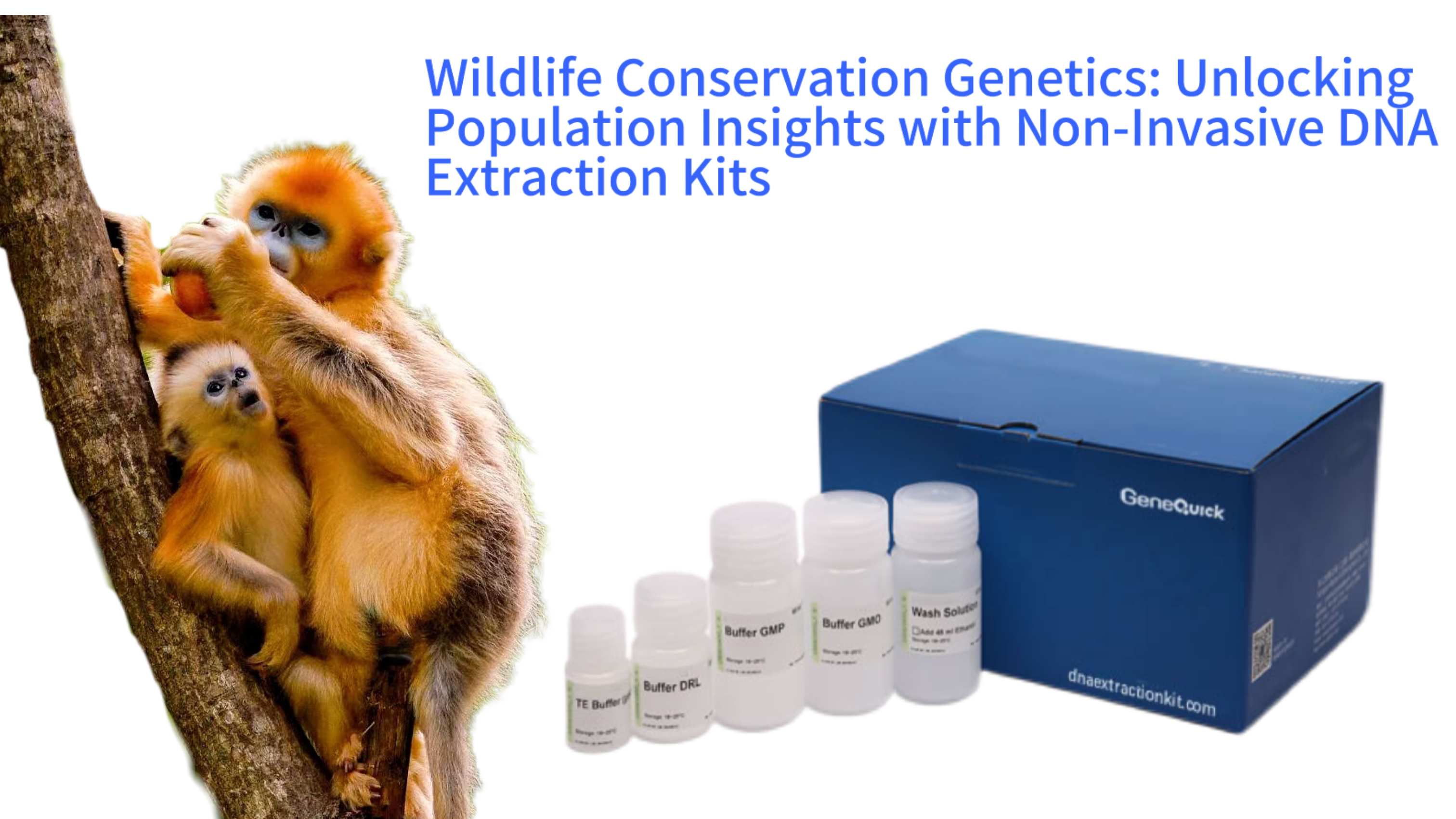
Wildlife conservation has entered a transformative era, moving beyond visual surveys and radio collars to harness the power of genetics. The field of conservation genetics relies on analyzing DNA to answer critical questions about population size, genetic diversity, relatedness, and movement patterns. A central challenge, however, lies in obtaining genetic material without disturbing or even seeing the animals themselves. This is where non-invasive sampling, coupled with specialized DNA extraction technologies, becomes indispensable. This guide explores how modern DNA extraction kits are engineered to overcome the unique hurdles posed by samples like feces, hair, and environmental DNA, enabling scientists to conduct detailed population studies that inform and guide effective conservation strategies for species around the globe.
The Foundation of Non-Invasive Genetics in Conservation
Traditional wildlife monitoring often involves capturing, handling, or closely approaching animals, which can be stressful for the individual, logistically challenging, and ethically problematic for endangered populations. Non-invasive genetic sampling circumvents these issues by collecting biological material animals leave behind in their environment. These samples serve as a genetic footprint, containing trace amounts of DNA shed from skin, hair, feces, saliva, or feathers. The information locked within this DNA allows researchers to identify individual animals, determine sex, assess genetic diversity, and reconstruct family trees without any direct contact.
The shift towards non-invasive methods represents a significant advancement in ethical wildlife research. It minimizes impact on animal behavior and welfare, which is particularly crucial for sensitive or threatened species. Furthermore, it allows for sampling across larger geographical areas and over longer time periods more efficiently, as researchers are not limited by capture success rates. This approach provides a more comprehensive picture of population dynamics, enabling conservationists to make data-driven decisions about habitat protection, corridor creation, and translocation programs.
Core Principles of DNA Recovery from Trace Samples
Extracting usable DNA from non-invasive samples is a demanding technical endeavor. The DNA present is often in minute quantities, highly degraded due to environmental exposure, and mixed with a complex array of PCR inhibitors from the sample matrix itself. For instance, fecal samples contain PCR inhibitors from plant secondary compounds and bacterial metabolites, while hair samples may have limited nuclear DNA concentrated only in the follicular tissue. Standard laboratory DNA extraction protocols designed for fresh blood or tissue are typically inadequate for these challenging sources.
Specialized non-invasive DNA extraction kits are built upon a foundational understanding of these obstacles. Their chemistry is optimized to maximize the release of DNA from difficult-to-lyse cellular material, such as keratinized hair shafts or digested cells in feces. More critically, they incorporate robust purification steps designed to selectively bind the target DNA while aggressively removing the co-purified inhibitors that would otherwise block downstream enzymatic reactions like PCR. This purification is the key differentiator, transforming a crude extract into a template suitable for sensitive genetic analysis.
The Critical Role of Inhibitor Removal
The success of any non-invasive genetics study hinges on the complete removal of substances that inhibit polymerase chain reaction. Common inhibitors in wildlife samples include humic and fulvic acids from soil, tannins and polyphenols from plant matter, urea and bile salts from feces, and melanin from hair. These compounds can bind to the DNA or directly inhibit the polymerase enzyme, leading to amplification failure or false-negative results. A high-quality extraction kit addresses this through tailored binding and wash buffers.
These buffers work by altering the local chemical environment to promote specific interactions. Under high-salt conditions, DNA preferentially binds to a silica-based matrix in spin columns or to coated magnetic beads, while many inhibitors do not. Subsequent wash steps with alcohol-based buffers then remove residual salts and other impurities without dislodging the DNA. The final elution releases the purified DNA in a low-salt buffer compatible with PCR. Kits designed for fecal DNA extraction, for example, often include additional wash steps or specialized inhibitor removal resins to handle the particularly challenging chemistry of scat samples.
Primary Non-Invasive Sample Types and Their Challenges
Wildlife researchers employ a diverse toolkit of non-invasive sample types, each with its own advantages and specific DNA extraction requirements. The choice of sample often depends on the target species, habitat, and research question. Feces are among the most commonly collected samples, providing not only host DNA for population studies but also dietary and microbiome data. Hair samples, collected from barbed wire hair snares or natural rub trees, offer a source of DNA that is relatively stable over time. Feathers shed by birds can be used similarly. Saliva residues on partially eaten fruit or bite marks, and even environmental DNA from soil or water, round out the non-invasive arsenal.
Each sample type presents a unique matrix that the DNA extraction protocol must contend with. Feathers and hair are composed of keratin, a tough structural protein that requires vigorous lysis conditions to break open cells trapped at the base. Fecal samples are a complex soup of digested material, host intestinal cells, and billions of microbial cells, requiring methods to selectively enrich for host mammal or bird DNA. Environmental samples, such as water or soil used for eDNA studies, contain vanishingly small amounts of target DNA dispersed in a vast background of non-target organic and inorganic material, necessitating protocols that concentrate nucleic acids efficiently.
Fecal Samples: A Wealth of Information
Fecal samples, or scat, are a gold standard in non-invasive monitoring for many mammal species. They are relatively easy to locate and collect in the field. The DNA within originates from sloughed intestinal epithelial cells of the host animal. However, the extraction process must overcome significant hurdles: the DNA is often present in low copy number, it is frequently degraded due to digestive processes, and the sample is laden with potent PCR inhibitors from diet and metabolism. Efficient lysis is the first critical step, often requiring extended incubation with proteinase K and specialized buffers to break down the complex fecal matrix and release cellular material.
Following lysis, the purification phase is paramount. Protocols must separate the tiny amount of host DNA from an overwhelming abundance of bacterial DNA and dietary plant DNA. This is achieved through optimized binding conditions where the host DNA is preferentially captured. Many modern kits include carrier RNA or other additives that improve the recovery of low-concentration DNA by providing mass for more efficient precipitation or binding to the purification matrix. The resulting DNA, while often fragmented, is of sufficient purity and concentration for downstream applications like microsatellite analysis or targeted sequencing of mitochondrial DNA regions.
Hair and Feather Samples: Targeting the Follicle
Hair and feathers offer a more stable source of DNA compared to feces, as the keratinous structure provides some protection from environmental degradation. The primary source of nuclear DNA is not the shaft itself but the follicular tissue or the quill's pulp, where nucleated cells can be found. Therefore, the extraction protocol must focus on effectively lysing these specific cellular components. For hair, this often involves carefully cutting the root end or crushing the entire follicle if present. For feathers, the calamus, or the base of the shaft, is the target.
The lysis step for these samples requires conditions that can break down keratin. This typically involves the use of a digestion buffer containing a strong detergent and proteinase K, with incubation times that may extend overnight to ensure complete tissue dissolution. Following lysis, the purification process is similar to other methods but must account for any residual keratin proteins. The yield from a single hair or feather can be low, making the efficiency of the binding and elution steps critical. Kits optimized for low-input samples, such as those used in forensic hair analysis, are often well-suited for this application, as they are designed to recover maximal DNA from minimal starting material.
Technology Platforms for Non-Invasive DNA Extraction
The evolution of DNA extraction chemistry has been driven by the need for higher throughput, consistency, and automation. For non-invasive wildlife genetics, two main technological platforms dominate: silica-membrane spin columns and magnetic bead-based systems. Both operate on the same fundamental principle of selective DNA binding under high-salt conditions, but their mechanics differ. Spin column technology relies on centrifugation to pass solutions through a silica membrane that traps DNA. Magnetic bead methods use paramagnetic particles coated with a silica or other DNA-binding surface, which are collected and moved using a magnet, allowing for easier automation in 96-well plate formats.
The choice between these platforms often depends on the scale of the study. For projects processing hundreds or thousands of samples, such as continent-wide population surveys, magnetic bead systems offer significant advantages in speed and integration with robotic liquid handlers. Spin columns remain a reliable and accessible choice for smaller labs or projects with lower throughput. A third category, direct PCR or "quick extraction" kits, minimizes purification steps for speed but is generally less effective at removing inhibitors from complex non-invasive samples, limiting its application in conservation genetics where sample quality is highly variable.
Spin Column Technology: Reliability and Accessibility
Silica-based spin column kits represent a mature and widely trusted technology. The process involves binding DNA to the silica membrane in the presence of a chaotropic salt, washing away contaminants with an ethanol-based buffer, and finally eluting the DNA in water or a low-salt Tris-EDTA buffer. For non-invasive samples, the key lies in the modifications to the standard protocol. Many manufacturers offer specific kits for stool or tissue that include enhanced lysis buffers and additional wash steps to handle inhibitors. The manual nature of the process allows for flexibility; a technician can, for instance, extend lysis times or perform extra washes if a sample appears particularly challenging.
The main limitations of spin columns are throughput and potential for cross-contamination. Processing large batches is time-consuming due to the repeated centrifugation steps. Furthermore, the open nature of transferring lysates to columns poses a slight risk of aerosol contamination between samples, which is a critical concern in genetics studies where individual identification is key. Despite these factors, spin columns are a cornerstone of wildlife genetics due to their proven performance, consistent yields, and the high purity of DNA they deliver, which is essential for long-read sequencing or other sensitive downstream applications.
Magnetic Bead Systems: High-Throughput and Automation
Magnetic bead technology has revolutionized high-throughput nucleic acid purification. In this system, tiny paramagnetic beads coated with a silica or carboxyl surface are added to the lysed sample. Under the right salt and pH conditions, DNA binds to the bead surface. A magnet is then used to pull the beads (with bound DNA) to the side of the tube or plate well, allowing the supernatant containing impurities to be easily removed. After washing, the DNA is eluted from the beads. This "bind-wash-elute" process can be easily automated on liquid handling platforms, enabling the simultaneous processing of 96 or 384 samples with minimal hands-on time.
For conservation genetics labs managing large-scale non-invasive sampling campaigns, this automation is a game-changer. It standardizes the extraction process, reducing human error and inter-batch variability. It also significantly increases laboratory capacity. The chemistry in magnetic bead kits designed for challenging samples often includes specific additives to compete with inhibitors for bead binding sites, ensuring the target DNA is recovered. These kits are particularly adept at handling the variable and inhibitor-rich nature of non-invasive samples, making them a preferred choice for modern, large-population studies. The technology is central to workflows in many high-throughput research DNA extraction pipelines.
Optimizing Workflows from Field Collection to Genetic Data
A successful non-invasive genetics study is built on a seamless workflow that preserves DNA integrity from the moment of collection to the final data analysis. The process begins in the field with careful sample collection. Using gloves and sterile instruments to avoid human contamination is paramount. Samples must be stabilized immediately to halt DNA degradation caused by microbial activity and environmental enzymes. For feces, this often means storing samples in vials filled with a stabilizing solution like ethanol or a commercial preservative. Hair and feathers can be stored in paper envelopes with desiccant to keep them dry.
Upon arrival at the laboratory, samples are logged into a dedicated laboratory information management system, often with barcodes to track each sample's chain of custody. The extraction phase follows a standardized protocol, but with built-in quality control checks. These typically include extraction blanks to monitor laboratory contamination and positive controls to confirm reagent efficacy. The eluted DNA is then quantified using sensitive fluorescence-based methods, as spectrophotometry is often inadequate for the low-concentration, potentially impure extracts from non-invasive sources. This quantification informs the normalization step before downstream genetic analysis, ensuring each sample is compared on an equal footing.
Field Preservation Strategies
The choice of field preservation method has a direct and significant impact on DNA yield and quality. The goal is to inactivate nucleases and inhibit microbial growth as quickly as possible. For fecal samples, 95-100% ethanol is a widely used and effective preservative; it dehydrates the sample and kills microbes. Commercial stabilizing buffers, such as those containing chaotropic salts, offer an alternative that may better preserve DNA for long-term storage at ambient temperatures, which is beneficial in remote field conditions without reliable freezing. Drying samples with silica beads is another effective method, particularly for reducing weight for transport.
For hair and feather samples, dry storage with desiccant is standard. The key is to ensure the sample is completely dry to prevent mold growth. When collecting hair from snares, researchers often use sterile forceps to place the hair directly into a small paper envelope containing a silica gel packet. These envelopes are then stored in a larger container with additional desiccant. Regardless of the method, detailed field notes about the sample's condition and storage time before preservation are crucial for interpreting downstream genetic results, as prolonged exposure before stabilization can lead to DNA degradation that no extraction kit can fully remedy.
Laboratory Setup and Contamination Prevention
The laboratory processing non-invasive samples must be designed to prevent contamination, which is a major threat given the low quantity of target DNA. A strict unidirectional workflow is essential, with physically separated pre- and post-PCR areas. The extraction laboratory should have positive air pressure, UV lights for decontaminating surfaces and equipment, and dedicated sets of pipettes and reagents. Personnel should wear lab coats, gloves, and face masks. All work surfaces should be routinely cleaned with a 10% bleach solution or commercial DNA-decontaminating agents.
A critical component of the workflow is the inclusion of control samples. Each batch of extractions should include at least one negative control, which contains all reagents but no sample, to detect contamination in the extraction process itself. For studies using hair or fecal samples, it is also prudent to include a field blank—a sample collected in the field that contains only the preservative—to check for environmental contamination during collection. These rigorous controls underpin the credibility of the genetic data, ensuring that the DNA sequences obtained truly originate from the target wildlife species and not from laboratory or field contaminants. This level of rigor is shared with standards in forensic DNA analysis.
Downstream Applications in Population and Conservation Studies
The purified DNA extracted from non-invasive samples serves as the raw material for a suite of powerful genetic analyses that define modern conservation science. The application chosen depends on the specific research question. For individual identification, parentage analysis, and estimating population size, microsatellite markers have been the traditional tool. These are short, repetitive DNA sequences that are highly variable between individuals. More recently, single nucleotide polymorphism panels and whole-genome sequencing approaches are providing even higher resolution data on genetic diversity, inbreeding, and local adaptation.
Beyond the nuclear genome, mitochondrial DNA is frequently analyzed due to its high copy number per cell, making it easier to amplify from low-quality samples. mtDNA sequences are excellent for determining species identity, studying maternal lineages, and investigating phylogeography—how historical processes shaped the current distribution of genetic variation. Furthermore, the non-invasive DNA extract itself can be a source of other information. Metabarcoding of fecal DNA can reveal detailed dietary composition, while sequencing of bacterial DNA can provide insights into the animal's gut microbiome health, offering a more holistic view of individual and population well-being.
Individual Identification and Capture-Recapture Analysis
The ability to distinguish individuals from their DNA transforms non-invasive sampling into a powerful tool for estimating population abundance. This is achieved through genetic mark-recapture analysis. Researchers collect samples spatially and temporally across a landscape. Each sample is genotyped at a panel of microsatellite loci or SNPs to create a unique genetic fingerprint. A "recapture" is recorded when the same genetic profile is identified from a sample collected at a different time or place. Statistical models then use these capture histories to estimate total population size, survival rates, and movement patterns.
The success of this method hinges on the quality of the genotyping data, which is directly dependent on the purity of the extracted DNA. Poor-quality extracts lead to allelic dropout, where one of the two copies of a genetic marker fails to amplify, or false alleles due to PCR artifacts. This can cause two samples from the same individual to be mistakenly scored as different, or vice versa, biasing population estimates. Therefore, the extraction protocol's effectiveness at removing inhibitors and recovering sufficient template is critical for generating reliable, reproducible genotypes that form the basis of accurate population models.
Assessing Genetic Diversity and Population Structure
Genetic diversity is the fuel for evolution and a key indicator of population health. Low genetic diversity can signal inbreeding, reduce adaptive potential, and increase extinction risk. Non-invasive genetics allows scientists to assess diversity metrics like heterozygosity and allelic richness across a species' range. By comparing genetic profiles from different geographic areas, researchers can also detect population structure—the degree to which groups are genetically distinct from one another. This reveals patterns of gene flow, identifies isolated subpopulations that may be vulnerable, and helps define management units for conservation.
Conducting these analyses requires high-quality genomic DNA that can be used on high-density SNP arrays or for reduced-representation sequencing methods like RADseq. These techniques demand DNA that is not only inhibitor-free but also of reasonable molecular weight to ensure even representation across the genome. Extraction methods that are too harsh can shear DNA into very small fragments, compromising these applications. Thus, selecting a DNA extraction kit involves balancing the aggressive lysis needed to break open tough sample matrices with gentle handling to preserve DNA integrity for broader genomic studies, a consideration also important for research on preserved tissues.
Future Directions and Integrative Technologies
The future of non-invasive conservation genetics is being shaped by technological convergence. Portable, miniaturized DNA extraction and sequencing devices are moving genetic analysis from the centralized laboratory directly to the field. Imagine a researcher in a rainforest performing a rapid DNA extraction from a fresh scat sample and obtaining a species ID or individual match within hours using a handheld sequencer. This real-time capability could transform anti-poaching patrols and rapid biodiversity assessments. Furthermore, the integration of CRISPR-based detection systems with non-invasive sampling holds promise for ultra-sensitive, field-deployable tests for specific pathogens or species from environmental samples.
Another significant trend is the move towards genomic-scale data from non-invasive samples. As extraction efficiencies improve and sequencing costs drop, it is becoming feasible to generate whole-genome resequencing data from high-quality hair or feather extracts. This will unlock unprecedented insights into adaptive genetic variation, historical demography, and the functional consequences of inbreeding. Concurrently, the field of metabarcoding and metagenomics from non-invasive samples is expanding beyond diet analysis to encompass pathogen surveillance and holistic ecosystem health monitoring, painting an ever-more detailed picture of wildlife populations and their challenges.
Portable and Rapid Field-Based Solutions
The development of field-deployable DNA extraction kits is a active area of innovation. These kits often use simplified protocols with fewer steps, stable reagents at ambient temperature, and equipment that can be powered by batteries. They may employ novel matrix materials or chemical formulations to rapidly capture DNA from crude lysates with minimal purification. While the DNA yield and purity from these rapid field methods may not match that of laboratory-based protocols, they are often sufficient for preliminary screening, species identification via PCR, or preparing samples for stabilization and later in-depth analysis in a central lab.
The adoption of such technologies empowers local conservationists and reduces the time lag between sample collection and data acquisition. This speed can be critical for time-sensitive applications like detecting the presence of an invasive species in a new area or confirming the presence of a rare animal during a survey. As these field kits become more robust and their downstream detection methods more sensitive, they will increasingly support decentralized conservation decision-making and community-based monitoring programs around the world.
Biobanking and Long-Term Genetic Resources
Non-invasive samples collected today are not just for immediate analysis; they are also valuable long-term genetic resources. Recognizing this, many conservation initiatives are establishing biobanks—systematic repositories of biological samples and their associated data. DNA extracted from non-invasive samples can be stored at ultra-low temperatures for decades. These archived genetic resources allow future scientists, armed with new technologies and questions, to revisit historical populations. They enable studies of genetic change over time, which is vital for understanding the impacts of climate change, habitat fragmentation, and demographic shifts.
The process of biobanking starts with the extraction step. Using a reliable, well-documented extraction kit ensures that the stored DNA is of known quality and concentration. Detailed metadata about the extraction protocol is archived alongside the DNA itself. This foresight creates a powerful legacy, turning contemporary conservation efforts into a permanent resource for future generations of scientists. It underscores the importance of viewing the DNA extraction process not merely as a technical step, but as the foundational act in building a long-term genetic understanding of Earth's biodiversity, complementing efforts in preserving plant genetic diversity through seed banks.